.svg)
.svg)
.svg)
.svg)





Reducing the carbon footprint of your office can seem complex at first. Yet there are many simple, concrete actions that can make a real difference. From energy use and transport to workspace design and daily habits, every small step counts. In this article, we share 10 practical levers you can activate today to make your office more sustainable, without sacrificing comfort or blowing the budget.
Manage heating and air conditioning more efficiently
Heating and air conditioning account for around 40 percent of a building’s total energy consumption. Fortunately, there are many simple ways to reduce this impact without major changes.
Start by setting up smart programming for your systems. There is no need to heat or cool the office when it is empty. Setting operating hours, for example from 8 a.m. to 7 p.m. on weekdays, already helps reduce waste.
Then, aim for reasonable temperatures:
- Heating: between 19 and 20°C
- Air conditioning: between 24 and 26°C
A small gesture can have a big impact. Lowering the temperature by just one degree cuts energy consumption by about 7 percent. It is not about switching everything off, but rather adopting good habits.
You can also launch a small internal campaign to remind teams about simple actions, such as closing windows when the air conditioning is on. Clear reminders make a real difference.
Choose a 100 percent renewable electricity provider
Let’s look at the numbers. Each employee consumes around 2,000 kWh of electricity per year. For a 50-person company, that represents about 5 tonnes of CO₂ annually, just for powering computers, lights, servers, and coffee machines.
The good news is that you can reduce this footprint without changing how you work. Simply switch to a 100 percent renewable electricity provider. This single action can reduce those 5 tonnes to nearly zero, depending on the supplier.
Furnish your office with reused materials
When thinking about decarbonising your workspace, furniture is often overlooked. Yet it is a powerful and effective lever for reducing emissions. Unlike energy or transport, office design is a one-off project — the perfect opportunity to take meaningful action.
The best solution is to use reused or refurbished furniture. These pieces are functional, stylish, and resource-efficient. The result is drastically lower CO₂ emissions and significant savings, often 30 to 50 percent cheaper than buying new.
If you don’t know where to start, companies such as Fairspace can support you from start to finish in creating 100 percent sustainable workspaces that reflect your values and those of your team.
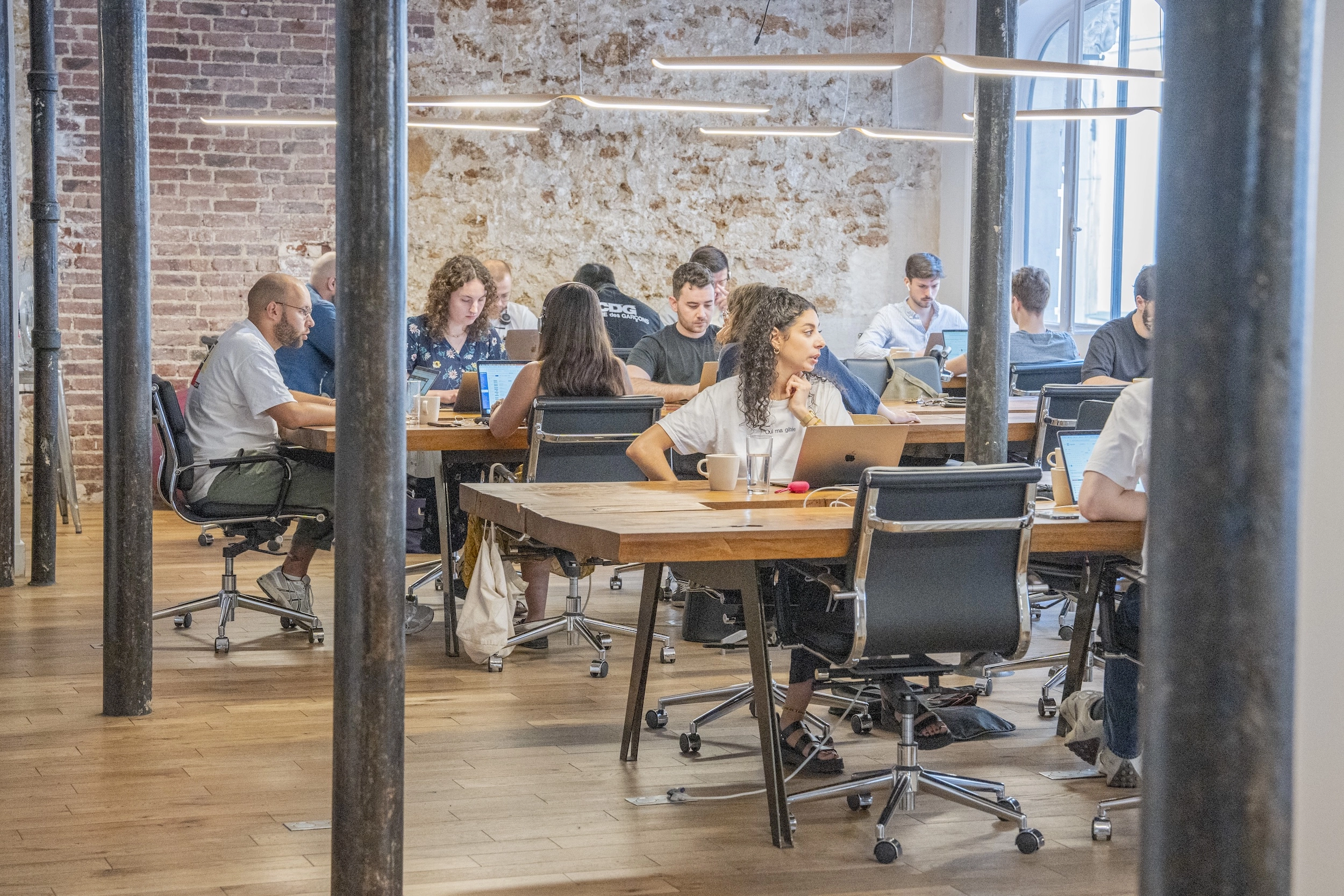
Reduce workspace per person with flexible office models
At first glance, flexible office models may seem unrelated to decarbonisation. Yet they are highly effective in reducing both space and emissions.
If your desk occupancy rate is low, why keep unused space? With a flex office approach, you can adjust your workspace to actual needs. Less surface area means less heating, cooling, and lighting — and therefore less carbon impact and lower costs.
It is also an opportunity to rethink work organisation. According to the Actineo 2025 Barometer, 77 percent of employees feel more productive when working remotely.
This might be the right time to try a more flexible, optimised, and sustainable work model.
Maximise natural light
Lighting is often underestimated, yet it accounts for about 10 percent of total electricity use in France, and nearly 60 percent in office buildings. It is therefore a key area to address, without requiring a full renovation.
One simple and effective solution is to maximise natural light. It reduces artificial lighting needs and improves employee comfort. Natural light also boosts concentration, mood, and productivity.
How to do it:
- Install floor-to-ceiling windows or enlarge existing openings where possible
- Use light-coloured paints or reflective materials to diffuse light
- Avoid opaque partitions and use glass or semi-transparent materials instead
Encourage sustainable transport
A French employee emits an average of 0.7 tonnes of CO₂ per year just for commuting to and from work. That is significant at the scale of a company.
There are, however, simple ways to cut this footprint without guilt or constraint. The goal is not to blame those who drive but to encourage positive change.
Practical ideas include:
- Subsidising the purchase of electric bikes
- Fully reimbursing public transport passes such as the Navigo card
- Installing secure bike parking or electric vehicle charging stations
Choose sustainable suppliers and products
Most companies rely on a long list of suppliers: office supplies, coffee, water, snacks, IT equipment, cleaning services, and more. Each of these generates emissions but also offers an opportunity for improvement.
You do not need to overhaul everything at once. The key is to move step by step towards more responsible suppliers. Start with easy wins such as switching your coffee supplier or water dispenser to sustainable alternatives.
Invest in energy efficiency improvements
When it comes to decarbonising office buildings, energy renovation is a must. Much of the energy loss comes from heating, air conditioning, and poor insulation.
Many leased offices are still energy-inefficient. Renovating, insulating, upgrading windows, or improving ventilation can significantly cut consumption, though it can be costly.
If major works are not possible right away, start small. Affordable measures such as adding insulation strips to windows or installing door draft stoppers already make a difference.
Choose local, low-water indoor plants
Plants are great allies in the office. Besides being decorative, they naturally help regulate temperature and acoustics.
Choose plants that are local or adapted to your climate and that require little watering. It’s better for the planet and for whoever takes care of them.
If you are unsure which plants to choose, ask a florist for advice or call on a professional service.
Build good daily habits
Decarbonising an office is also about collective mindset. Individual actions matter, but teamwork and shared motivation are what make the difference.
The goal is not to lecture people but to engage them. Explain what actions have been taken, why they matter, and what results they achieve. Transparent communication that informs and celebrates progress helps create long-term impact.
Conclusion
Decarbonising your office is not a revolution but a step-by-step process. There is no need to transform everything overnight. The key is to act with common sense, progressively and together.
By activating these 10 levers, you lay the foundation for a more sustainable, efficient, and forward-thinking workplace.

.png)




.webp)