What is a soundproof pod and how does it work?
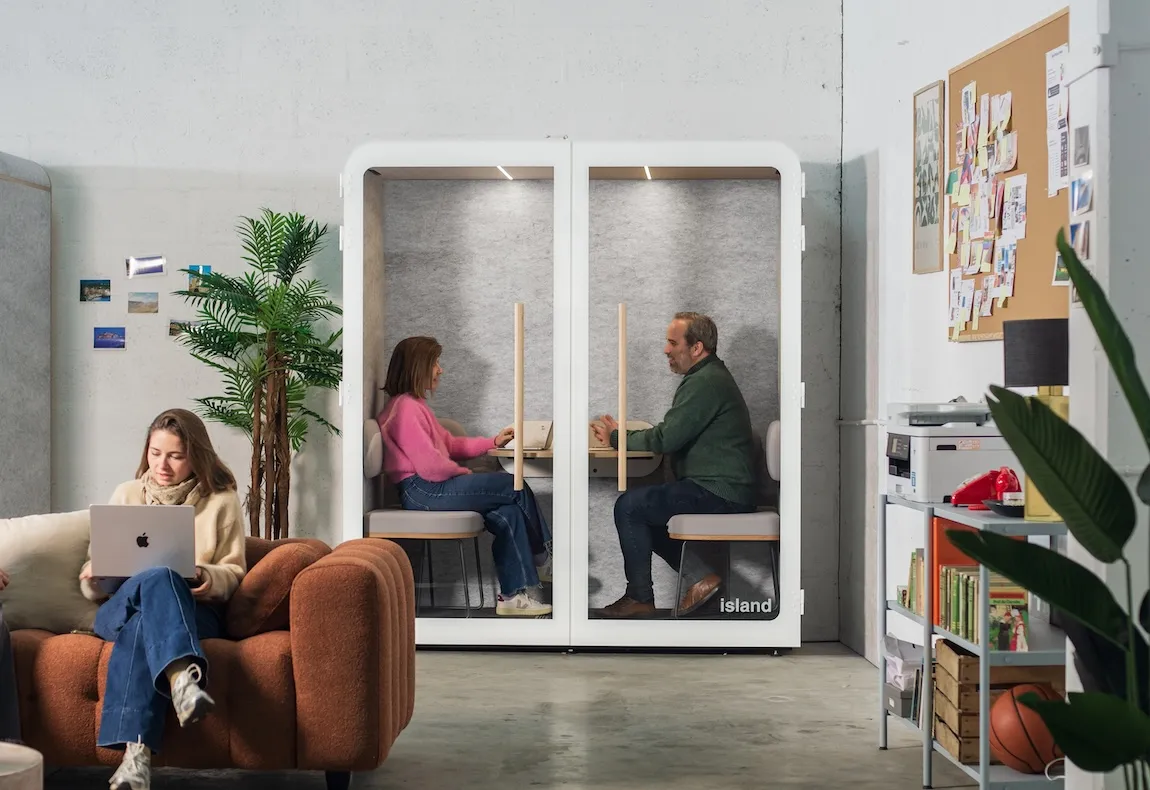
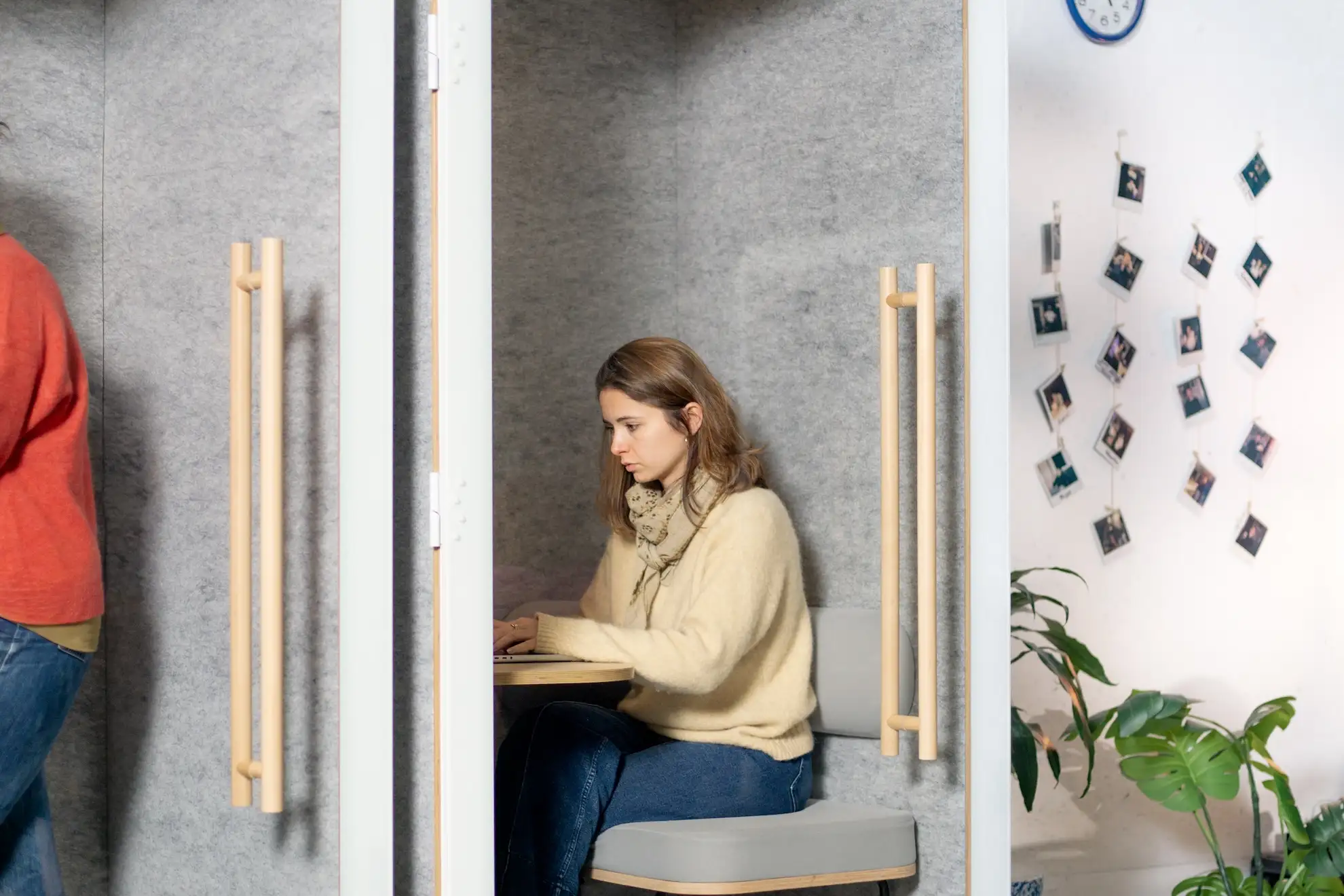
A soundproof pod is an enclosed space designed to significantly reduce sound transmission between the inside and the outside. It combines sound insulation (keeping noise out) and acoustic treatment (improving the acoustics inside). This technology turns any open plan office into a quiet, productive place to work.
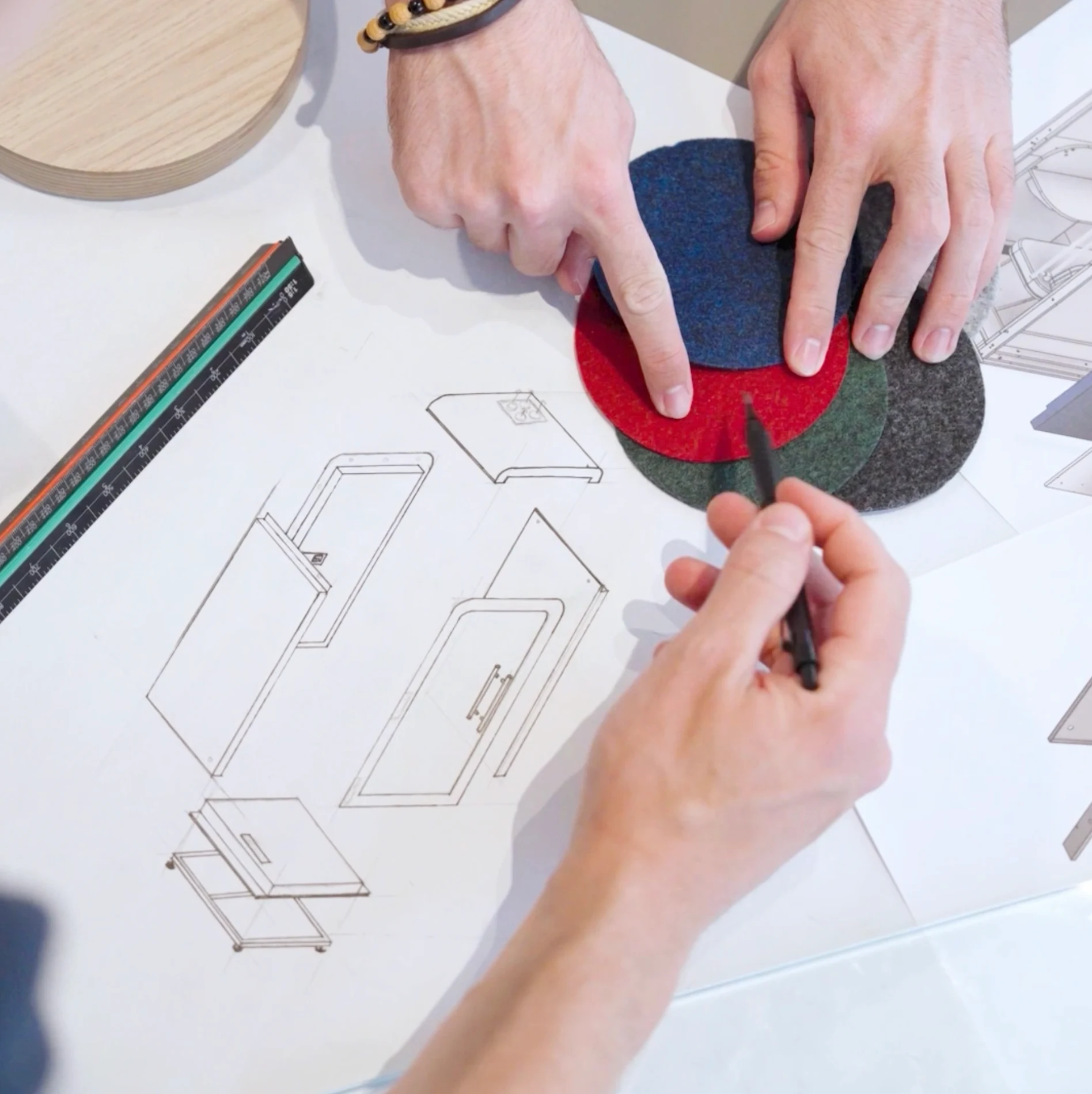
The principle relies on a multi-layer approach that deals with both insulation and sound absorption. Modern acoustic pods use technical materials to achieve high levels of sound reduction while keeping users comfortable.
The different types of acoustic pods for your needs
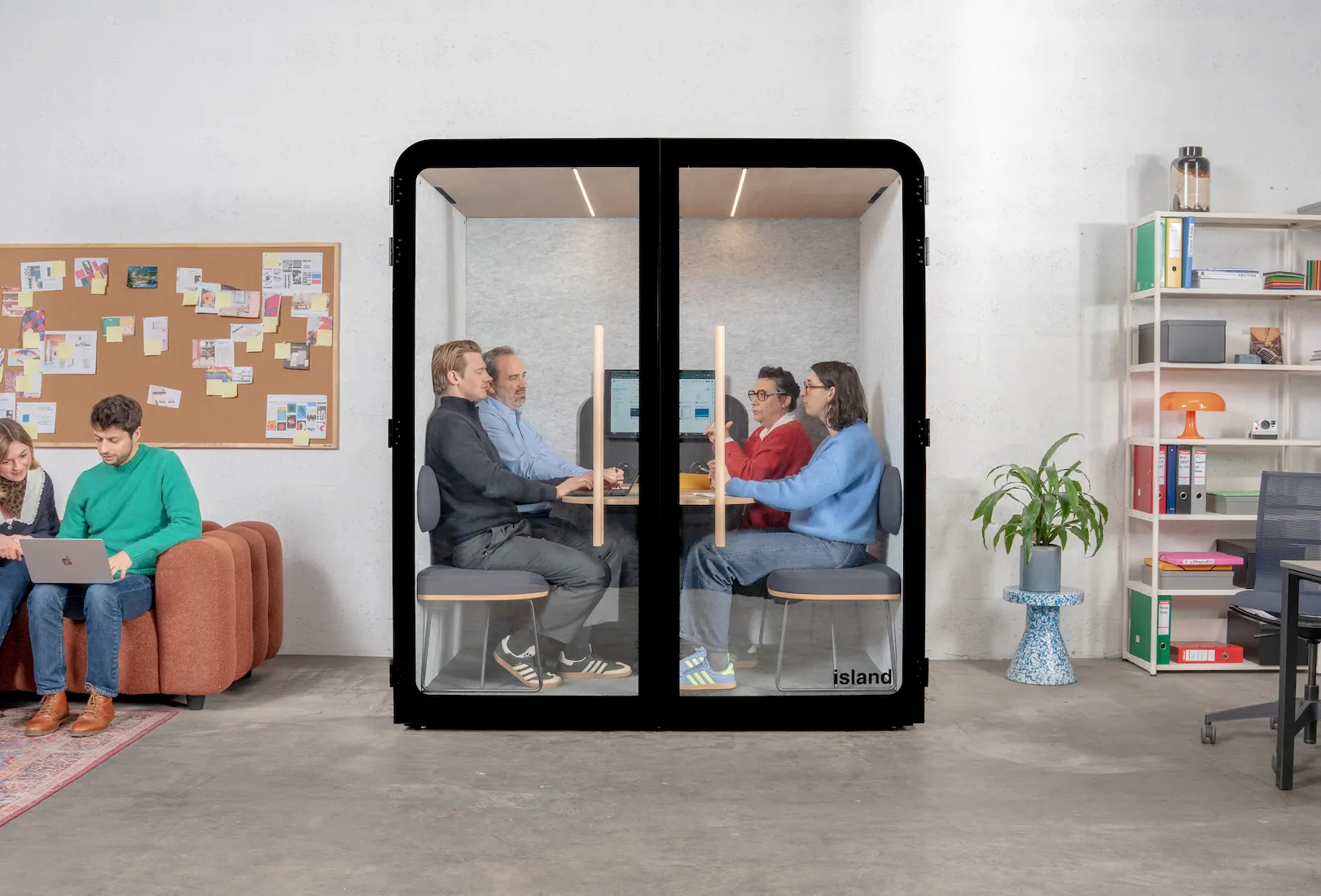
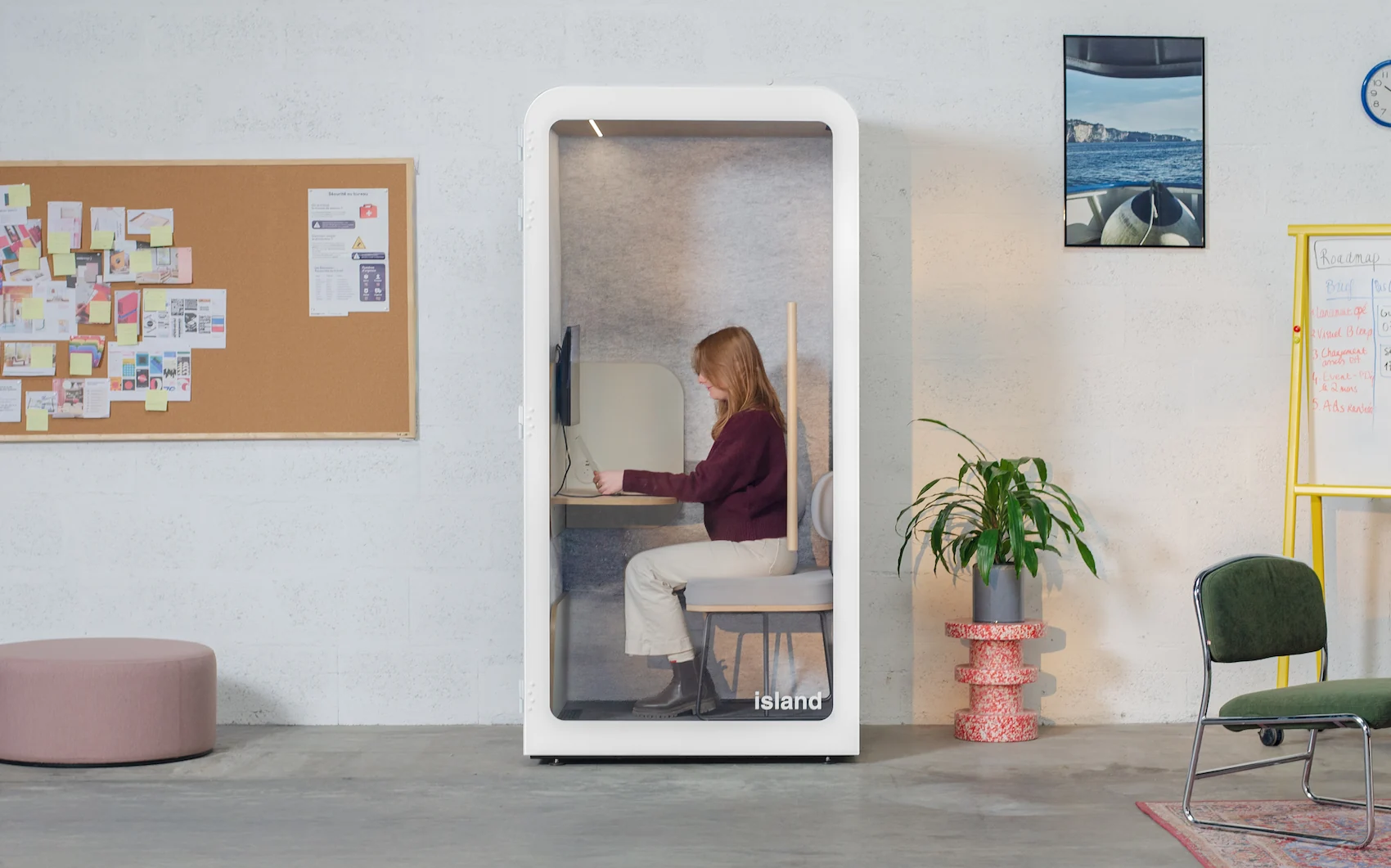
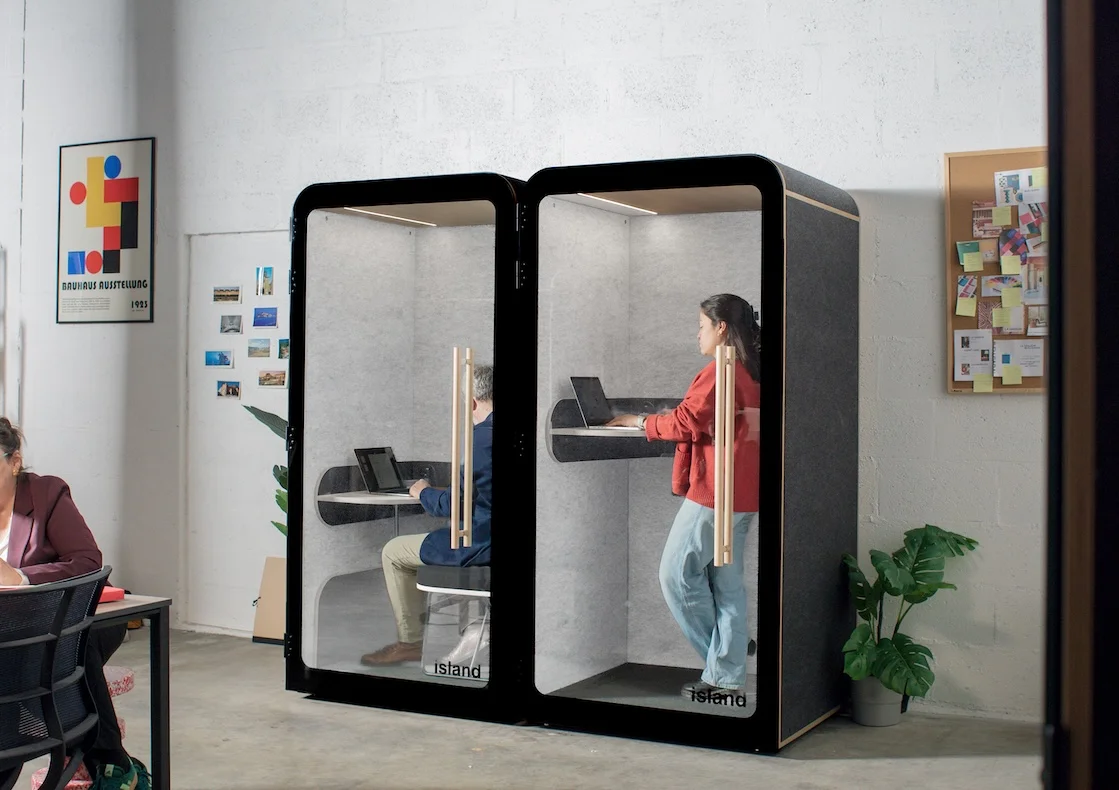
The acoustic pod market offers a range of solutions for different professional uses. Understanding how they differ helps you choose the right configuration for your space constraints and operational needs.
Installation and office design: making the most of your space
Integrating a soundproof pod successfully requires careful planning of the technical and logistical aspects. This preparation ensures a smooth installation and immediate use.
Technical requirements and constraints
The floor space needed ranges from 1 m² for individual pods to 2.5 m² for collaborative pods. Allow 50 cm of clearance for the door and for moving around the acoustic pod. This clearance also makes maintenance and cleaning easier.
A minimum ceiling height of 2.30 m is required, with 2.50 m being ideal for comfort and natural ventilation. This constraint affects where the pod can go in your existing space and may require specific adjustments.
The pod needs a dedicated 220V socket to power the lighting, ventilation and built-in equipment. USB-A and USB-C ports are built in for good connectivity, particularly for heavy video conferencing use.
Dismantling and mobility
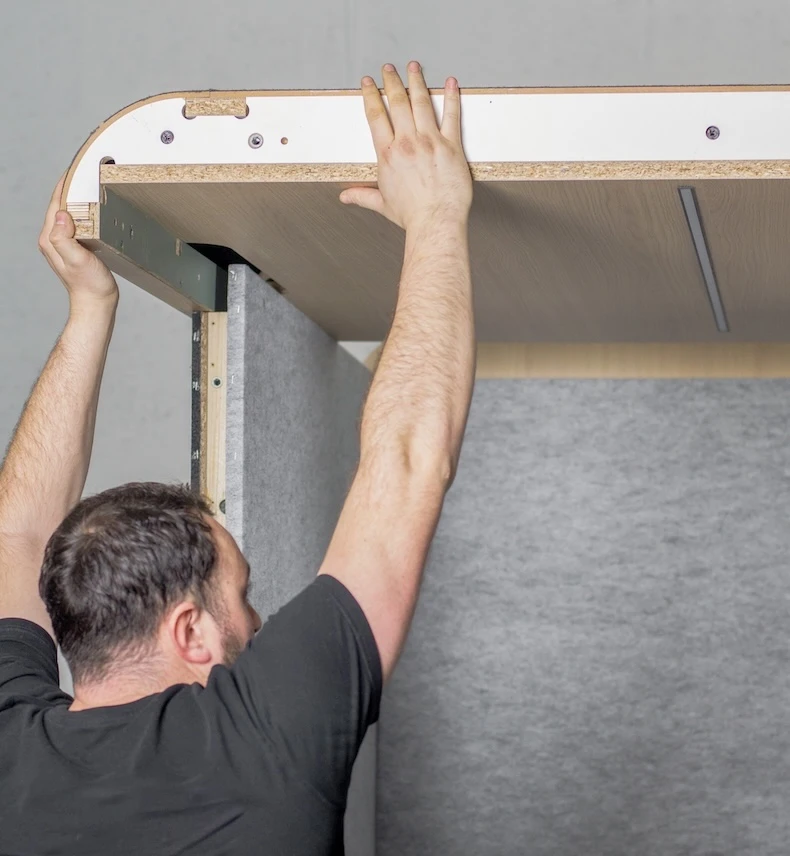
Demountable pods have a modular structure, so you can move and reconfigure them as your needs change. Dismantling and reassembly are quick and preserve the pod's integrity and acoustic performance.
Adjustable feet compensate for uneven floors by up to 2 cm, ensuring stability on all types of flooring. This means no levelling work is needed before installation.
Fitting into your office design
Designs and finishes can match your existing visual identity. Custom colours and materials let the acoustic pod blend naturally into your workplace.
Ideally, avoid placing the pod right next to walkways and favour indirect natural light. This careful positioning makes the pod easy to use while keeping circulation flowing.
Accessibility meets the standards for people with reduced mobility, with particular attention to door width and signage. Our B Corp certification (2025) reflects our sustainable and responsible practices across every aspect of design.
Ventilation and comfort: breathing easy in silence
The ventilation system is critical to a soundproof pod's effectiveness and comfort. This complex technology balances air quality and acoustic performance.
Silent ventilation systems
Air is renewed at 400 m³/h in individual pods and 800 m³/h in collaborative pods. This airflow renews the air completely every 30 seconds, keeping air quality constant even during long occupancy.
Acoustic silencers use baffles inside the ducts to maintain sound insulation while the pod is ventilated. This technology preserves the acoustic pod's performance without compromising user comfort.
Built-in comfort technologies
Automatic lighting switches on when someone enters and adjusts its intensity to the task: focused work, video calls or a break. This LED technology reduces energy use and creates the right atmosphere for each situation.
Built-in connectivity includes 220V sockets, Ethernet, USB-A and USB-C for all your mobile devices. This complete set-up avoids extension leads and power strips, keeping the workspace tidy and functional.
Jérôme Bourdon, co-founder of WiiSmile, explains: "What our employees told us is that noise is draining and tiring. They need moments to recharge, to settle down and to get away. The pod lets them shut themselves off completely, in a zero-decibel atmosphere."
Air quality and wellbeing
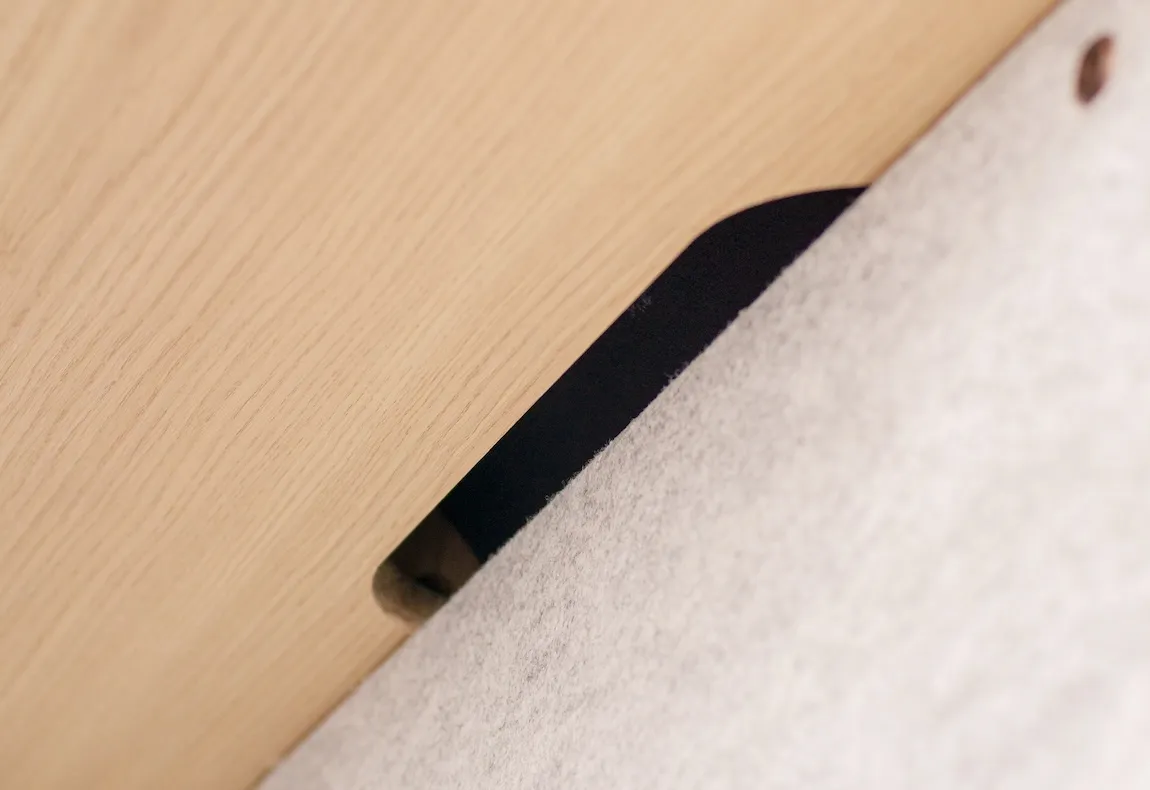
All Work With Island pods are made from materials selected for their performance and low environmental impact. The PEFC-certified wood comes from sustainably managed forests, guaranteeing a renewable and traceable resource. The Métisse® acoustic insulation, made by our partner Le Relais, is produced from recycled textiles.
The airflow is designed to create a laminar flow that avoids dead zones, efficiently extracting CO2 and humidity. This technical design keeps comfort constant even under heavy use.
Müge Sené, project manager at Yemanja, adds: "It was our first project with the FFF. From the outset, we wanted a very responsible project. We chose Work With Island because the pods are made in France."
Work With Island supports you in your project
Our European-made acoustic pods
Since 2018, Work With Island has designed and manufactured acoustic pods that transform workspaces. Our Island range (Solo, Desk, Duo, Quattro) covers all your soundproofing needs, with certified performance of up to 31.1 dB.
Why choose us
Our European manufacturing with short supply chains ensures quality is controlled from start to finish. This proximity means responsive service and maintenance.
Our acoustic performance is based on compliance with ISO 23351-1:2020 (Class A for Solo and Desk, Class B for Duo and Quattro), with tests at the CSTB laboratory and technical materials. This independent certification validates the performance we announce.
Our full service is backed by a dedicated team in Paris, London and Madrid. Many clients trust us with their office acoustics projects.
They trust us
Engie, Decathlon, LVMH, L'Oréal, Qonto and SNCF trust us. Our installations across Europe reflect high customer satisfaction, with a strong adoption rate after our 100-day trial.
Looking for an effective, long-lasting acoustic solution? Contact Work With Island for a personalised quote and find out how our pods transform workspaces.
.svg)
.svg)
.svg)
.svg)






.webp)