.svg)
.svg)
.svg)
.svg)





What if productivity was achieved through sensory comfort?
{{CARDS_ONE}}
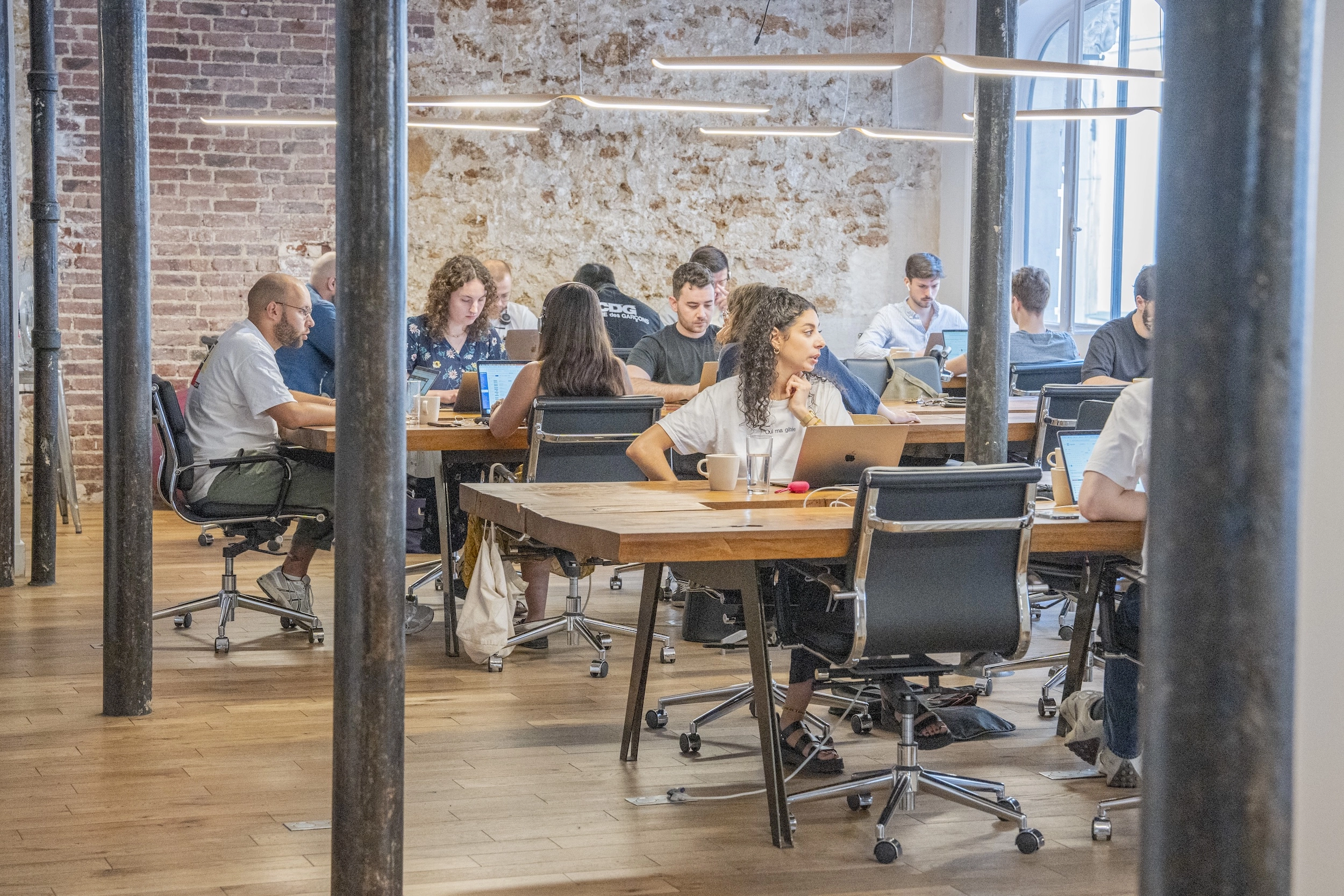
Between permanent notifications, noisy open-plan offices, and omnipresent screens, employees are subjected to continuous sensory hyper-stimulation.
This situation leads to increased fatigue and a drop in concentration. Studies show that a noisy environment can generate up to 40% more errors in memory and concentration tasks.
What if employee well-being and productivity did not depend on bigger or more beautiful spaces, but on better daily sensory comfort? Efficiency often comes down to the simple ability to concentrate.
Sensory comfort, an often overlooked lever for workplace performance
What do we mean when we talk about "sensory comfort"?
Sensory comfort encompasses all the perceptions that influence our well-being at the office: sounds, lights, textures, smells, and temperature.
It is a key concept in modern space design. it particularly relies on neuro-architecture, which studies the impact of the built environment on the brain, and biophilia, which integrates nature into workplaces. the goal is to design the space to be comfortable for humans.
Why the senses influence our concentration and mood ?
Constant noise or inappropriate lighting reduce our efficiency. An ifop/jna survey revealed that one in five working people loses more than 30 minutes of work per day due to noise nuisance. Sensory stimuli directly affect stress, creativity, and motivation.
Working in an unsuitable environment forces the brain to concentrate on filtering out unnecessary information.
{{BANNER_DEFAULT}}
Focusing on soothing environments is therefore a pragmatic approach. It allows employees to let their brain "breathe," reduce the effort of concentration, and focus on their tasks.
The 5 senses serving well-being and productivity
Hearing: noise, the primary barrier to concentration
Hearing is the most solicited, and often the most disrupted, sense in open-plan offices. Background noise is a major problem. According to the inrs, 67% of french workers say they are bothered by noise at work.
Constant background noise (phone conversations, discussions, keyboard noise) profoundly harms concentration and the quality of exchanges. For tasks requiring sustained attention, it becomes a major obstacle.
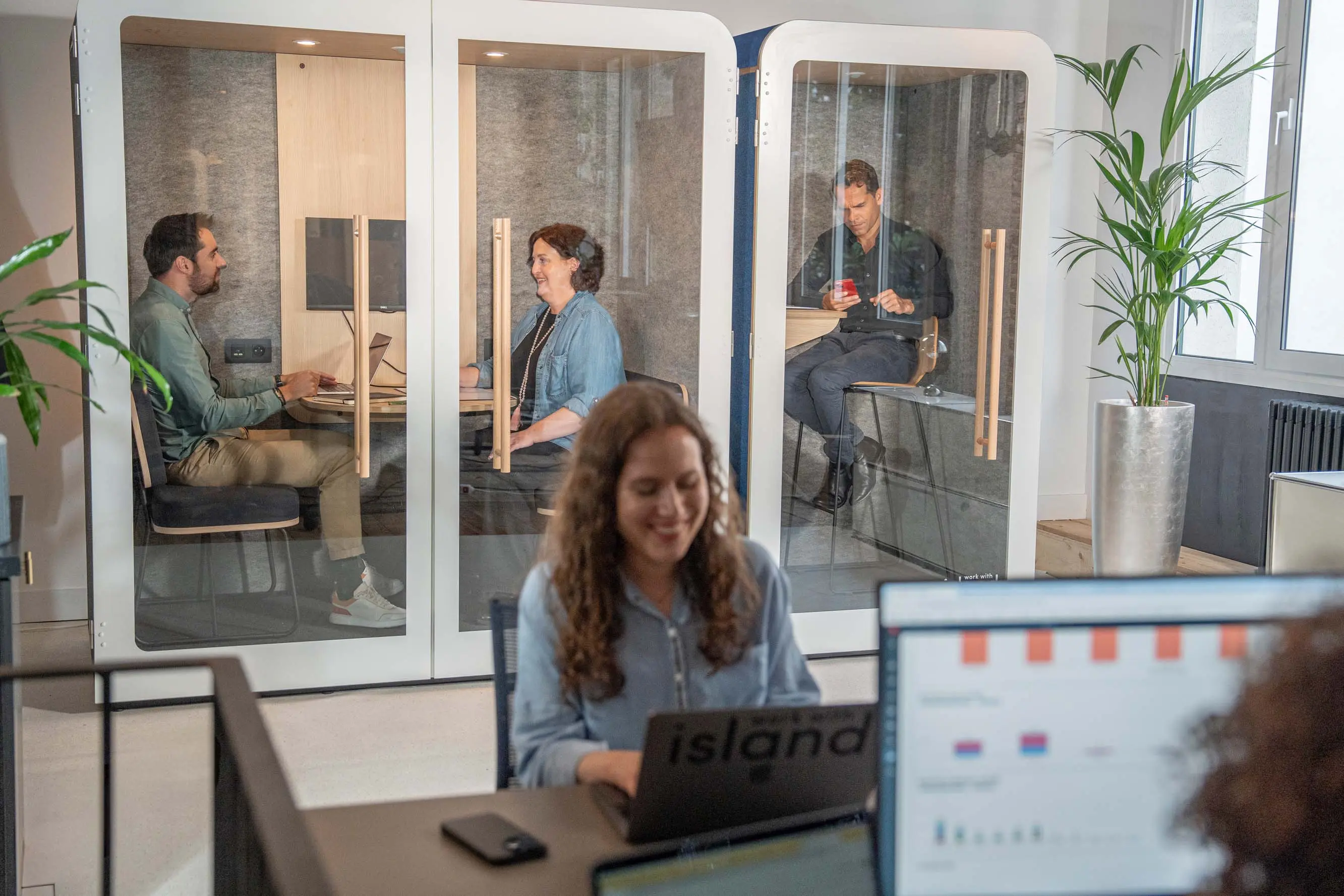
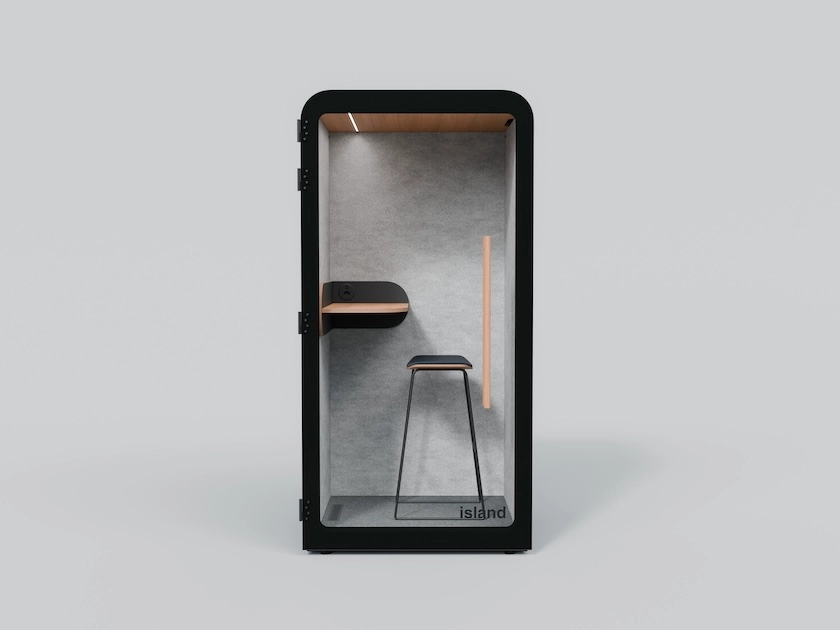
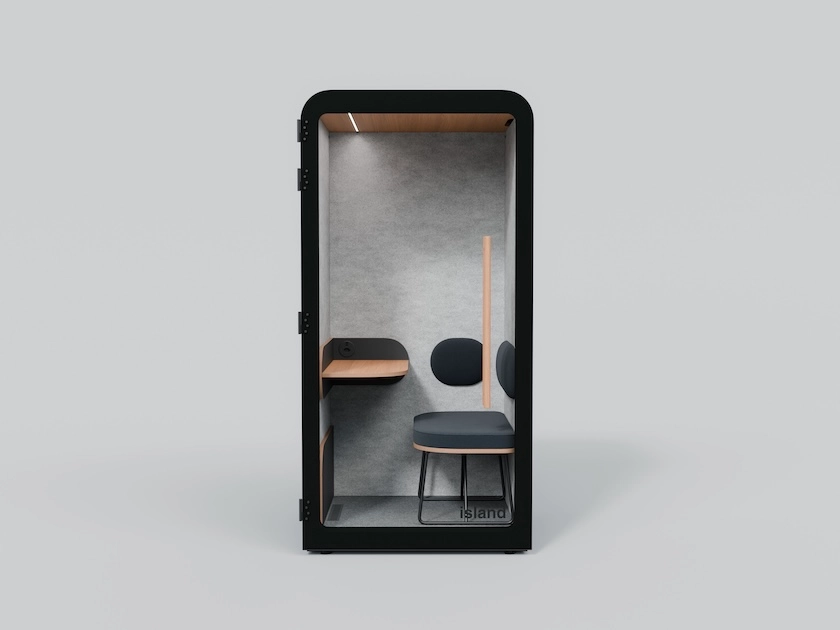
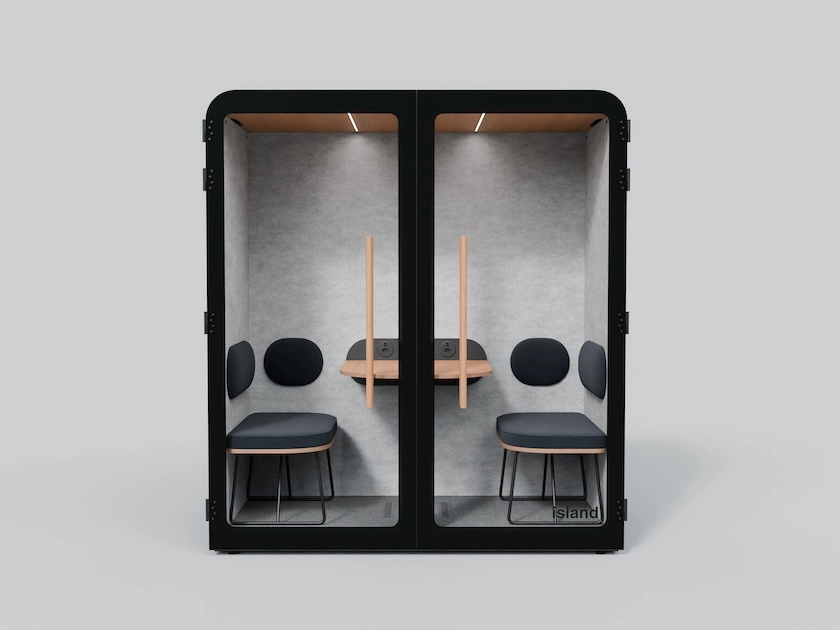
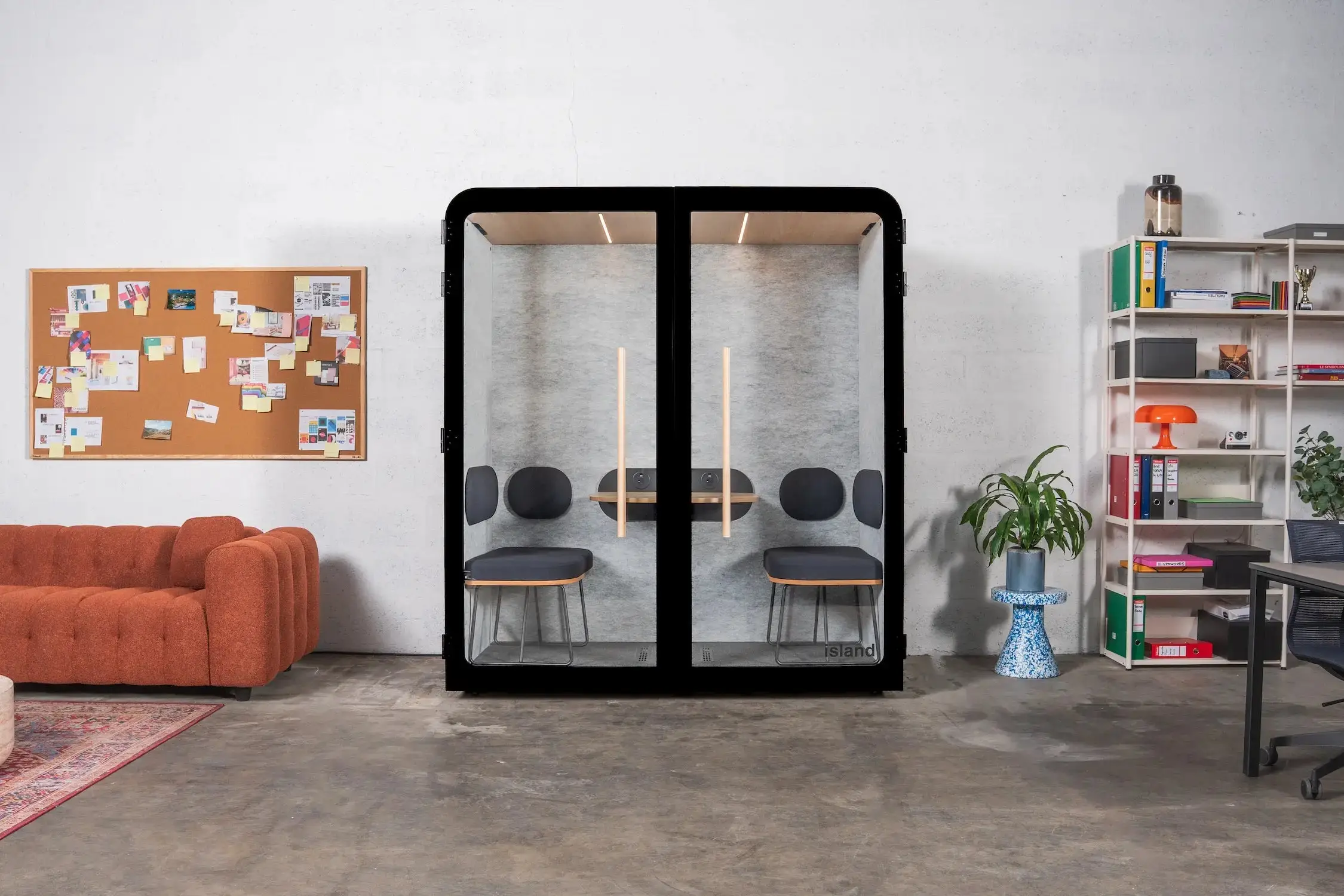
The solution involves micro-zoning, meaning the creation of specialized spaces for each use. For sound insulation, acoustic pods like the island solo or the island desk offer an essential refuge for quiet and confidentiality.
{{CTA_DEFAULT}}
Sight: natural light and visual coherence
Light has a direct impact on our concentration, our energy level, and our circadian rhythm. Workstations near windows, benefiting from natural light, are generally preferred.It is also essential to ensure the visual coherence of the space.
The use of soothing colors, simple lines, and an orderly layout reduces visual effort and creates a serene work atmosphere.
Touch: materials, furniture, and physical comfort
The texture of surfaces influences the perception of comfort and quality. The choice of materials (wood, fabric, metal, glass) is important for creating a warm or, conversely, a more technical atmosphere.
Furthermore, furniture ergonomics plays a central role. It helps prevent physical fatigue and musculoskeletal disorders (msds). Physical comfort is the foundation of attention.
Smell and taste: the most discreet but not negligible senses
Well-ventilated and maintained spaces actively contribute to a pleasant work environment. Good air quality is an essential well-being factor.
Moreover, coffee or lunch breaks allow employees to disconnect and reduce mental load. Hydration is also a simple ally for staying concentrated throughout the day.
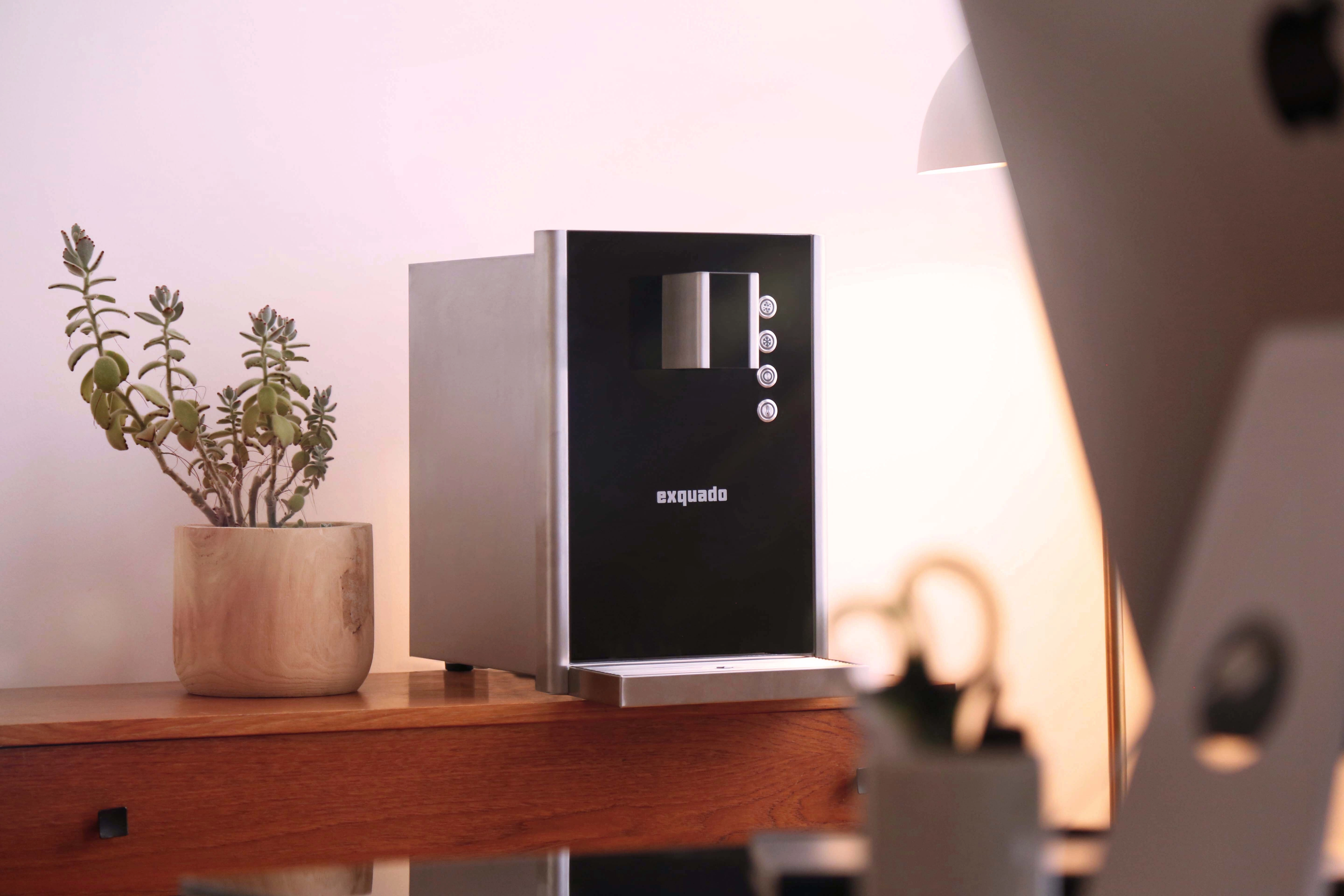
Hence the importance of planning well-integrated and welcoming coffee or water fountain areas.
Exquado offers layout solutions adapted to these break spaces, combining practicality and visual coherence.
{{MULTI_IMAGE}}
Designing spaces that stimulate without causing sensory overload
Creating differentiated zones according to use
Smart design favors spaces with differentiated sound environments:
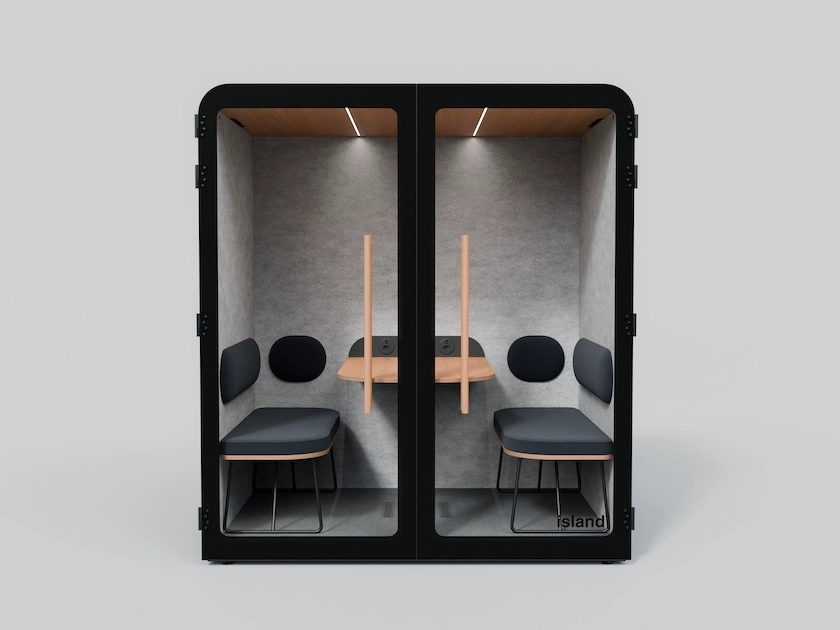
- Quiet zones: for individual concentration or calls, like the island duo or island quattro acoustic pods.
- Collaborative zones: shared tables for exchanges and meetings.
- Relaxation zones: comfortable seating and soft lighting for break times.
{{PRODUCTS_VARIANT1}}
This modularity addresses the new practices of hybrid work, by offering everyone the possibility of choosing the environment adapted to their task at the moment.
Relying on simple and sustainable solutions
Successful design relies on simple and coherent choices, not on an overabundance of equipment. It is primarily a question of relevance.
Relying on modular and easy-to-maintain furniture allows spaces to last over time. Robust materials guarantee lasting comfort and avoid frequent and costly replacements.
Furthermore, prioritizing local manufacturing and repairable products reduces the environmental impact and hidden costs associated with complex logistics. Exquado's solutions clearly illustrate this approach: durable furniture, designed to evolve with usage.
Towards a multisensory office, more human and more efficient
Designing comfortable and sensorially balanced spaces means allowing everyone to work under good conditions, simply. It is recognizing that the human is at the center of the performance equation.
The multisensory office is neither a gadget nor a passing trend, it is now a standard of the modern office, which places employee well-being and concentration first.

.webp)

.webp)

.webp)
.webp)




.png)

.webp)
.webp)












.png)


.webp)
.webp)