To remember
Noise tops the list
Noise is the top complaint from employees in open-plan offices, well ahead of a lack of privacy or visual distractions.
Effects beyond concentration
Auditory fatigue, postural tension, difficulty recovering mentally: the effects build up over time.
Solutions that work together
Acoustic zoning, a shared usage charter, modular spaces, and acoustic pods work together as complementary solutions.
Try before you invest
Acoustic pods install in around 30 minutes and come with a 100-day trial before you commit.
The main drawbacks of the open-plan office
Noise and distraction
Noise is the top complaint from employees in open-plan offices. Phone calls, conversations between colleagues, equipment noise, and ringtones create a constant sound environment that can reach the level of a busy street.
Noise interruptions fragment work and lengthen the time needed to regain deep concentration after each break. Complex intellectual tasks become hard to manage without a specific coping strategy.
Lack of privacy and stress
Having no private spaces keeps a feeling of constant exposure alive. Employees unconsciously adapt their behaviour, limit spontaneous interactions, and struggle to find a moment to decompress during the day. This underlying tension hurts both professional fulfilment and performance.
Difficulty concentrating
Complex intellectual tasks are particularly affected by this environment. Deep concentration, needed for problem-solving or writing, becomes hard to sustain over time. Employees report higher mental fatigue by the end of the day, linked to constant demands on their attention and frequent interruptions.
Good to know:
The ISO 23351-1:2020 standard rates acoustic pods from A to D based on their insulation performance. A Class A pod reduces noise by more than 30 dB: the standard for environments where concentration and privacy are critical. Every Work With Island model offers between 28.7 and 31.1 dB, depending on capacity.
The Island Solo and Island Desk are Class A certified. The Island Duo and Island Quattro are Class B certified.
Impact on employee health and wellbeing
Auditory fatigue
Prolonged exposure to a busy sound environment can cause auditory fatigue by the end of the day. Some employees report trouble falling asleep, linked to accumulated tension and the heightened alertness built up during the workday. This fatigue shows up as reduced alertness and lower cognitive performance.
The build-up of sound demands can create a persistent state of tension that doesn't always fade once you leave the office. Affected employees struggle to mentally disconnect from their work environment.
Awkward postures
A standardised workstation layout doesn't always allow for ergonomics suited to every body type. Postures held for long hours, combined with the tension caused by the sound environment, can lead to back and neck pain. This is more broadly a workstation ergonomics issue, whatever the type of space.
Burnout
A lack of control over one's work environment is a contributing risk factor for burnout. Not being able to step away to mentally recover during the day adds to employees' emotional load. Over time, this can develop into a sense of helplessness in the face of constant demands.
“The feedback from our teams was clear: noise is exhausting. They need moments to recharge, to slow down and step away. The pod lets them fully isolate themselves and enjoy a zero-distraction atmosphere.”
Jérôme Bourdon
Co-founder of WiiSmile
Solutions to ease the drawbacks of the open-plan office
Acoustic fit-out and privacy zones
Acoustic zoning organises the space into distinct zones by use: collaborative zones where conversation happens naturally, quiet zones dedicated to focus, and private spaces for calls and meetings. This separation significantly reduces noise on the main floor.
Absorbent materials on the ceiling and partitions lower the ambient noise level. Carpet, acoustic panels, absorbent false ceilings: every well-treated surface helps improve comfort across the floor.
Ground rules and usage charters
A good-practice charter makes employees mindful of their impact on the shared environment: time slots for calls, dedicated spaces for conversations, signage to indicate focus time. Rules built together with teams are better respected than those imposed from above.
Modular spaces and flexibility
Setting up modular spaces lets you adapt the environment to the day's activities. Collaborative zones for teamwork, quiet zones for focus, meeting rooms for private conversations: this flexibility meets different needs without forcing a single model on everyone.
Work With Island acoustic pods: the practical solution
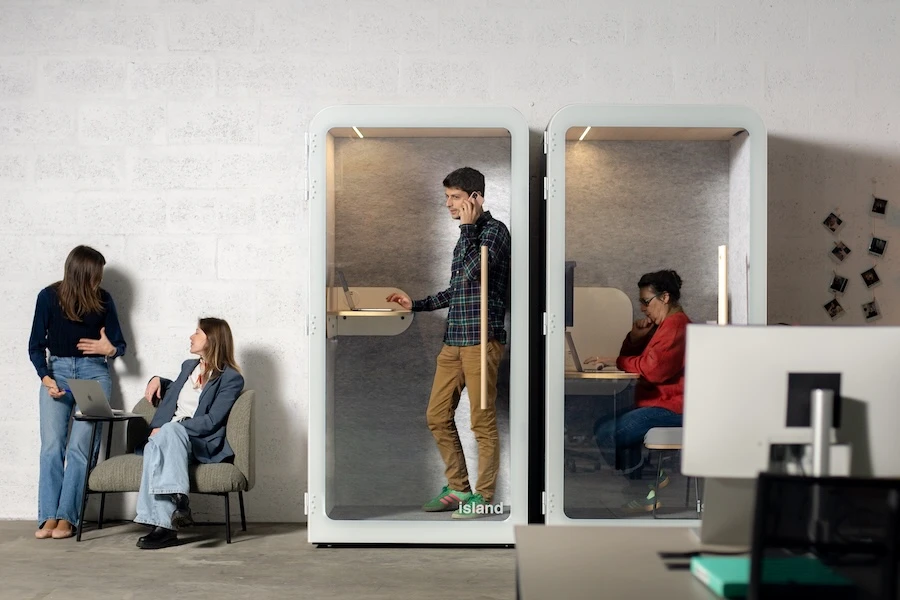
Work With Island's acoustic pods offer an effective answer for stepping away from ambient noise, taking a private call, or focusing on a complex task. Installed in around 30 minutes, with no major construction work, and movable as your needs change.
Benefits of the pods:
• Installed in around 30 minutes, with no construction work
• ISO 23351-1 Class A certification (up to 31.1 dB of attenuation on the Desk model)
• Flexibility: pods can be moved as your spaces evolve
• Made in France in the Vendée region, Origine France Garantie
• 100-day trial, money back if not satisfied
Work With Island helps you optimise your spaces
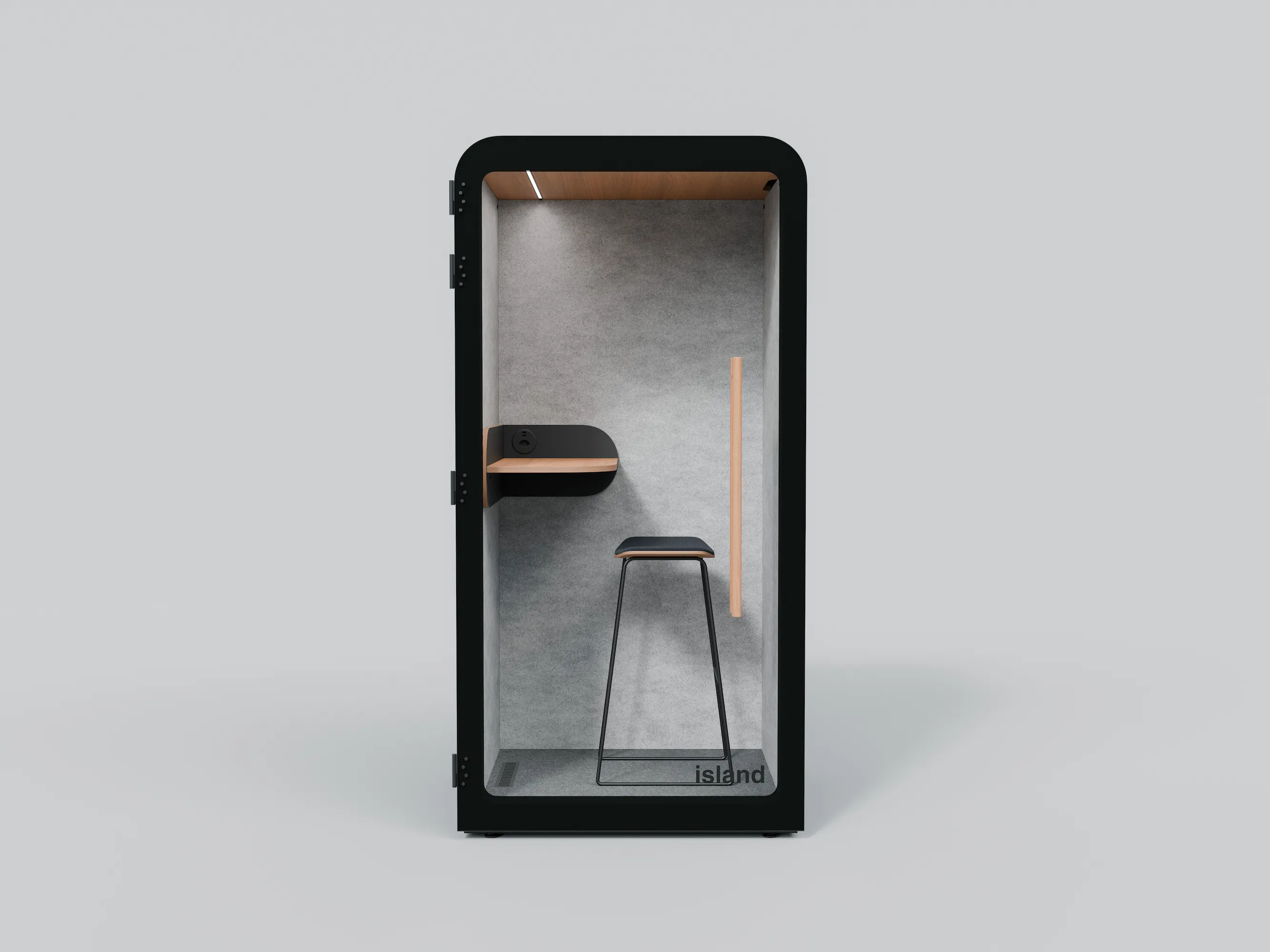
Individual, standing, from €3,990 or €68/month
For your calls and focused moments, with complete privacy.
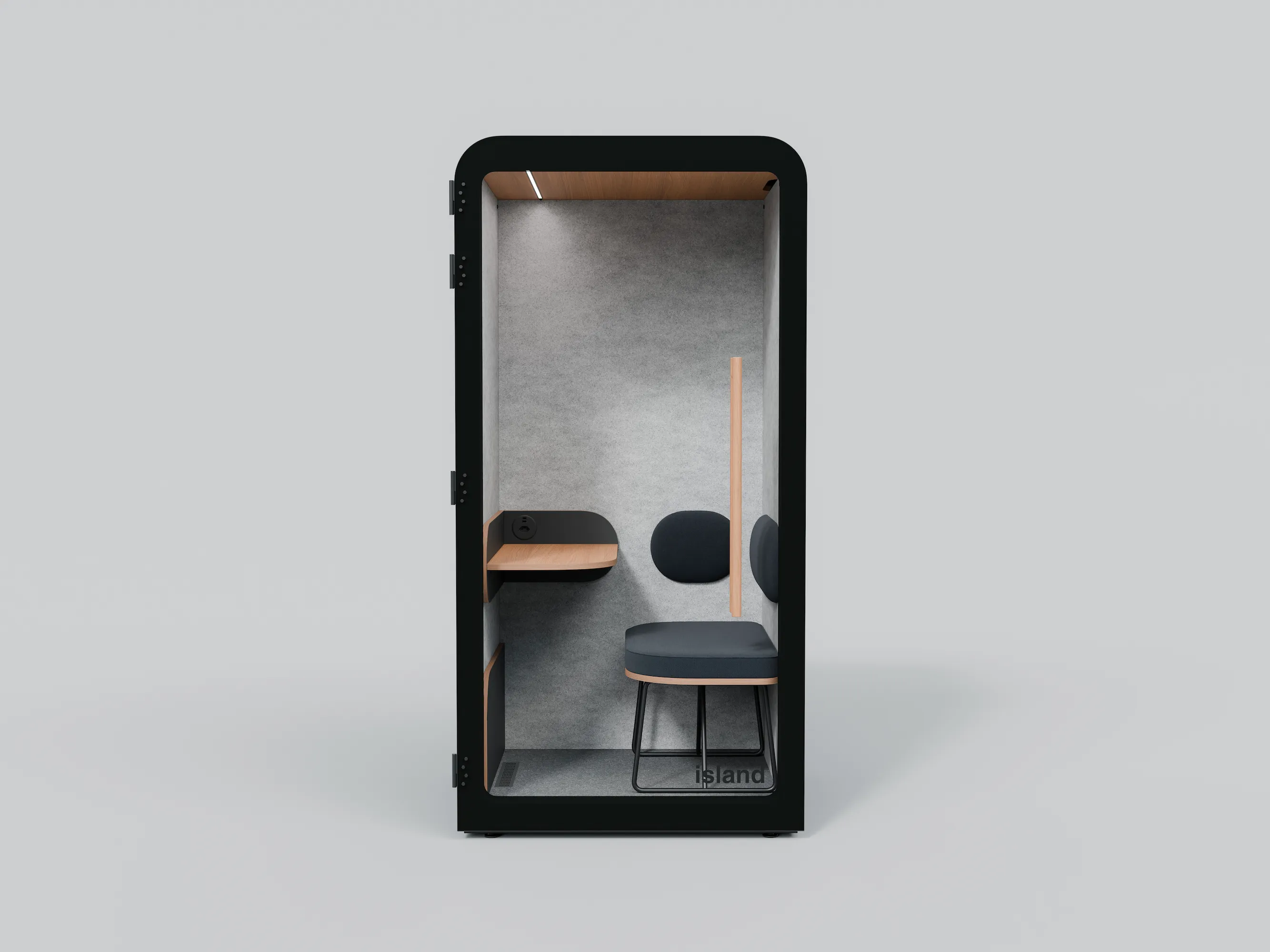
Individual, seated, from €4,790 or €80/month
Your own enclosed desk for calm, equipped, seated work.
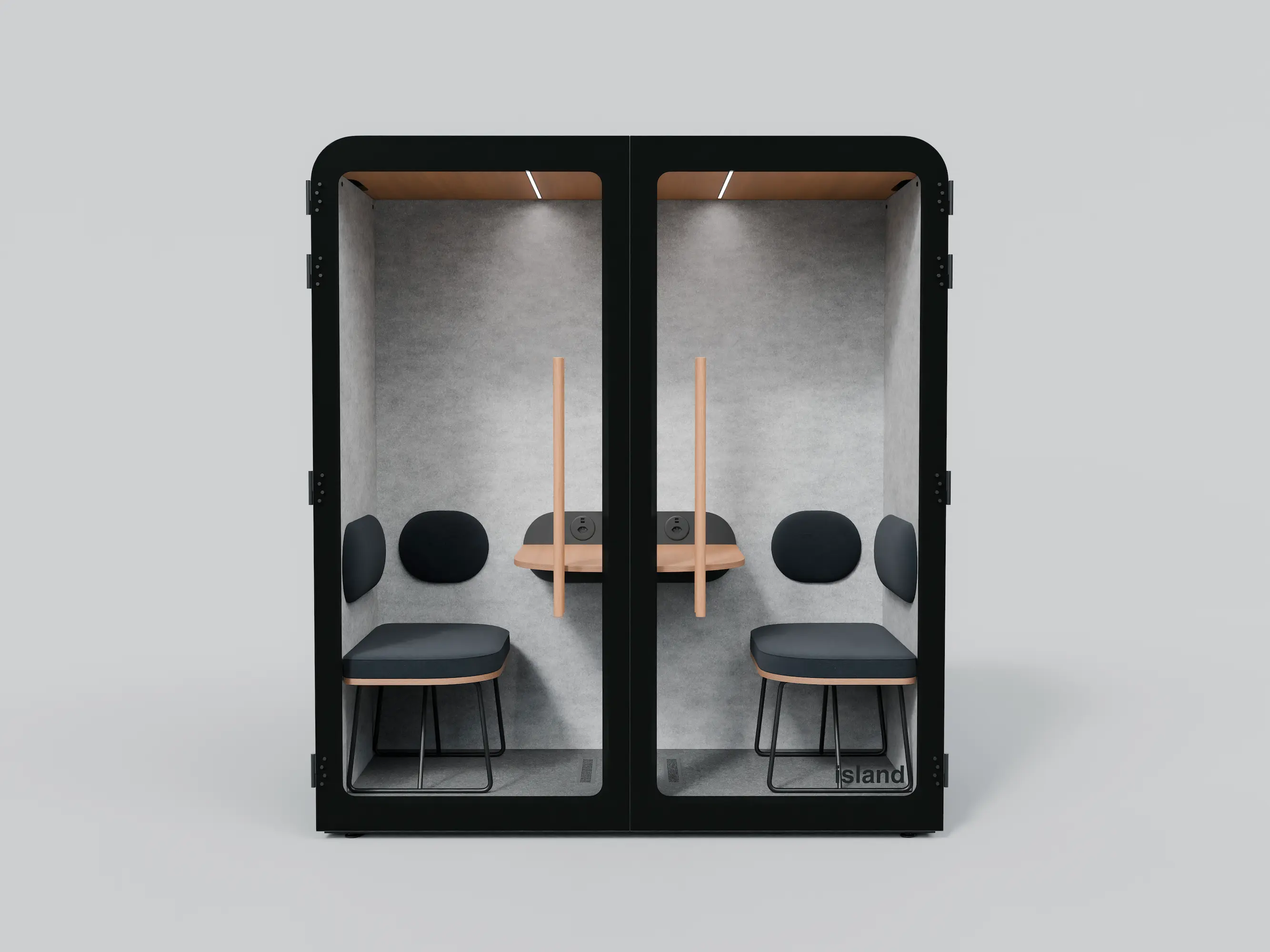
2-person meetings, from €7,990 or €135/month
The ideal space for your 2-person meetings and video calls.
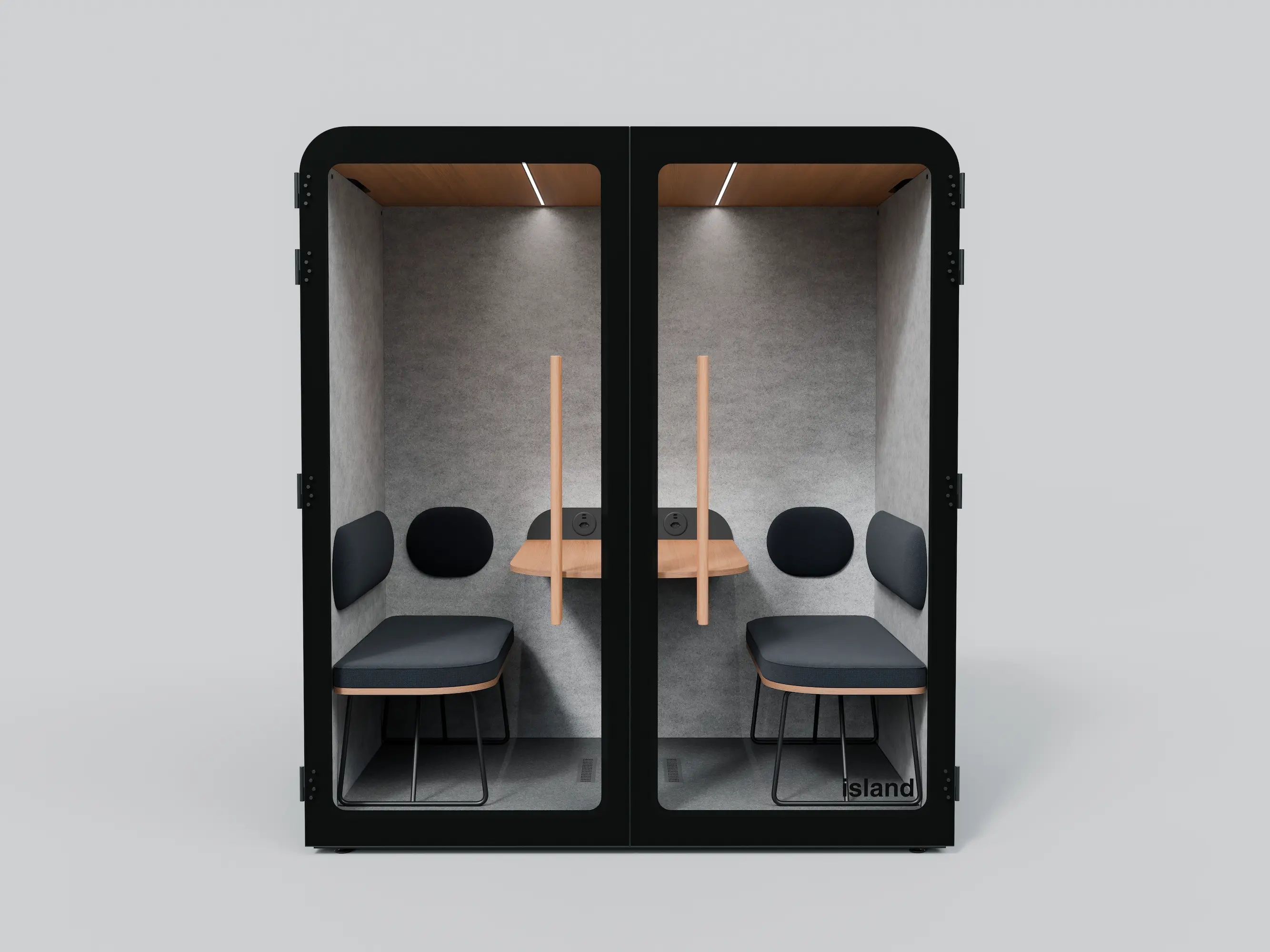
Team meetings, from €9,990 or €171/month
The compact meeting room for your small-group conversations.
The 3 major drawbacks, and their solutions
- Noise
Conversations, calls, and equipment turn the open-plan office into a constant sound environment that fragments work. Acoustic pods and zoning let you isolate sensitive tasks without breaking collaboration.
- Lack of privacy
Constant exposure creates an underlying tension that limits spontaneous interaction and weighs on wellbeing. Dedicated private spaces (for interviews, sensitive calls) restore the breathing room the day needs.
- Difficulty concentrating
Deep concentration becomes hard to sustain over time. Dedicated time slots, focus signage, and acoustic pods give employees moments of isolation without leaving the floor.
Why choose Work With Island?
Responsiveness
Free quote within 24 hours. A team available by phone to answer your questions and tailor the offer to your setup.
Simplicity
A 220V socket, around 30 minutes to assemble, zero construction work. Your pod is ready to use the same day.
Quality
French manufacturing, PEFC-certified materials, Class A ISO 23351-1 insulation. 5-year warranty.
Effectiveness
Up to 31 dB of sound reduction. Your teams get their concentration and privacy back right away.
Frequently asked questions about the drawbacks of the open-plan office
What are the main drawbacks of the open-plan office?
The most commonly reported drawbacks are noise, a lack of privacy, and difficulty concentrating. These factors can affect employee productivity and wellbeing. A well-planned acoustic fit-out and dedicated private spaces help ease them.
How do you reduce noise in an open-plan office?
Several levers combine well: installing acoustic panels, creating spaces dedicated to calls, using soundproof pods, and putting a good-practice charter in place. Acoustic zoning keeps the main floor calm while giving employees spaces suited to noisier tasks.
How do you involve employees in the process?
Hold regular information sessions, share the timeline, and ask for feedback on needs (spaces, equipment, flex office). Involving teams early on reduces resistance and helps them make the new space their own.
Is the open-plan office bad for your health?
Feedback from the field points to a few things worth watching: auditory fatigue by the end of the day, tension from a lack of privacy, and difficulty recovering mentally. A fit-out with recovery spaces like acoustic pods helps ease these effects. Prevention bodies like the INRS and ANACT publish useful resources on the topic.
How do you concentrate in an open-plan office?
A few things help: wearing noise-cancelling headphones, scheduling complex tasks for the quietest hours, visibly signalling focus time, and using spaces dedicated to individual work. Acoustic pods offer an effective temporary retreat, with up to 31.1 dB of sound reduction.
How much does it cost to install acoustic pods?
Work With Island pods start at €3,990 excluding VAT to buy, or €68/month leasing. Installation in around 30 minutes with no construction work avoids the costs of a traditional fit-out. A 100-day trial lets you confirm the solution works in real conditions.
What are the alternatives to the traditional open-plan office?
Flex office, hybrid spaces with modular zones, and adding acoustic pods are the main trends. These solutions keep the collaborative benefits of the open-plan office while giving employees focus and privacy spaces suited to different types of tasks.
.svg)
.svg)
.svg)
.svg)







.png)