.svg)
.svg)
.svg)
.svg)






Every employee aspires to work in a peaceful environment that fosters communication and well-being. That’s why optimal acoustic comfort is essential. If left unchecked, unwanted noise can negatively affect employees’ health and harm the company’s overall productivity.
Why reducing noise pollution is essential for workplace well-being
Whatever the industry, fighting noise pollution is a prerequisite for employee well-being. This involves identifying noise risks, installing high-performance soundproofing systems, and implementing solutions that support productivity. Together, these measures help transform both individual offices and shared spaces into environments where employees can work calmly and stay fully focused on their tasks.
The optimal noise level
According to international regulations, sound is measured in decibels (dB). In workplace safety standards, noise levels at or above 80 dB are considered hazardous to hearing — conditions most often found in industrial, construction, or public works settings.
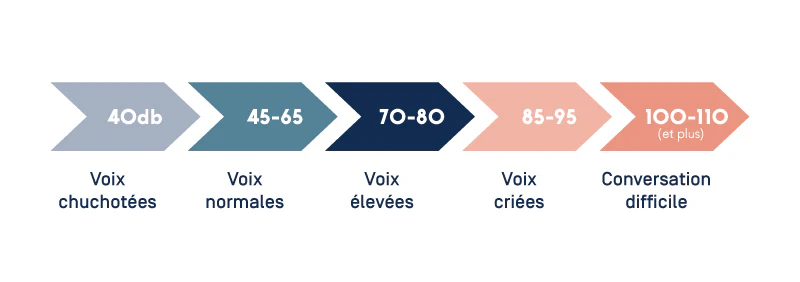
For remote work, the sound environment should never exceed 50 dB. To put this into perspective, a television emits around 70 dB, which represents its average sound level. If you work from home, this means your living room may not be the ideal place to set up your workspace.
The main sources of noise pollution
External noise:
Good thermal and acoustic insulation of walls protects against street and neighborhood sounds. These treatments can often be added during insulation work to reduce costs.
Internal noise:
Sounds coming from adjacent rooms or family members should be minimized — especially during video calls. Installing soundproof doors and encouraging household awareness can help.
Noise within the workspace:
Sounds generated inside the office, such as echoes in empty rooms, can be reduced using acoustic panels, curtains, or absorbent carpets.
Effective solutions for office soundproofing
A well-insulated workspace should combine solutions for ceilings, walls, and floors:
- Walls and ceilings: Acoustic panels, baffles, and stretched fabrics effectively absorb and reduce sound propagation.
- Acoustic partitions: Available in movable, glass, or solid versions, partitions help define areas while reducing ambient noise.
- Floors: Dense carpeting can reduce impact and footstep noise by 20 to 40 dB, offering extra acoustic comfort.
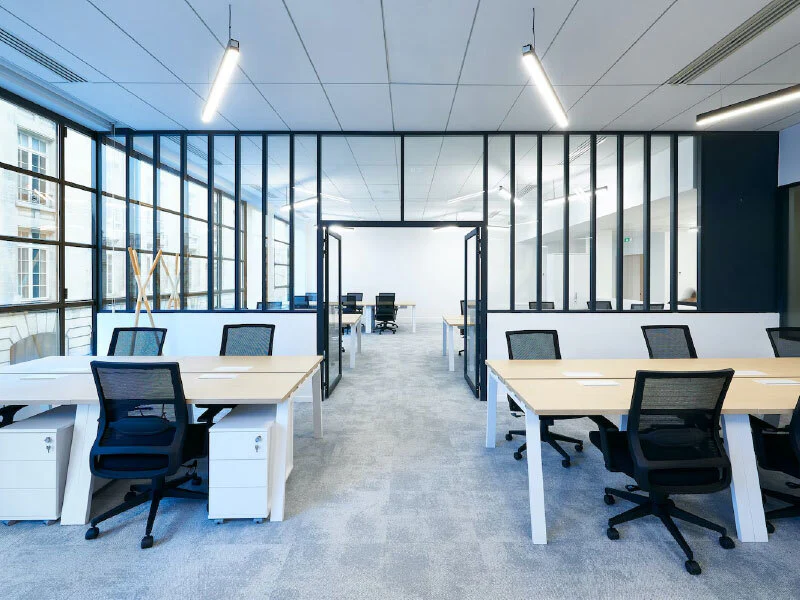
Improving acoustic comfort by soundproofing walls
To enhance acoustic comfort, an acoustics specialist can soundproof specific surfaces — such as floors, ceilings, and walls — identified as too noisy.
Possible solutions include decorative wall panels, which absorb sound while adding aesthetic appeal; acoustic partitions, which create private spaces conducive to focus; and desk dividers, which subtly improve sound isolation between workstations.
These measures contribute to employee well-being by enhancing focus, motivation, and overall productivity.
{{CTA_DEFAULT}}
How to effectively reduce noise pollution
Limit airborne noise transmission
To reduce ambient noise, installing acoustic ceiling panels is essential. These elements dampen sound while combining durability, design, and performance. Wall-mounted panels also play a key role by absorbing noise and reducing sound reflection, ensuring optimal acoustic correction throughout the workspace.
Optimize office layout
A strategic office layout helps minimize noise exposure. Placing workstations away from high-traffic areas — such as entrances or corridors — reduces disruptions during working hours. Meeting rooms should also be carefully insulated to limit both external and internal noise transmission, allowing discussions without disturbing nearby employees.
Create quiet zones and organize teams strategically
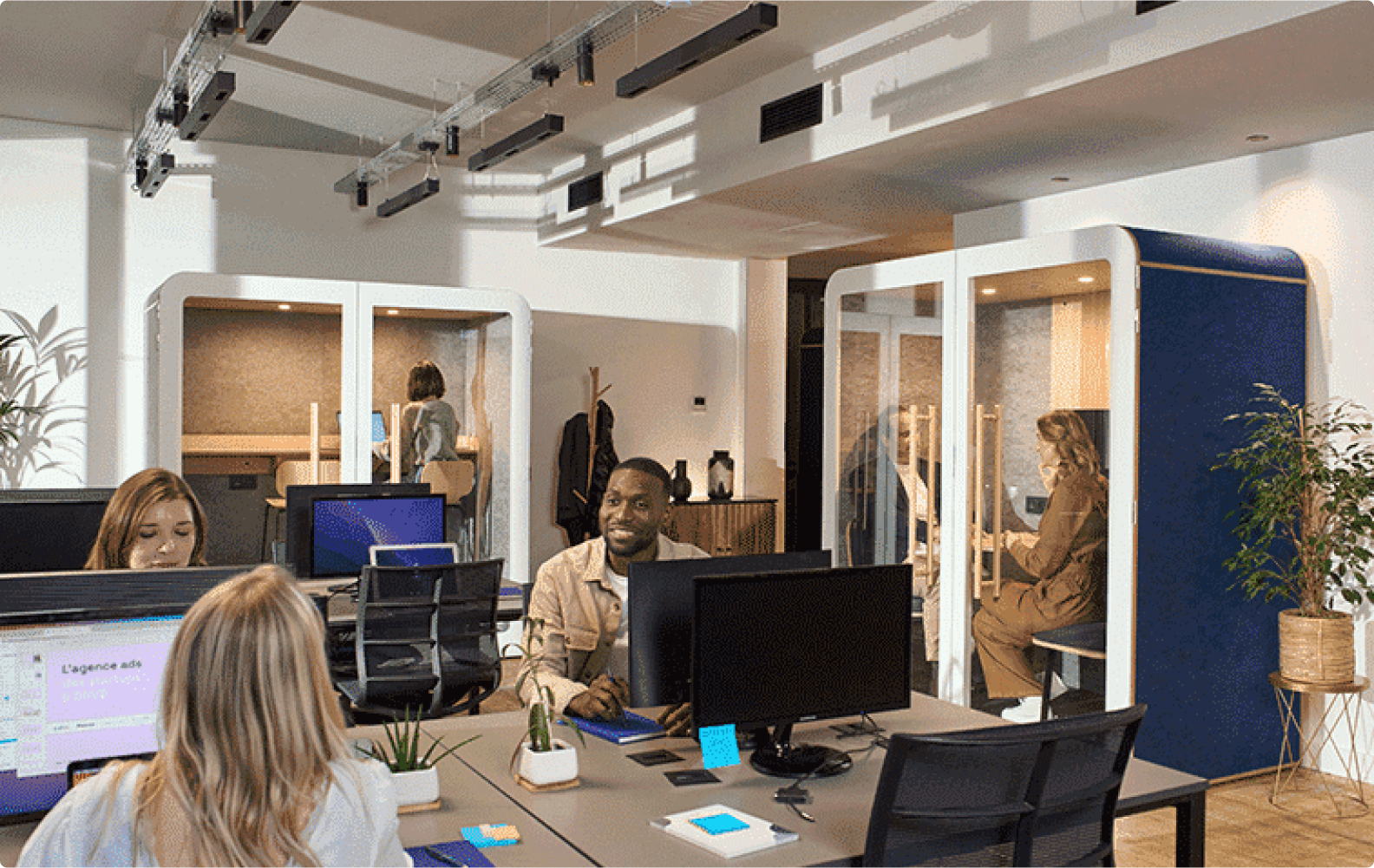
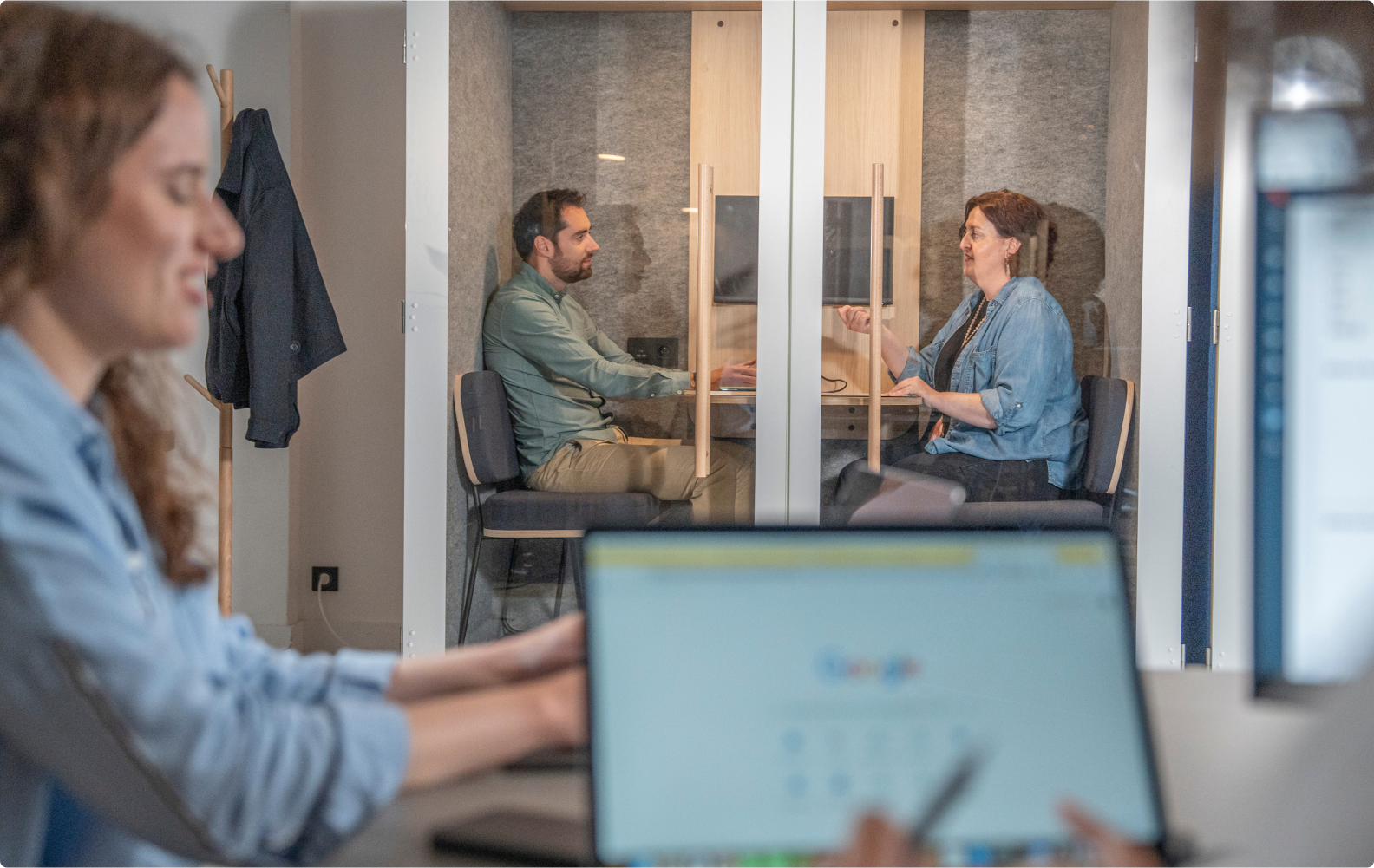
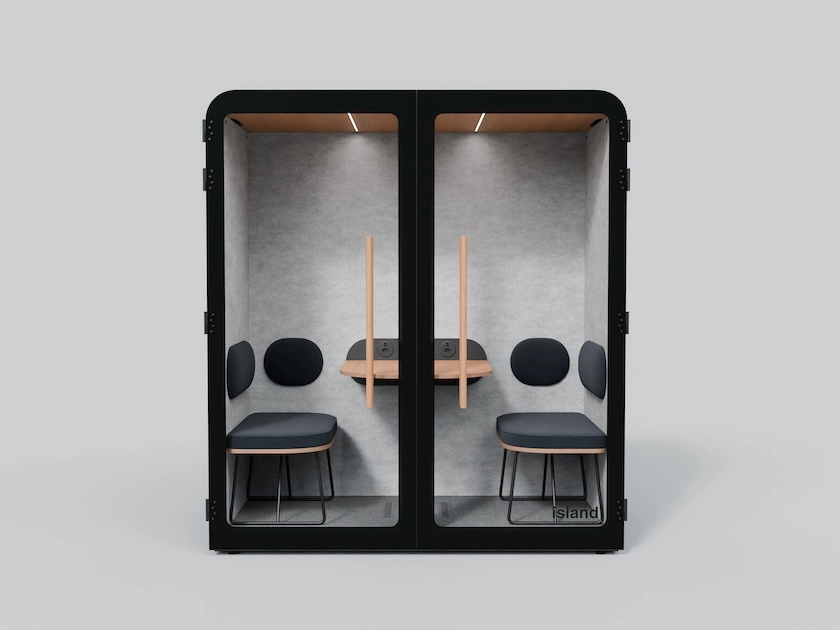
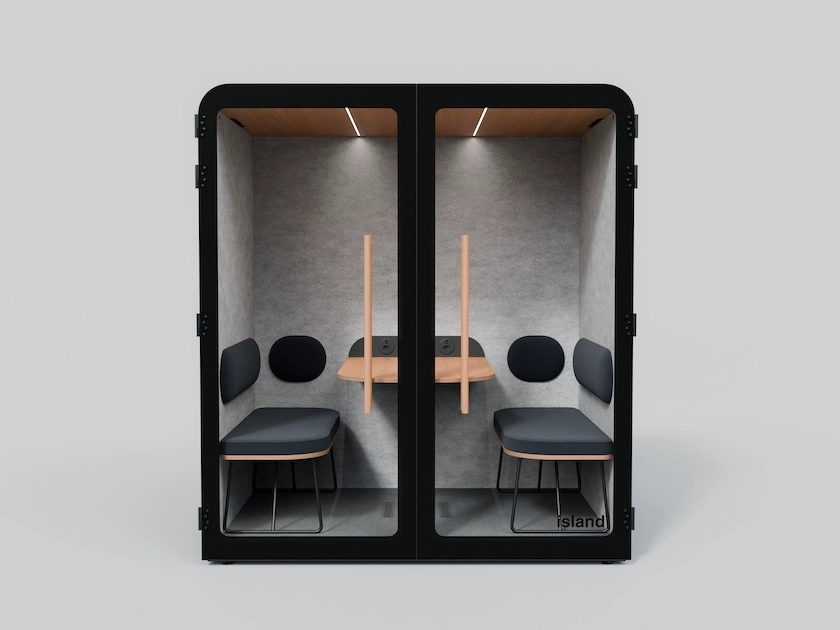
To ensure an environment conducive to concentration, soundproof booths or pods can be installed. These eliminate vibrations and background noise, providing employees with optimized focus spaces.
Meanwhile, teams with frequent conversations — such as sales or management — should be located in more isolated areas. Using acoustic partitions between zones helps reduce unwanted noise and maintain calm.
Use the right materials and equipment
Materials such as acoustic foam or mineral wool (rock or glass) — selected after professional analysis — are highly effective in reinforcing insulation. In some cases, noise-cancelling headsets can also help employees stay focused and protected from ambient noise.
When implemented thoughtfully, these measures create a sound environment adapted to both productivity and well-being.
In Conclusion
Providing a peaceful, acoustically optimized workspace is not a luxury — it’s a necessity for protecting health, well-being, and productivity.
Adopting effective acoustic solutions, such as soundproof booths or other insulating devices, significantly reduces noise pollution and fosters an environment conducive to concentration and collaboration.
By investing in the right acoustic strategy, you not only improve your employees’ comfort but also enhance the overall performance and harmony of your organization.

.png)




.webp)