Choose shipping location in order to see the correct pricing, delivery times and shipping costs. Prices of items may vary based on your shipping destination to reflect local market pricing and taxes.
Choose shipping location in order to see the correct pricing, delivery times and shipping costs. Prices of items may vary based on your shipping destination to reflect local market pricing and taxes.
Flex Office: A Complete Guide to Flexible Workspaces
Flex office is an innovative approach that radically changes how work gets organised. It reshapes the traditional office by removing assigned workstations. Employees book their space based on their needs each day. This flexibility makes better use of floor space and fits the new hybrid ways of working.
This complete guide walks you through understanding and rolling out flex office. You'll discover the concrete steps, the challenges to plan for, and the solutions that make a transformation succeed.
A way of working where no desk is assigned: each employee chooses their space based on the task at hand, from among specialised zones.
Measuring the benefits
Property savings, greater autonomy, employer appeal, quality of working life: flex office changes the picture on several fronts.
Planning for the human challenges
Loss of bearings, a weaker sense of belonging, change management: these human frictions are eased with support and clear rules.
Making the rollout work
Diagnosis, modular furniture, acoustic pods, booking tools, management by objectives: success depends on several factors together.
What is flex office?
Definition and core principle
Flex office refers to a way of working where employees have no assigned desk. They book their workspace based on their needs and activities for the day. This approach reshapes traditional office occupation by prioritising flexibility and making the best use of space.
The principle rests on a calculated ratio between the number of employees and the workstations available. For example, a company of 100 employees can work effectively with 70 workstations. This is based on analysing actual presence rates and hybrid working patterns.
Flex office relies on booking spaces through digital tools. Employees plan their day by choosing the type of space that suits their tasks. This flexibility lets the working environment adapt to the specific needs of each activity.
The ISO 23351-1 standard governs flexible workspaces by setting out privacy and acoustic criteria. This certification guarantees the quality of a fit-out and how well it meets users' needs.
Flex office takes several forms depending on the company's goals:
Hot desking
No assigned workstation, each employee chooses their desk on a daily basis.
Desk sharing
Desks are shared between different teams, who use a schedule to organise themselves day to day.
Dedicated spaces
Each type of activity has a dedicated space.
Activity Based Working is the most developed approach to flex office. It offers zones dedicated to specific activities: focus spaces for individual work, collaborative zones for team meetings, and relaxation spaces for informal breaks.
This flex office approach makes the best use of floor space by creating specialised environments. Each zone meets a specific need, with its own layout and equipment.
The advantages of flex office for your company
Cost and space optimisation
Flex office generates substantial savings on property costs. Companies achieve significant savings by optimising how their floor space is used. This comes down to a better occupancy rate that eliminates under-used spaces.
Optimising space means you can reduce the total floor area needed, or fit more employees into the same premises. This is particularly valuable in urban areas, where property is a major cost.
The advantages of flex office also include better handling of activity peaks. Spaces adapt to changes in presence based on periods, projects or events, avoiding oversized investments.
Occupancy data analysis shows that a significant share of traditional desks sit empty every day. Flex office turns that inefficiency into an opportunity to optimise both budget and space.
Better employee wellbeing
Quality of working life improves thanks to the range of spaces on offer. Employees choose their environment based on their tasks and mindset. This autonomy strengthens their satisfaction and engagement.
Flex office meets newer generations' expectations around flexibility. It fits naturally into hybrid working policies by offering spaces suited to different patterns of presence.
Customer feedback confirms that noise is tiring and wears people down, and that employees need moments to recharge, settle and get some space.
This variety of work environments supports creativity and productivity. Focus spaces allow for deep work, while collaborative zones spark innovation and conversation.
Advantage
Savings
Flexibility
Productivity
Talent attraction
Benefit
Significant cost reduction
Choice of environment
Spaces suited to tasks
Modern image
Impact
Budget optimisation
Employee satisfaction
Enhanced performance
Easier recruitment
The disadvantages and challenges of flex office
Moving to flex office comes with real challenges that need a structured approach. Resistance to change is the main obstacle in workspace transformations.
Loss of bearings and belonging
The absence of a personal desk can be unsettling for some employees. This loss of bearings particularly affects those attached to their personal space and their established work habits.
Difficulty settling in shows up as a temporary dip in productivity. Employees need to build new routines and adapt to environments that change daily.
Resistance to change affects a significant share of transitions to flex office. This pushback often comes from insufficient communication or inadequate support for teams.
Technological and organisational challenges
Setting up an effective booking system is a major technical undertaking. Digital tools need to be intuitive and reliable to avoid daily frustration.
Mobile equipment becomes essential in a flex office environment. Employees need laptops, headsets and accessories that let them work effectively from any desk.
Training teams and managers is a necessary investment. Managers need to adapt their leadership style and build new skills to guide distributed teams.
Here are the 5 main challenges to plan for:
• Employee resistance to change
• Complexity of booking systems
• Adapting management to a distributed environment
The success of a flex office project rests on a thorough analysis of current usage. This prior study identifies working patterns, specific needs and the company's organisational constraints.
An audit of usage reveals presence habits, types of activity and interactions between teams. This data shapes the design of spaces and the sizing of each zone.
Involving employees from the design phase guarantees buy-in for the project. Usage-analysis questionnaires gather expectations and identify points to watch.
A typical questionnaire explores several dimensions: how often people are in the office, types of activity, privacy needs, environment preferences and technical constraints. This information guides fit-out choices.
Our proven methodology, tested across many companies, shows how important this preparation phase is. The most successful projects invest real time in analysis and preparation.
Fitting out spaces and equipment
A flex office fit-out organises space into three main zones: focus, collaboration and social. This split meets different activity needs throughout the day.
The recommended ratio plans for 70% individual workstations and 30% collective spaces. This proportion adjusts by sector and company culture. Workspaces should offer a range of suitable environments.
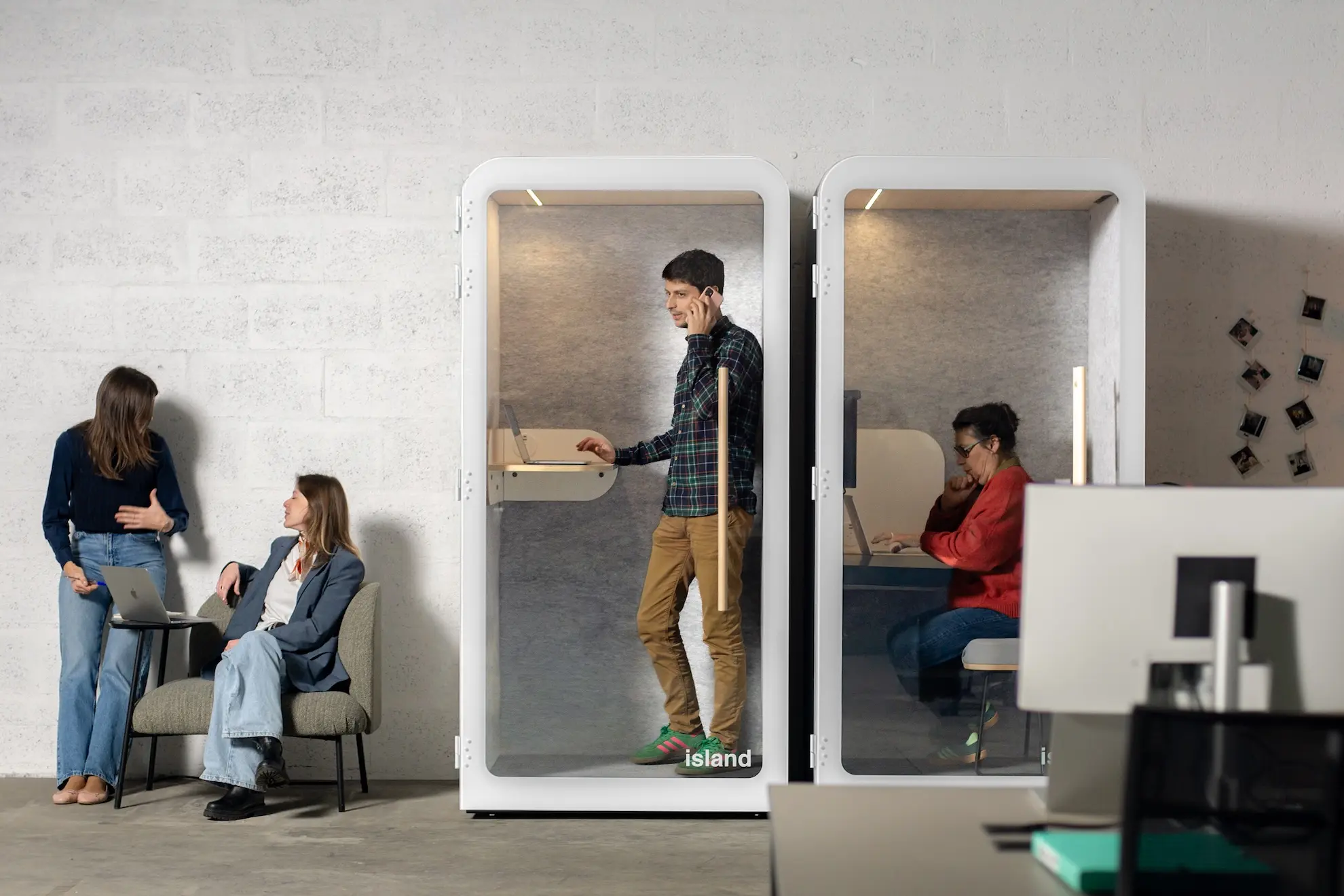
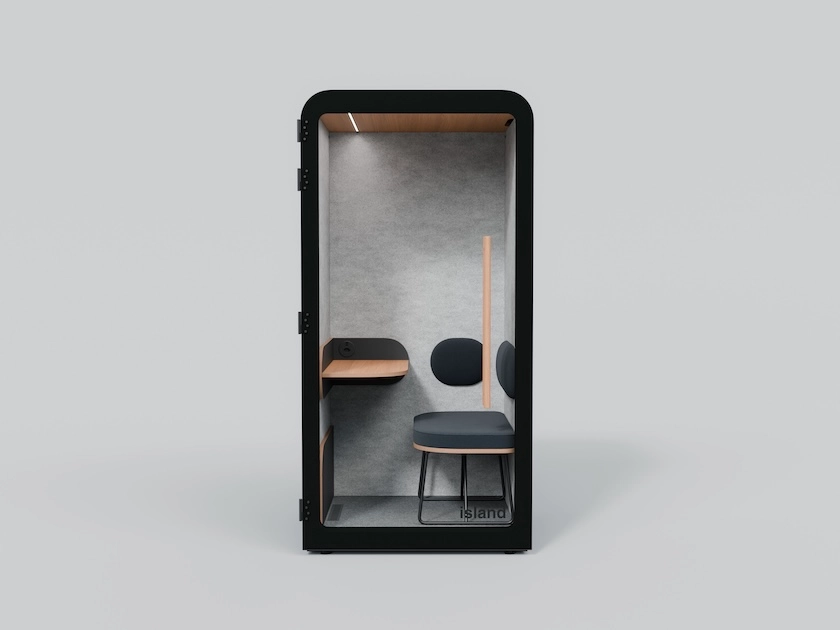
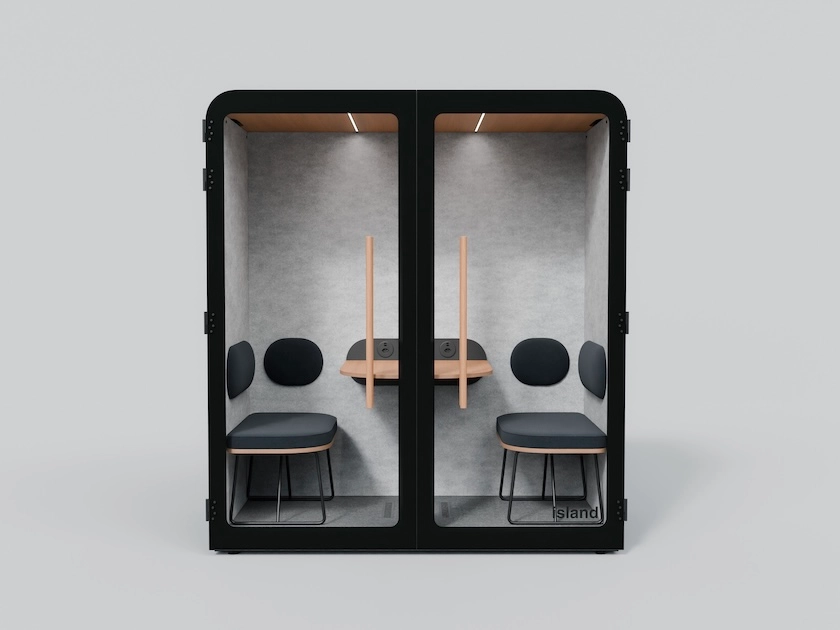
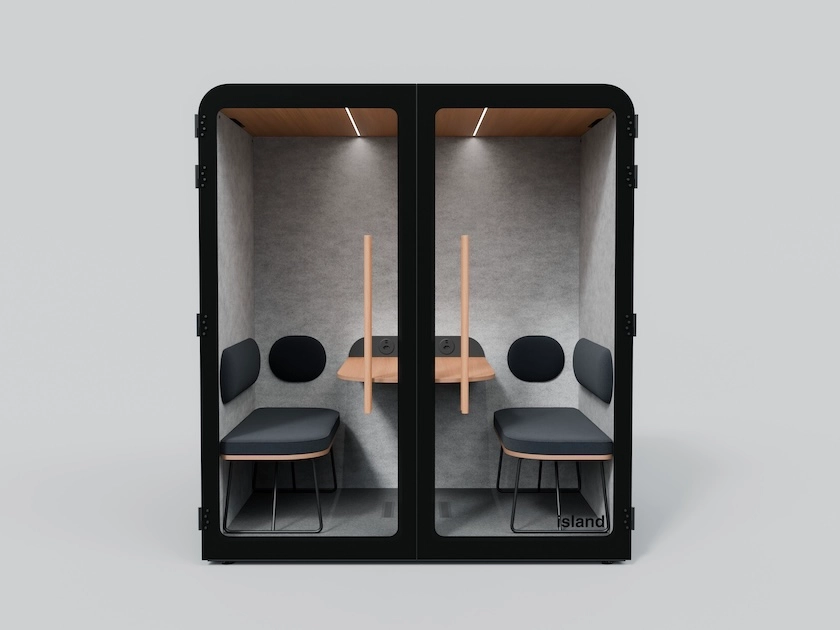
Acoustic solutions play a crucial role in a successful flex office. Acoustic pods allow people to isolate themselves for calls and video calls without disturbing the open environment. For tighter budgets, refurbished pods are available with a manufacturer warranty through the "Work With Me Again" programme.
Team work zones need advanced technology equipment: shared screens, video conferencing systems and stronger connectivity. These tools make collaboration easier and keep productivity up.
10-step implementation checklist:
Audit of current usage
Definition of objectives
Space design
Equipment selection
Choice of booking tools
Team training
Change communication
Pilot on a test zone
Adjustments and optimisations
Full deployment
Fitting out your office has never been so simple.
Our pods are available on a lease from 24 months up to 60 months.
Acoustic pods are the key ingredient of a successful flex office. These spaces provide the privacy needed for phone calls, video conferences and tasks that need maximum focus.
Quiet rooms offer a silent environment for deep work. These individual spaces meet the need for calm in an open environment that could otherwise be distracting.
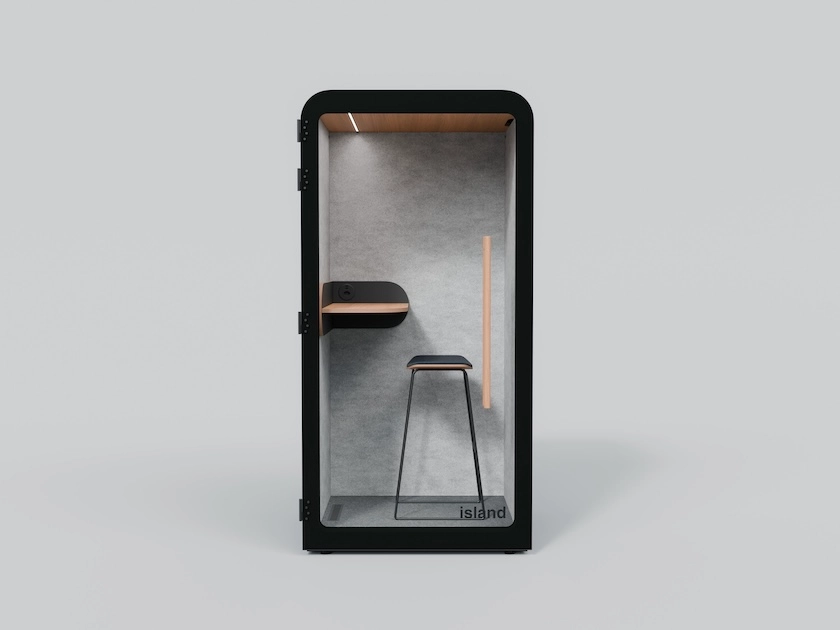
The concrete example of one-person pods shows why this matters: they handle professional calls without disturbing nearby colleagues. This solution protects privacy while keeping the open space running smoothly.
Individual workstations round out these private spaces. They offer a semi-enclosed environment for tasks that need a moderate level of focus.
Collaborative and meeting zones
Modular meeting rooms adapt to different meeting formats. These flexible spaces suit both formal meetings and creative brainstorming sessions.
Informal collaborative spaces encourage spontaneous conversation. These relaxed zones spark creativity and strengthen team cohesion through natural interaction.
Built-in technology equipment supports collaborative work: touch screens, screen-sharing systems and video conferencing tools. This connectivity keeps conversations running smoothly.
The ISO 23351-1 standard guarantees privacy in meeting spaces. This certification ensures the acoustic isolation needed for sensitive conversations and confidential interviews.
Flex office and management: adapting your leadership style
Shifting to management by objectives
Flex office fundamentally transforms the managerial approach by prioritising results over physical presence. This shift calls for stronger trust between managers and employees.
Autonomy becomes the cornerstone of management in a flexible environment. Teams gain more responsibility and build their capacity to self-organise. This freedom drives engagement and performance.
Setting up the right performance indicators replaces traditional visual oversight. These metrics make evaluation more objective and guide support towards achieving goals.
Team structure shifts towards more cross-functional work. Projects bring together different skills, in space configurations suited to specific needs.
Communication and team cohesion
Digital tools become essential for keeping teams connected in a distributed environment. Collaborative platforms make conversations easier and preserve team spirit.
Team rituals matter more in a flex office. These moments of coming together strengthen bonds and maintain company culture.
Social spaces support informal interaction. These relaxed zones make up for the loss of physical proximity and encourage spontaneous conversation.
Customer feedback highlights Work With Island's ability to respond quickly, from the sales process through to logistics, to install pods smoothly and simply.
Good management practices:
• Set clear, measurable objectives
• Schedule regular check-ins with teams
• Use collaborative tools effectively
• Maintain team-building rituals
“We chose Work With Island booths because they offer excellent value for money. The team was flexible, agile and very responsive during both delivery and installation.”
Cyrille Picard
Technical Manager at Siemens
Technology and tools for optimising your flex office
Booking and space management systems
Mobile booking apps are the technological backbone of flex office. These tools allow real-time space planning and make the best use of available floor space.
Smart scheduling analyses usage patterns to offer personalised recommendations. These algorithms improve the user experience and maximise how efficiently spaces are used.
Occupancy analytics provide valuable data for ongoing optimisation. These indicators reveal under-used zones and guide layout adjustments.
Better booking tools significantly cut down the time spent looking for a desk. That efficiency frees up productive time and improves employee satisfaction.
Acoustic solutions and equipment
Sound insulation is a major challenge in flexible open spaces. Acoustic solutions protect focus and keep conversations private.
Built-in ventilation keeps enclosed spaces comfortable. These systems maintain good air quality inside pods and focus spaces.
Advanced connectivity equips every space: power sockets, ports and charging stations. This technical infrastructure keeps mobile work running smoothly.
B Corp and Origine France Garantie certified equipment meets quality and environmental responsibility requirements. These labels give reassurance about the durability of your investment.
Recommended technologies:
• An intuitive booking platform
• Real-time occupancy sensors
• Certified acoustic solutions
• A complete connectivity infrastructure
Good to know:
Work With Island pods are made in France, in Vendée, and Origine France Garantie certified. The company has been B Corp certified since 2025. On the product side: a 5-year manufacturer warranty, Class A ISO 23351-1 certification (for the Solo and Desk), and a 100-day trial with a full refund if you're not satisfied. Triple reassurance for a long-term investment.
Your flex office roadmap in 8 points:
Define flex office A way of working with no assigned desks: each employee chooses their workspace based on what they're doing, from among several dedicated zones.
Choose the right variant Full flex, partial flex, hybrid: the ratio of desks to employees and the share of remote working shape which format suits your culture best.
Quantify the savings Shared furniture, less floor space needed, lower overheads: savings can be measured from the first year after the transition.
Improve wellbeing Choice of environment, autonomy, work-life balance: flex office meets newer generations' expectations around quality of working life.
Plan for the human friction Losing a personal desk, managing belongings, sense of belonging: plan for change support and clear shared rules.
Set up booking and management tools A space-booking app, individual lockers, clear signage: technology tools smooth out the day-to-day.
Adapt your management style Shifting to management by objectives and results, stronger communication, regular check-ins: the manager becomes the one who keeps a remote team connected.
Work With Island supports your transition
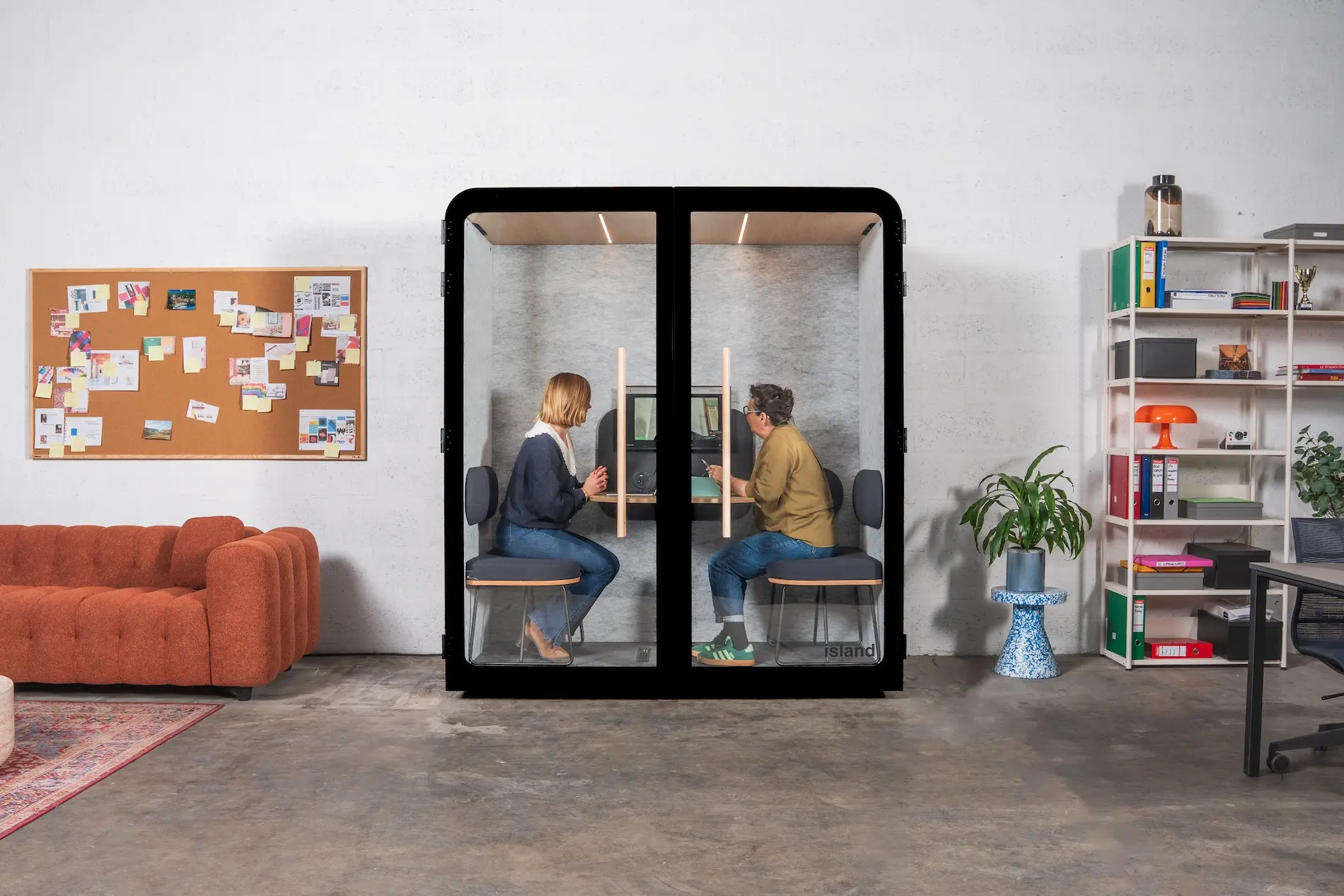
Work With Island offers a complete range of certified acoustic pods to optimise your flexible workspaces. Our Island SOLO, DESK, DUO and QUATTRO solutions fit perfectly into a flex office approach by creating the private, focused zones you need.
Certified French expertise: our 2025 B Corp certification and the Origine France Garantie label reflect our commitment to quality and to local, responsible manufacturing.
Proven experience: more than 4,000 clients trust us. From startups to major groups like Decathlon, LVMH and L'Oréal, we support every kind of transformation project.
Flexible solutions: installation takes around 30 minutes, with no heavy building work. Our 100-day trial with a full refund if you're not satisfied protects your investment. Leasing options from €68/month make it easy to equip your offices gradually.
Thinking about a move to flex office?
Contact Work With Island to discover how our acoustic pods can optimise your workspaces. Request your personalised quote and benefit from our proven expertise.
Fill in this form and receive our product guide by email. A clear, complete PDF with models, dimensions, options and pricing.
To understand, compare and move forward without wasting time.
FAQ on flex office
What is flex office?
Flex office is a way of working where employees have no assigned desk. They book their space based on their needs and activities for the day. This approach makes better use of floor space and gives teams more flexibility.
What are the advantages of flex office?
The main advantages include a significant reduction in property costs, better use of space, and greater flexibility for employees. Flex office encourages conversation between teams and lets spaces adapt to different activities.
What are the disadvantages of flex office?
The main difficulties concern the loss of personal bearings and resistance to change. Some employees may feel a weaker sense of belonging. Rolling it out requires investment in technology and training.
How do you roll out flex office?
Success depends on a prior analysis of usage and involving employees from the design stage. Plan for different types of spaces and invest in booking tools. Change support and manager training are essential. Refurbished pods are available for tighter budgets.
What's the difference between flex office and desk sharing?
Desk sharing simply means sharing identical workstations between several people. Flex office goes further by offering different types of spaces suited to activities. It's part of a broader rethink of work organisation and usage.
Is flex office suited to every company?
Flex office particularly suits companies with remote working, mobile teams or varied activities. It's less suited to roles that need specific equipment. A prior analysis helps determine feasibility and the adjustments needed.