.svg)
.svg)
.svg)
.svg)





Open office or closed office: the right compromise?
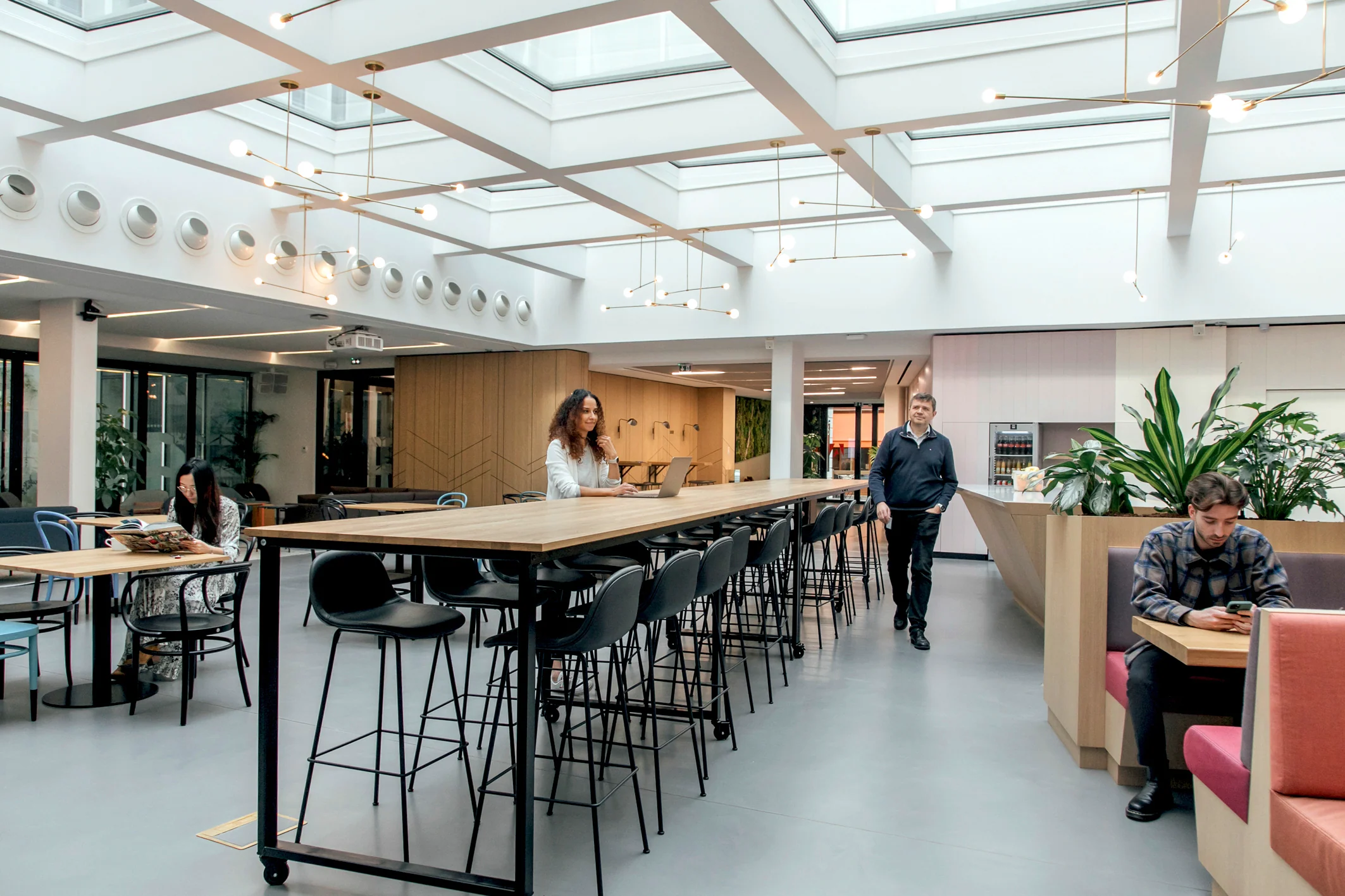
The modern workplace is undergoing a major transformation, with the introduction of a new alternative to the closed office: the open office, or open space. Although they are very different, these two solutions have advantages and disadvantages that must be taken into account to determine which is best for your business. Here is some information to help you find it better.
The emergence of open offices, or open spaces
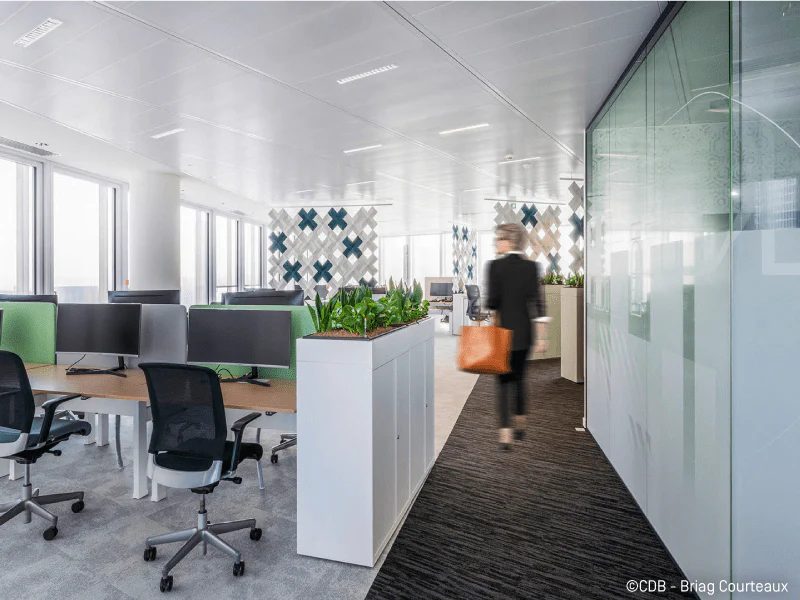
Open offices, or open spaces, have become increasingly popular in companies over the past few years, as more and more employers realize the immense benefits they can offer. Not only is the open office cost effective and makes efficient use of available space, it also has the potential to dramatically improve employee morale, productivity and collaboration.
Open or closed offices: pros and cons
Traditionally, the standard model was closed offices, where two or three employees share an enclosed space. The rise of open-plan offices has disrupted this model and our work habits.
So, which layout is best suited to your company and its goals?
Here’s an overview of the advantages and disadvantages of each type of layout.
Advantages of open offices
- Encourages collaboration: The absence of partitions makes direct communication easier, allowing team members to share ideas and information more quickly.
- Boosts creativity and innovation: Open spaces give employees the freedom to move around, encouraging brainstorming and spontaneous interaction.
- Cost-effective: Open-plan offices make better use of available space, which can help reduce costs related to office area requirements.
Limitations and challenges of open offices
- Lack of privacy: Without walls, it’s difficult to maintain confidentiality and protect private conversations or sensitive work.
- Increased noise: Open spaces are often noisy, which can lead to distractions and reduced focus and productivity.
- No physical boundaries: Without clear separations, employees may feel their personal space is invaded, leading to discomfort and lower efficiency.
- Feeling exposed: The lack of privacy can create a sense of insecurity for some team members, making the workspace less comfortable and productive.
{{MULTI_IMAGE}}
Advantages of closed offices
- Privacy: The most obvious advantage of closed offices is that they offer more privacy to their occupants. Conversations and phone calls can take place without being distracted by other conversations and noises in the office.
- Adaptability: Closed offices also offer better control to occupants. They can control the temperature, lighting and layout of their space to make their work more comfortable.
- Calm: in a closed office, the noise is limited to that of one, two or three people at most, which makes it possible to work in calm and silence, and is essential for some people.
Disadvantages of closed offices
- Risk of isolation: Fewer spontaneous interactions can lead to feelings of loneliness and disengagement, which may affect motivation.
- Reduced communication: The lack of informal exchanges makes it harder to share ideas and information among colleagues.
- Potential increase in stress: Team separation can limit opportunities for collaboration, mutual support, and creativity, reducing collective problem-solving and potentially increasing stress.
.webp)
The ideal compromise: open offices with acoustic pods
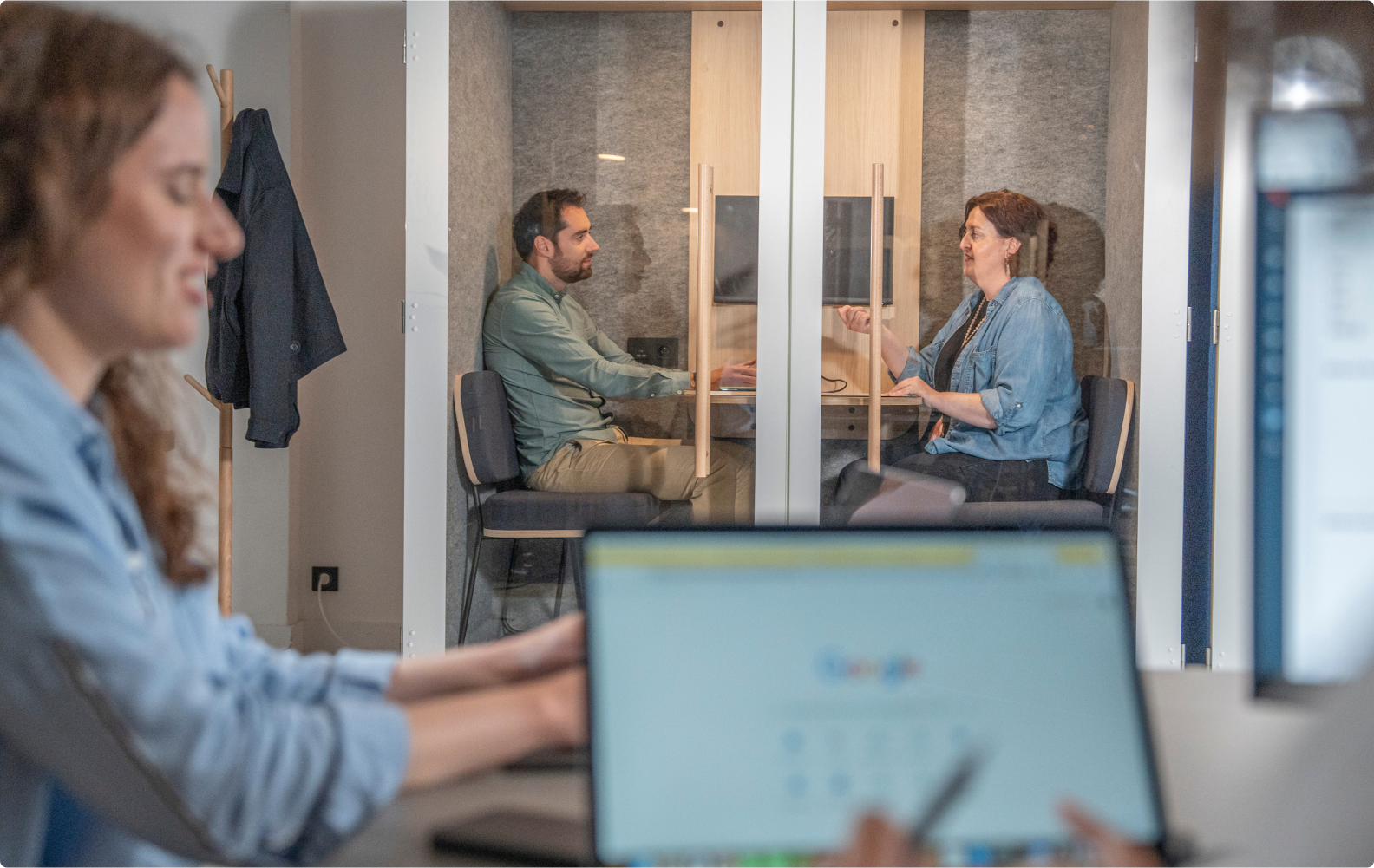
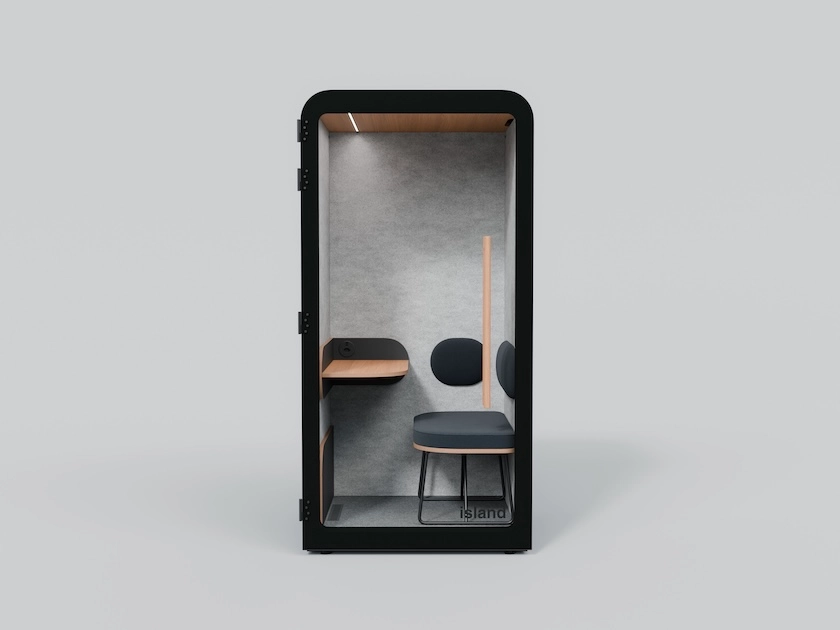
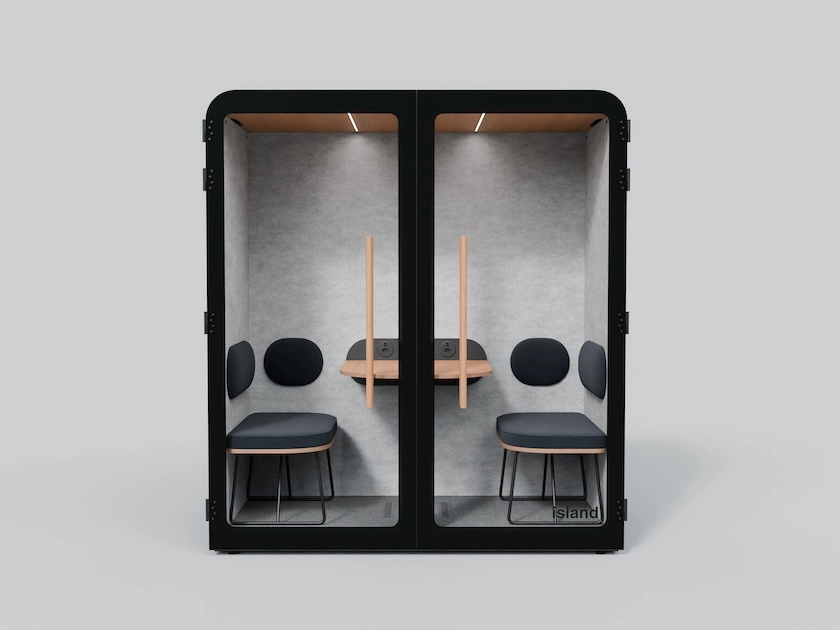
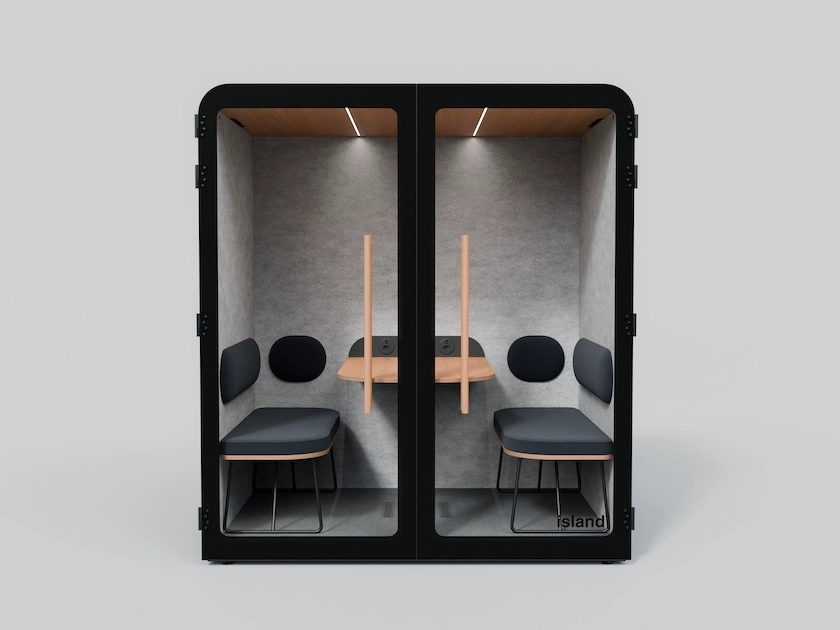
Soundproof booths provide a private, distraction-free workspace perfect for taking calls, conducting interviews, and working on projects without interruption. They create a sound barrier between the cubicle and the rest of the office, reducing background noise and allowing workers to concentrate on their tasks.
{{CTA_DEFAULT}}
Work in peace with Work With Island acoustic pods
Soundproof booths also help to create a sense of privacy and security, allowing employees to feel more comfortable and relaxed but also to be able to enjoy a moment of calm when working on a more complex project or that they feel the need to isolate themselves for a while.

.png)





.webp)