To remember
Frame the project
Set a shared vision led by leadership, with measurable objectives beyond just cutting floor space.
Bring teams on board
Involve employees from the design stage through workshops, surveys and a network of ambassadors.
Trial it for a few months
Run a 3 to 6 month pilot with a volunteer team before rolling it out more widely.
Adjust your organisation
Steer with regular surveys and quick iterations rather than imposing a fixed plan.
1. Frame the vision and expected benefits
The transition starts with a shared vision. Lower real estate costs, better collaboration, more organisational flexibility: the objectives vary depending on each company's context. A flex office project driven purely by cutting floor space meets more resistance than one that also factors in qualitative gains for employees.
Senior leadership needs to visibly back the project. Without this visible commitment at the top, teams see the initiative as a purely financial decision, and buy-in stays fragile. Objectives need to be measurable and shared: target occupancy rate, employee satisfaction, cross-team collaboration indicators.
2. Involve employees from the design stage
Involving employees from the earliest stages turns resistance into contribution. Participatory workshops help surface concerns, specific needs and layout suggestions. An early survey on working habits reveals the real patterns of use to account for.
Co-designing shared ground rules helps them stick. Booking policy, clean-desk policy, acoustic rules: teams that define these rules themselves follow them better than teams they're imposed on. Appointing ambassadors in each department creates a network that keeps communication flowing and surfaces friction points on an ongoing basis.
3. Communicate throughout the project
Communicating early and regularly defuses rumours. Teams need to know the timeline, the objectives, the expected benefits, and what's coming next. Silence between phases feeds anxiety, particularly around sensitive topics like removing the assigned desk.
Several channels work together: in-person team meetings to address emotions, an intranet to document decisions, emails to flag milestones, an internal FAQ to centralise recurring questions. Being transparent about trade-offs builds credibility for the project.
Taking the sting out of losing a personal desk takes deliberate effort. Individual lockers, personalisable zones, mobile storage: each of these that preserves some sense of personal ownership makes it easier to accept.
4. Launch a pilot before wider rollout
A pilot limits risk and builds proof. A volunteer team representing several roles tests the new set-up for 3 to 6 months. This phase surfaces the real issues no theoretical plan can anticipate: bottlenecks at peak times, booking rules that are too rigid, not enough confidential spaces.
Indicators to track during the pilot: occupancy rate by zone, employee satisfaction, perceived quality of the tools, qualitative feedback on everyday friction points. Adjustments happen quickly to fix issues before wider rollout.
“The feedback from our teams was clear: noise is exhausting. They need moments to recharge, to slow down and step away. The pod lets them fully isolate themselves and enjoy a zero-distraction atmosphere.”
Jérôme Bourdon
Co-founder of WiiSmile
5. Train managers and teams
Train managers for hybrid leadership
Flex office changes what it means to be a manager. Without constant physical visibility over their team, managers shift from leading by presence to leading by objectives. This shift calls for new skills: setting measurable objectives, running team rituals both in person and remotely, and picking up on early warning signs without visual oversight.
Managers need training before their teams do. Dedicated training on hybrid management, built around trust and autonomy, prepares them for this shift.
Train teams on the new ways of working
Practical training helps with adoption. Employees learn to use the booking app, follow the shared ground rules, and choose the right space for each task. A short, hands-on session at launch is usually enough, backed by extra technical support in the first few weeks.
Giving the most reluctant employees one-to-one support avoids drop-off. Individual conversations, pairing with an ambassador, transitional arrangements: each specific case deserves a tailored response rather than a blanket rule.
6. Steer and adjust continuously
The transition doesn't stop once it's rolled out. Monthly satisfaction surveys in the early months, then quarterly, capture how sentiment is evolving. A steering group with HR, leadership and ambassadors decides on adjustments based on the data collected.
Quick iterations keep trust intact. An issue that's been flagged should be fixed in weeks, not months. Publicly celebrating adjustments made in response to on-the-ground feedback reinforces the sense of a living project, not a fixed one.
Success is measured over time: tool adoption rate, satisfaction settling at a high level, fewer requests to go back to the old way, and rising collaboration indicators.
Good to know:
Making a purchasing decision during a transition period calls for flexibility. Work With Island offers a 100-day money-back trial on its acoustic pods. That's enough time to test Island pods as part of a flex office pilot, gather feedback from your teams, and adjust the order before committing.
The three most common sources of resistance
Losing a personal desk
An assigned desk is a symbolic territory, not just a workspace. Losing it can feel like a loss of status or recognition. Effective levers: secure individual lockers, personalisable zones where photos or personal items are allowed, adjustable ergonomic furniture that keeps some sense of individual ownership.
Fear of noise and lost concentration
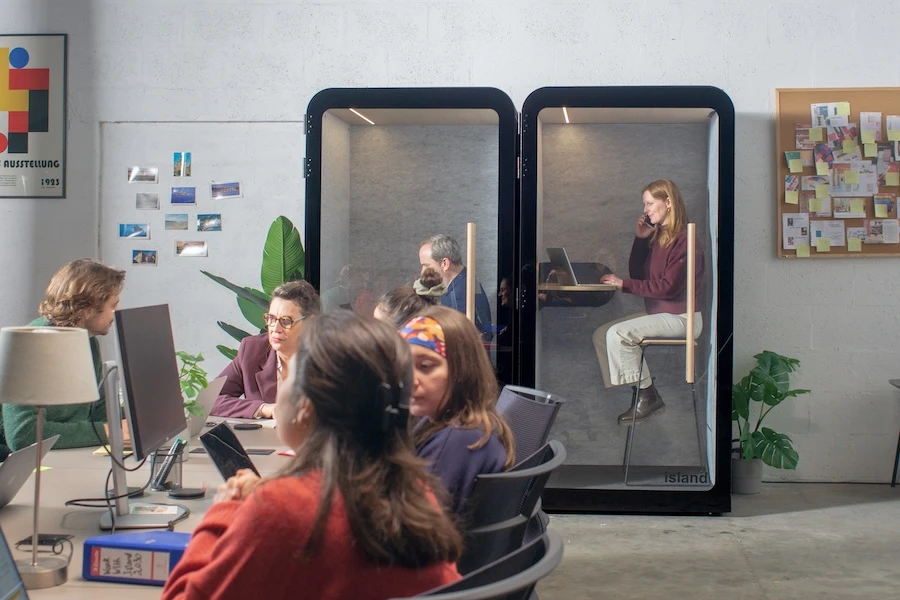
Fear of a permanently noisy open-plan office is often the first objection. It's addressed through zoning (quiet focus spaces, collaborative zones, relaxation areas) and dedicated acoustic solutions like Work With Island acoustic pods for tasks that need confidentiality or deep focus.
Fear of surveillance and losing autonomy
Some employees worry that the booking system and occupancy sensors are being used to monitor them. Being transparent about how the data is used, a written commitment to limited purposes, and managing by objectives rather than presence all help ease this concern.
What changes with a Work With Island pod: the noise
A reference scale
70 dB
Lively open plan office
Outside the pod
65 dB (Lively conversation)
Inside the pod
37 dB (Library)
Your 6-phase transition roadmap
- Frame the vision and expected benefits
Set measurable objectives led by senior leadership, beyond just cutting floor space.
- Involve employees from the design stage
Participatory workshops, usage surveys, and ambassadors appointed in each department.
- Communicate throughout the project
Combine meetings, intranet, emails and an FAQ to defuse rumours and concerns.
- Launch a pilot before wider rollout
Trial it for 3 to 6 months with a volunteer team and adjust before rolling out more widely.
- Train managers and teams
Train managers for hybrid leadership first, then teams on the new ways of working.
- Steer and adjust continuously
Regular surveys, a steering group and quick iterations to make the change stick.
Work With Island supports your transition to flex office
A successful flex office transition relies as much on the human side as on the acoustic solutions that make shared spaces liveable day to day. The Island Solo, Island Desk, Island Duo and Island Quattro acoustic pods create the pockets of silence that help win over employees worried about noise.
Our range of acoustic pods
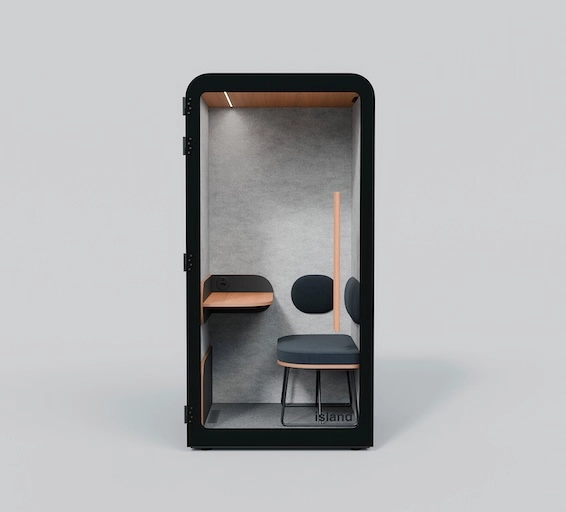
Island Solo
- To be quiet during a call
- To step away from noise for a few minutes
- To take a break between meetings
Island Desk
- To prepare for a meeting
- To work on a project without being disturbed
- To attend remote learning sessions
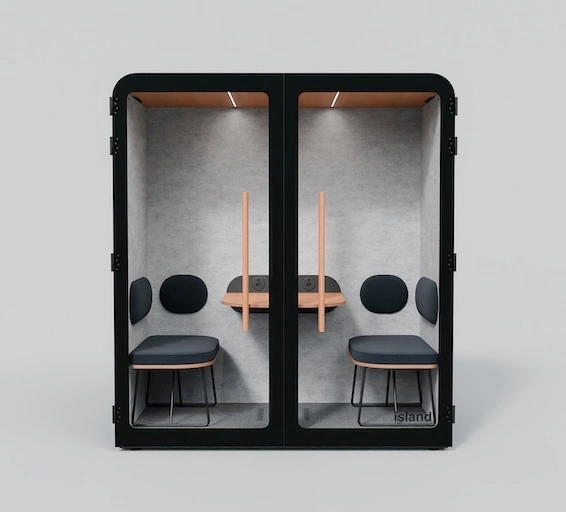
Island Duo
- To work in pairs without disturbing others
- For confidential HR interviews
- To prepare for a meeting with two people
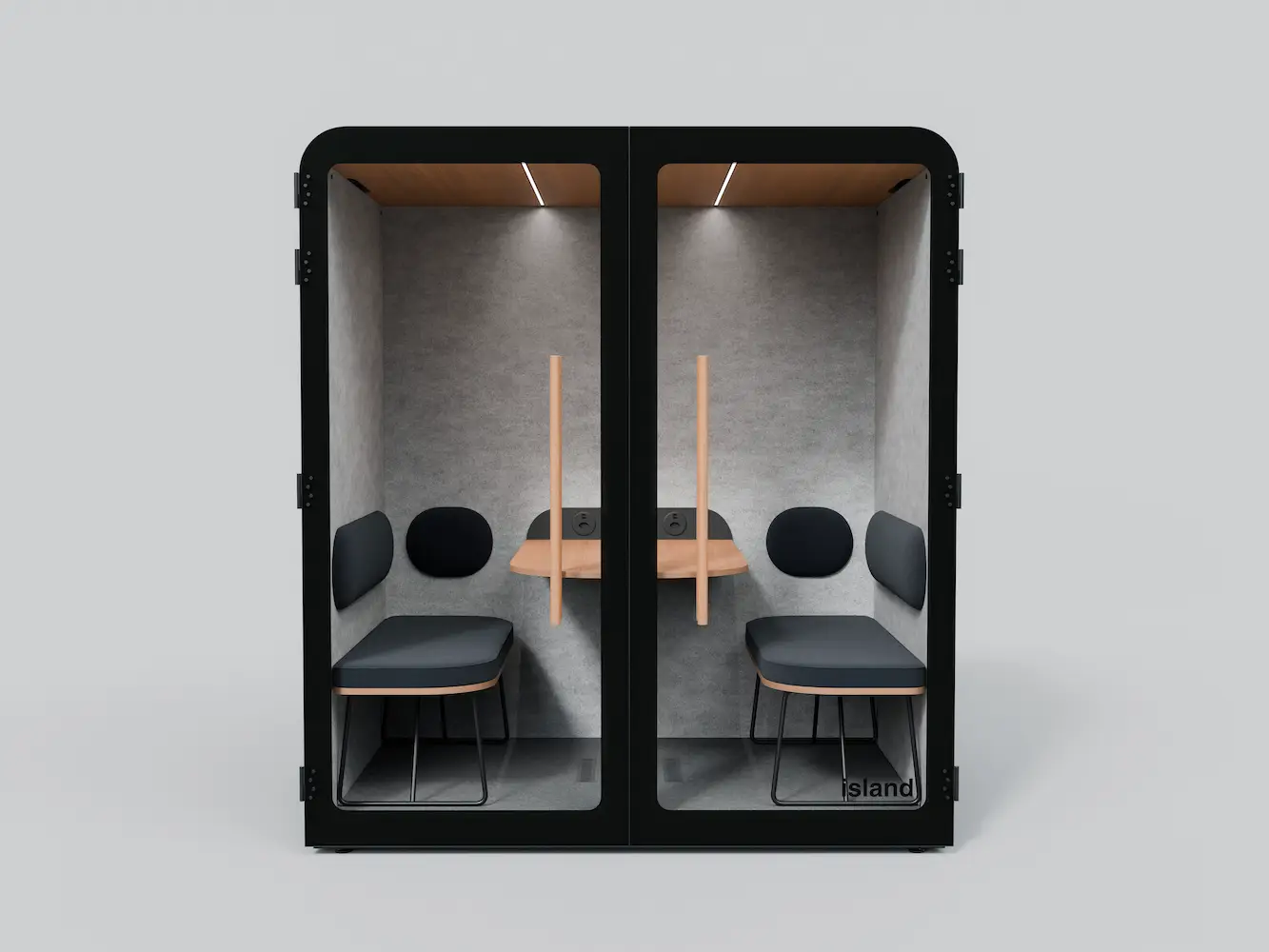
Island Quattro
- For team meetings
- For group video conferences
- For brainstorming or debriefing sessions
Our commitments
Installed in around 30 minutes, with no construction work. Unlike traditional partitions, our pods can be installed straight away and moved as your organisation evolves. This mobility fits perfectly with the frequent adjustments of a flex office still finding its footing.
Proven expertise. B Corp certification since 2025 and more than 4,000 client companies speak to our technical expertise. Pods certified ISO 23351-1 guarantee measured, consistent performance.

Origine France Garantie, 100% made in France in the Vendée region

100-day trial on your pod: money-back guarantee

5-year warranty on all our pods, so you can work with peace of mind.

A company certified B Corp since 2025.
Does your flex office project need the right acoustic solutions?
Get in touch with Work With Island to discuss your needs and discover our ISO 23351-1 certified pods.
Download the product guide to find out more
Frequently asked questions about transitioning to flex office
How long does it take to succeed at a flex office transition?
Allow 6 to 12 months depending on the size of your organisation. The audit and design phase takes 2 to 3 months, the pilot 3 to 6 months, and progressive rollout another 3 to 6 months. Rushing the transition into a few weeks risks costly backtracking.
How do you bring sceptical employees on board?
Listening and involving people early on defuses most objections. Participatory workshops, surveys on real working patterns, ambassadors in each department: these turn sceptics into contributors. One-to-one support for harder cases is still needed, with transitional arrangements where it makes sense.
How do you measure whether the transition succeeded?
The indicators to track combine quantitative and qualitative data: space occupancy rate, employee satisfaction measured by survey, booking-tool adoption rate, perceived quality of the spaces, cross-team collaboration indicators. These indicators staying stable over several quarters confirms the new way of working has taken hold.
Do you need to consult the works council for a flex office transition?
Yes, consulting the works council is mandatory for any change to how work is organised. Negotiating a company agreement puts the project on solid legal footing and clarifies the terms of implementation. Our guide on implementing flex office covers the legal and procedural side in detail.
How do you manage noise during the transition phase?
Noise is the first complaint employees raise in a flex office. It's addressed through clear acoustic zoning (focus spaces, collaborative zones), absorbent materials, and acoustic pods for calls and tasks that need confidentiality. Island pods, installed in around 30 minutes, allow for a fast response to pilot feedback.
Where do you start with a flex office pilot?
Select a volunteer team that represents several roles and several usage profiles. Equip the pilot space with acoustic solutions and booking tools from day one. Plan weekly check-ins to catch friction points and adjust quickly. The pilot runs for 3 to 6 months before the decision to roll out more widely.
.svg)
.svg)
.svg)
.svg)









.png)