To remember
Real savings
Optimised square metres, lower real estate costs, shared equipment: flex office shrinks the company's space footprint without sacrificing comfort.
A productivity boost
Choosing your environment based on what you're doing, easier collaboration, better focus: the right space for the right task multiplies efficiency.
A powerful HR argument
Autonomy, flexibility, quality of working life: flex office meets what younger generations expect and strengthens employer appeal.
An organisation that evolves
Modular furniture, reconfigurable spaces, built-in hybrid working: the company adapts to change without redoing the whole layout.
What is flex office, and why adopt it?
Definition of flex office
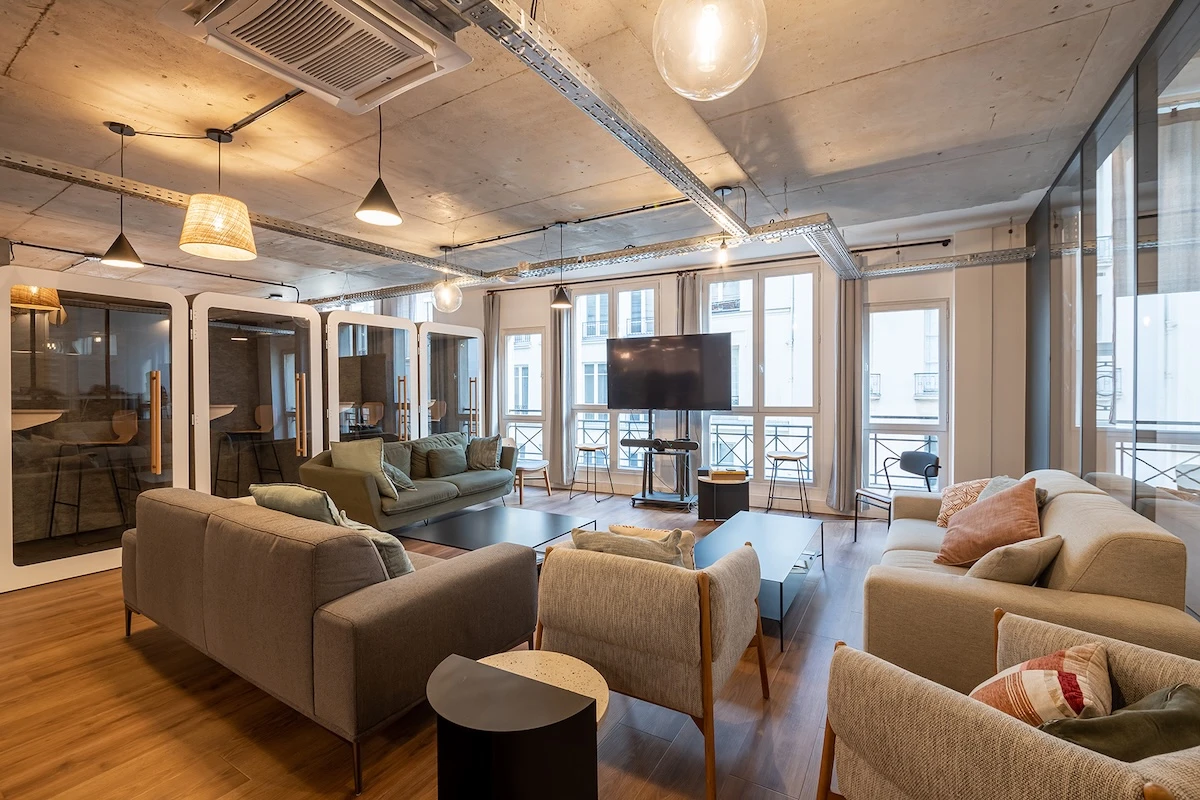
Flex office is a way of organising work where employees don't have a permanently assigned desk. This approach is built on desk sharing and lets teams choose their space based on their day-to-day needs. Flex office layouts combine collaborative spaces, focus zones and modular meeting rooms.
Companies have shown it's possible to significantly optimise office space while keeping teams just as productive. This shift is a perfect example of rethinking the traditional workplace.
The new ways of working
Hybrid remote working has accelerated the adoption of flex office. A significant share of companies combine flex office with remote working to create a flexible work environment. This shift responds to employees looking for more flexibility in how they work.
The three most common types of flex office are:
Hot desking
No assigned desk, each employee picks their desk on a daily basis.
Desk sharing
Desks are shared between different teams, who use a schedule to organise their days.
Dedicated spaces
There's a dedicated space for each type of activity.
The 8 main advantages of flex office
Space optimisation and cost reduction
The first advantage is optimising space and cutting real estate costs. Companies save substantially on real estate. This saving comes from better office occupancy and less floor space required overall.
The maths is simple: with regular remote working, an optimised ratio of desks per employee is enough, compared with a much higher ratio under a traditional set-up.
Better productivity and collaboration
Varied workspaces let you match your environment to the task. Spontaneous collaboration increases thanks to open exchange zones, while productivity improves with specialised spaces.
Attracting and retaining talent
Flex office is becoming a major recruiting argument. A large majority of candidates see flexibility as a key factor in choosing an employer. This approach improves wellbeing at work and strengthens employer branding.
Adaptability and scalability
A flexible organisation adapts to headcount changes and temporary projects. This scalability helps companies handle rapid growth without heavy real estate investment.
Good to know:
Equipping a flex office with acoustic solutions is an investment that can strain cash flow, especially during the transition. Work With Island offers leasing over 24 to 60 months with a €1 purchase option at the end of the contract. Rates start at €68/month for an Island Solo and go up to €171/month for an Island Quattro. The pod is treated as an operating expense, without tying up capital.
The challenges of flex office, and their solutions
Managing noise and confidentiality
The main challenge is managing noise and the lack of privacy. Open-plan offices generate noise that affects concentration.
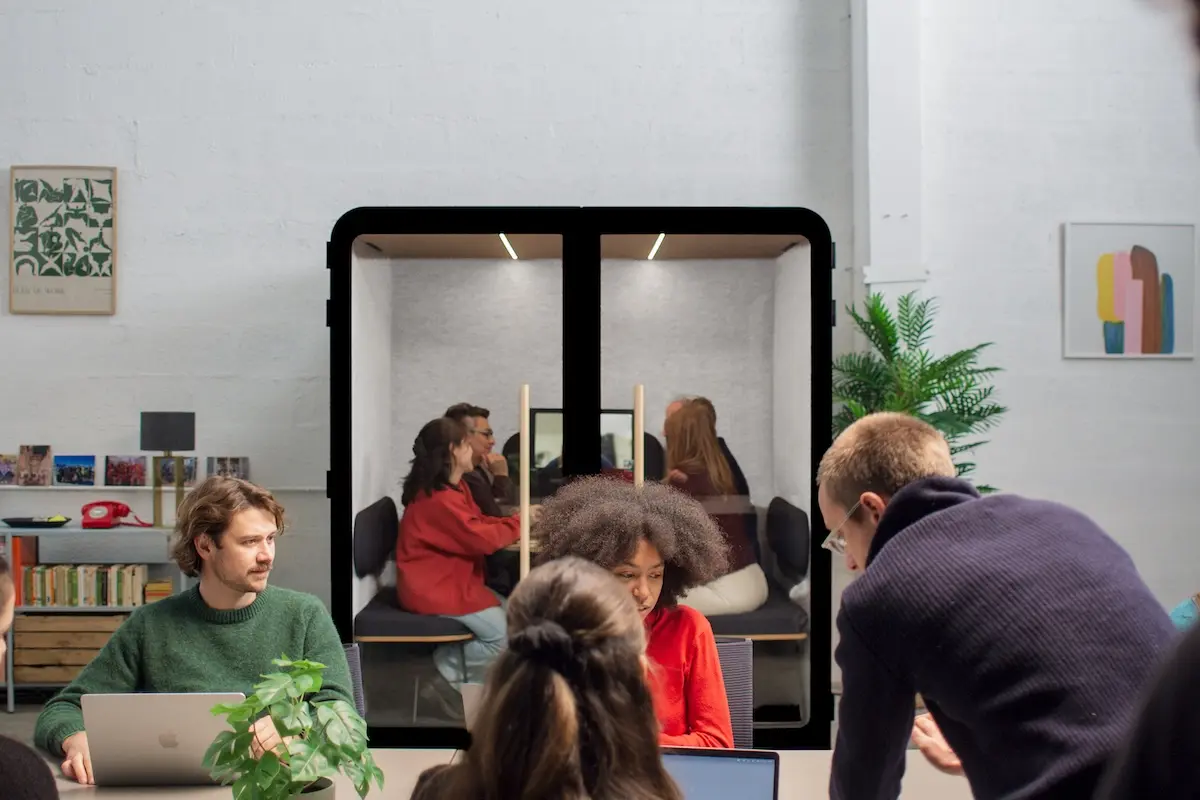
The solution lies in dedicated acoustic spaces and soundproofed pods for confidential calls.
A weaker sense of belonging
Having no fixed desk can leave employees feeling untethered. This is solved by creating social spaces and keeping regular team rituals going.
Organisation and resource management
Managing resources calls for effective flex office tools for booking spaces and checking equipment availability. Well thought-out logistics avoid day-to-day frustration.
These challenges can be overcome with a structured approach, as our experience across many flexible workspace projects shows.
What changes with an Island cabin: the noise
A reference scale
70 dB
Lively open plan office
Outside the pod
65 dB (Lively conversation)
Inside the pod
37 dB (Library)
How to get flex office right
Key transition steps
A successful flex office rollout follows a proven methodology. Consulting the works council is mandatory, since this transition changes working conditions. Many high-performing companies take a "test and learn" approach with a pilot phase.
The essential steps:
• Audit current needs and habits
• Consult employee representatives
• Run a pilot phase on a test area
• Adjust based on feedback
• Roll out progressively
Layout and equipment
The layout needs to offer a mix of zones: collaborative spaces, focus zones, modular meeting rooms. Technology (reliable wifi, mobile screens) and modular furniture are essential.
Supporting the change
How well you support your teams determines whether the project succeeds. Training people for the new environment and adapting management style are crucial for successful adoption.
Implementation checklist:
• Audit of user needs
• Mandatory works council consultation
• Design of the new spaces
• 3-month pilot phase
• Team training
• Booking tools
• Acoustic solutions
• Evaluation and adjustments
“Work With Island acoustic pods fit seamlessly into our interior design projects, combining contemporary aesthetics with user comfort. We enjoy working with them because their approach is fully in line with our philosophy: preserving resources by designing sustainable furniture, made in Europe from responsible materials.”
Martin Hallégouet
Interior Architect and Director of Studio Bluedigo
The 8 key points of flex office
- Optimise space and costs
Fewer square metres occupied, shared furniture, lower real estate costs: flex office savings show up from year one.
- Support productivity
Each employee chooses the environment suited to what they're doing: focus zones, collaborative spaces, acoustic pods for calls.
- Encourage collaboration
Teams cross paths, share ideas, and break down their everyday silos: flex office feeds the flow of information across the business.
- Attract and retain talent
Autonomy, flexibility and the quality of the environment rank among the top criteria for choosing an employer among people under 35.
- Protect confidentiality despite the open layout
Island Solo for confidential calls, Island Duo for interviews: sensitive conversations stay protected.
- Manage noise effectively
Class A ISO 23351-1 pods cutting noise by 28.7 to 31.1 dB, clearly marked quiet zones, and a shared charter for calls.
- Adapt as things change
Growing or shrinking headcount, new teams, more remote working: your flex office layout follows the changes without a costly overhaul.
- Prepare the transition with a method
Participatory workshops with your teams, a booking system, change management: success depends as much on the method as on the furniture.
Work With Island supports your flex office project
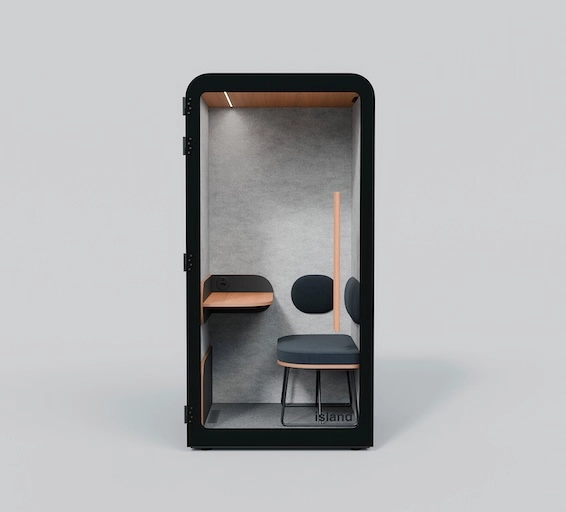
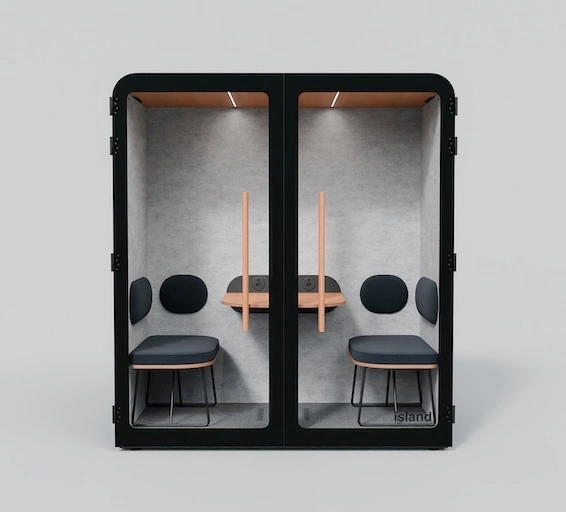
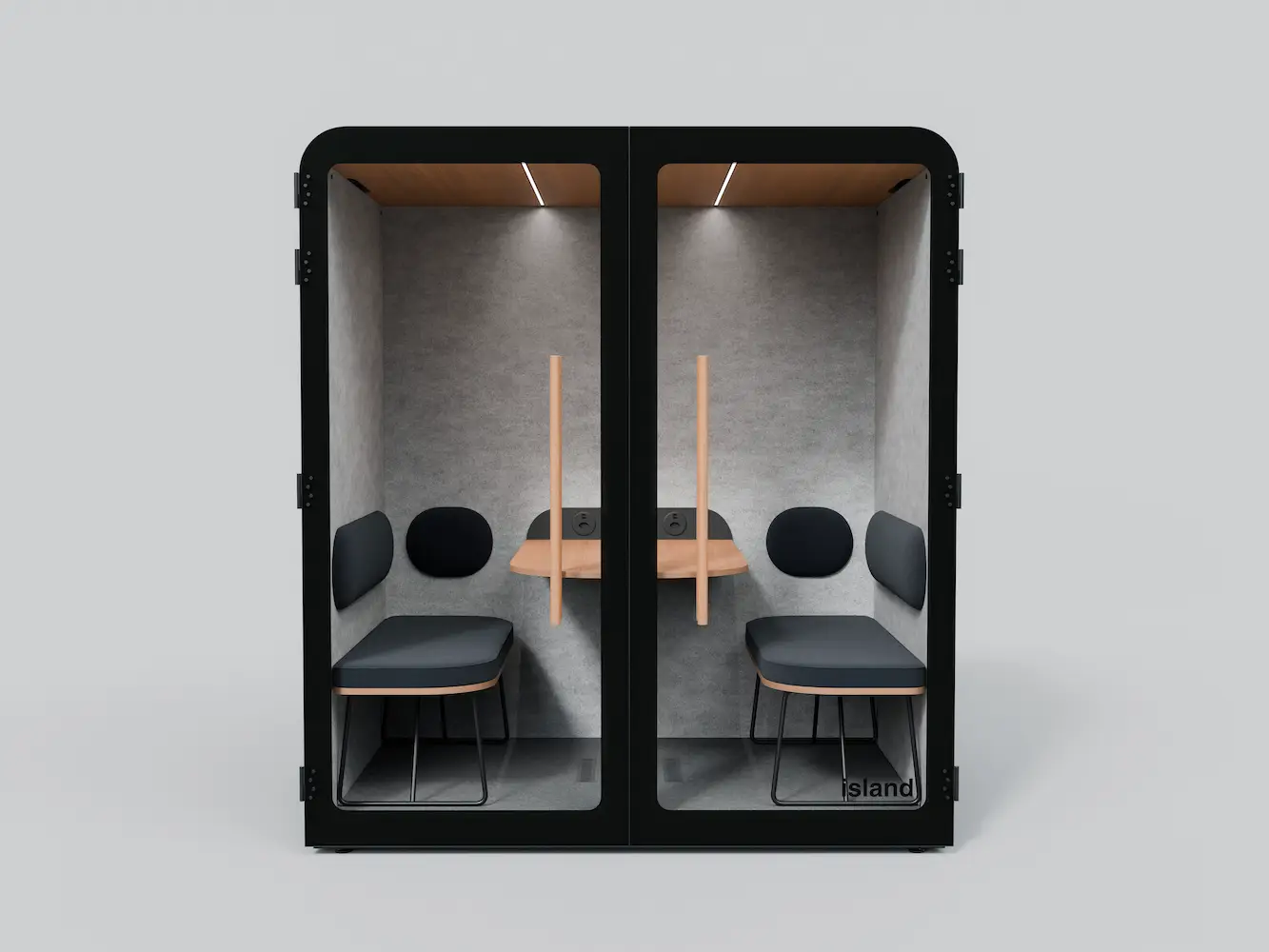
Flex office brings plenty of advantages, but it also creates new acoustic challenges. Work With Island offers acoustic pods specially designed to optimise your flexible spaces: Island Solo (1 person), Island Desk (extended work), Island Duo (meetings), and Island Quattro (teams).
Our 7 years of expertise with 4,000 client companies (Engie, Decathlon, LVMH, Qonto) means we can support you effectively. Our solutions are certified B Corp 2025 and Origine France Garantie, with 100% French manufacturing and recyclable materials.
The concrete benefits of our pods:
• Installed in around 30 minutes with no construction work
• 100-day free trial with no-cost returns
• 5-year warranty on all our products
• Noise reduction of up to 31.1 dB, certified Class A under the ISO 23351-1 standard
Island Solo
- To be quiet during a call
- To step away from noise for a few minutes
- To take a break between meetings
Island Desk
- To prepare for a meeting
- To work on a project without being disturbed
- To attend remote learning sessions
Island Duo
- To work in pairs without disturbing others
- For confidential HR interviews
- To prepare for a meeting with two people
Island Quattro
- For team meetings
- For group video conferences
- For brainstorming or debriefing sessions
Responsiveness
Free quote within 24h. A team on hand by phone to answer your questions and tailor the offer to your set-up.
Simplicity
A 220V socket, around 30 minutes to assemble, zero construction work. Your pod is up and running the same day.
Quality
French manufacturing, PEFC-certified materials, Class A ISO 23351-1 insulation. 5-year warranty.
Effectiveness
Up to 31 dB of noise reduction. Your teams get their focus and confidentiality back straight away.
FAQ
What is flex office?
Flex office is a way of organising work where employees have no fixed desk and choose their space based on their needs. It combines desk sharing, collaborative spaces and focus zones to make better use of office space.
What are the main advantages of flex office?
The advantages include substantial real estate savings, better collaboration, attracting talent, and adaptability as teams change. Flex office improves productivity by offering spaces suited to each task.
How do you manage noise in a flex office?
Noise is the main challenge of flex office. Solutions include dedicated acoustic spaces, soundproofed pods for confidential calls, and zoning based on the noise level each area needs.
Does flex office suit every company?
Flex office is particularly well suited to companies with remote working, project teams or variable growth. That said, it needs a collaborative culture and the right digital tools to work effectively.
Do you need to consult the works council to set up flex office?
Yes, consulting the works council is mandatory because flex office changes working conditions. This step helps anticipate resistance and adapt the project to employees' needs.
How much does implementing flex office cost?
The initial investment (layout, tools, training) is offset by substantial real estate savings. Return on investment is usually seen from the first year, thanks to the savings achieved.
.svg)
.svg)
.svg)
.svg)











.png)