Choose shipping location in order to see the correct pricing, delivery times and shipping costs. Prices of items may vary based on your shipping destination to reflect local market pricing and taxes.
Choose shipping location in order to see the correct pricing, delivery times and shipping costs. Prices of items may vary based on your shipping destination to reflect local market pricing and taxes.
Flex Office Explained: Everything You Need to Know Before Taking the Plunge
A large share of French employees now work in hybrid mode, upending the traditional way offices are organised. This shift to flex office raises plenty of questions: how do you organise it effectively? What are the real advantages and drawbacks? How do you handle the acoustic and confidentiality challenges?
This complete guide walks you through everything about flex office: its definition, how it works, how to implement it, and the solutions to optimise this new way of organising work. Drawing on our experience fitting out workspaces and supporting more than 4,000 companies, we share the keys to a successful flex office.
A way of working where desks aren't assigned: each employee picks their space based on what they're doing, from several specialised zones.
A range of benefits
Real estate savings, greater autonomy, easier collaboration, employer appeal: flex office fits the way people work today.
Challenges not to underestimate
Noise, lost bearings, confidentiality, sense of belonging: without proper support, flex office can create lasting frustration.
A methodical rollout
Usage diagnostics, change management, modular furniture and acoustic pods: success depends as much on method as on equipment.
What is flex office? Definition and core principles
Definition of flex office
Flex office is a way of organising work with no assigned desks, where employees book their space based on their day-to-day needs. This flexible approach transforms the traditional workplace by prioritising shared space and adaptability.
This new way of organising work rests on three core principles. First, having no personal desk optimises the use of space. Second, a booking system makes it easy to access a desk. Third, this approach fits perfectly with hybrid ways of working that combine in-office and remote time.
Companies like Decathlon have adopted this approach, where employees book their workspace through an app based on their day-to-day needs. This flexibility improves the employee experience while lowering real estate costs.
The different forms of flex office
Three main models structure this flexible organisation.
Desk sharing means sharing desks between several users on a set schedule.
Activity-based working offers dedicated spaces by activity: focus, collaboration or creativity.
Hot-desking offers free desks on a first-come, first-served basis.
Good to know:
Moving to flex office often means rethinking your existing equipment. To combine savings with a CSR approach, Work With Island offers its "Work With Me Again" programme: professionally refurbished pods, with the manufacturer warranty maintained and ISO 23351-1 certification preserved. Unlike standard second-hand purchases, every pod goes through a full inspection and has its worn parts replaced. Available in the Île-de-France region.
Running a flex office day to day relies on clear rules and the right tools. Employees use a booking platform to choose their space based on what they plan to do. This organisation also calls for clear rules on tidying up and keeping desks clean.
Managing equipment becomes crucial in this set-up. Companies favour mobile solutions: laptops, wireless headsets and equipment that's easy to carry around. This approach ensures flexibility while keeping things running smoothly.
Technologies and tools needed
Technology infrastructure is the backbone of flex office. Space-management software handles booking and occupancy tracking. Mobile, connected equipment makes it easy to move between desks. Built-in video-call tools support hybrid collaboration.
Essential tools include:
• Real-time space-booking platform
• Badge system for access and tracking
• Mobile apps for day-to-day management
• Built-in video-call solutions
• Mobile or digital personal storage
The benefits of flex office for companies and employees
Economic benefits
The benefits of flex office translate into substantial savings for companies. Real estate cost reductions can be significant thanks to better space occupancy. This approach also lowers fixed costs tied to furniture and equipment.
A company can significantly cut its office floor space with optimised occupancy. This frees up resources for other strategic investments. Energy and maintenance savings round out these economic benefits.
Optimising space matters especially in city centres, where every square metre is expensive. This real estate efficiency directly improves company profitability.
Benefits for employees
Employees enjoy greater flexibility in their day-to-day organisation. This autonomy lets them choose their surroundings based on what they're doing and how they're feeling. The variety of workspaces sparks creativity and cuts down on monotony.
The five main benefits for employees:
• Autonomy in choosing your workspace
• A variety of available environments
• Flexibility in day-to-day organisation
• Less commuting thanks to remote working
• Better work-life balance
The challenges and drawbacks of flex office
Organisational challenges
Moving to flex office brings real organisational challenges. Losing physical bearings can unsettle employees used to their own desk. This set-up also makes spontaneous collaboration and close-up management harder.
A notable share of employees still prefer having a personal desk. This resistance to change calls for proper support and transparent communication about the expected benefits.
Managing teams gets more complex without constant physical proximity. Managers need to adapt their leadership style to keep the team effective.
Acoustic and confidentiality issues
Noise is a major challenge of flex office. Open-plan offices generate noise that hurts concentration and increases employee stress. A lack of privacy for phone calls also raises confidentiality concerns.
The four main issues identified:
• Background noise disrupting concentration
• Not enough spaces for confidential calls
• Difficulty concentrating in open-plan offices
• Acoustic stress caused by the sound environment
Is your flex office short on confidential spaces?
Discover our certified acoustic pods and try them for 100 days. Request a personalised quote to optimise your work environment.
Implementing flex office calls for a structured, progressive approach. A needs audit is the first step to understanding current habits and identifying what employees expect. This analysis guides layout and organisational decisions.
Consulting teams and the works council is required under French labour law for any significant change to working conditions. This participatory approach builds buy-in and identifies the points that need particular attention for your company.
A "test and learn" approach over several months before full rollout allows the organisation to be adjusted based on real feedback. This progressive approach limits risk and fine-tunes the final solution.
Layout and equipment
A successful flex office layout rests on the variety of spaces on offer. Collaboration zones support teamwork. Focus spaces provide the quiet needed for complex tasks. Relaxation areas encourage informal exchanges and creativity.
Acoustic solutions become essential to preserve confidentiality and limit noise. Booking and communication technology rounds out this ecosystem to ensure a smooth experience for everyone.
8-step checklist for a successful transition:
• Analyse current needs and habits
• Consult teams and employee representatives
• Define usage and sharing rules
• Choose the right booking tools
• Create varied spaces
• Install acoustic solutions
• Test the organisation over a pilot period
• Adjust based on feedback
Over the long run, how your flex office is organised may well evolve. Make sure you invest in office furniture that can go the distance with you over several years.
Managing in a flex office setting calls for traditional management practices to evolve. Moving from control to trust becomes essential once teams are spread out. This shift favours managing by objectives over managing by physical presence.
Digital communication grows to keep the connection with teams alive. Managers use collaborative tools to track project progress and preserve team cohesion. This shift often calls for specific training in the new ways of working.
Having supported companies since 2018, we see that success largely depends on how involved managers are in this transformation. Their buy-in makes it easier for teams to adopt the new way of working.
Maintaining team cohesion
Preserving team cohesion is a crucial issue in a flexible environment. Rituals and gathering moments make up for the physical spread of employees. These shared moments strengthen belonging and support informal exchanges.
Good practices for maintaining cohesion include:
• Regular in-person team meetings
• Group events and social moments
• Collaborative spaces dedicated to shared projects
• Stronger communication around shared objectives
• Digital tools that support informal exchanges
Acoustic solutions to optimise your flex office
The importance of acoustic comfort
Acoustic comfort largely determines whether a flex office succeeds. Noise significantly reduces productivity. This impact justifies investing in effective acoustic solutions to keep employees performing at their best.
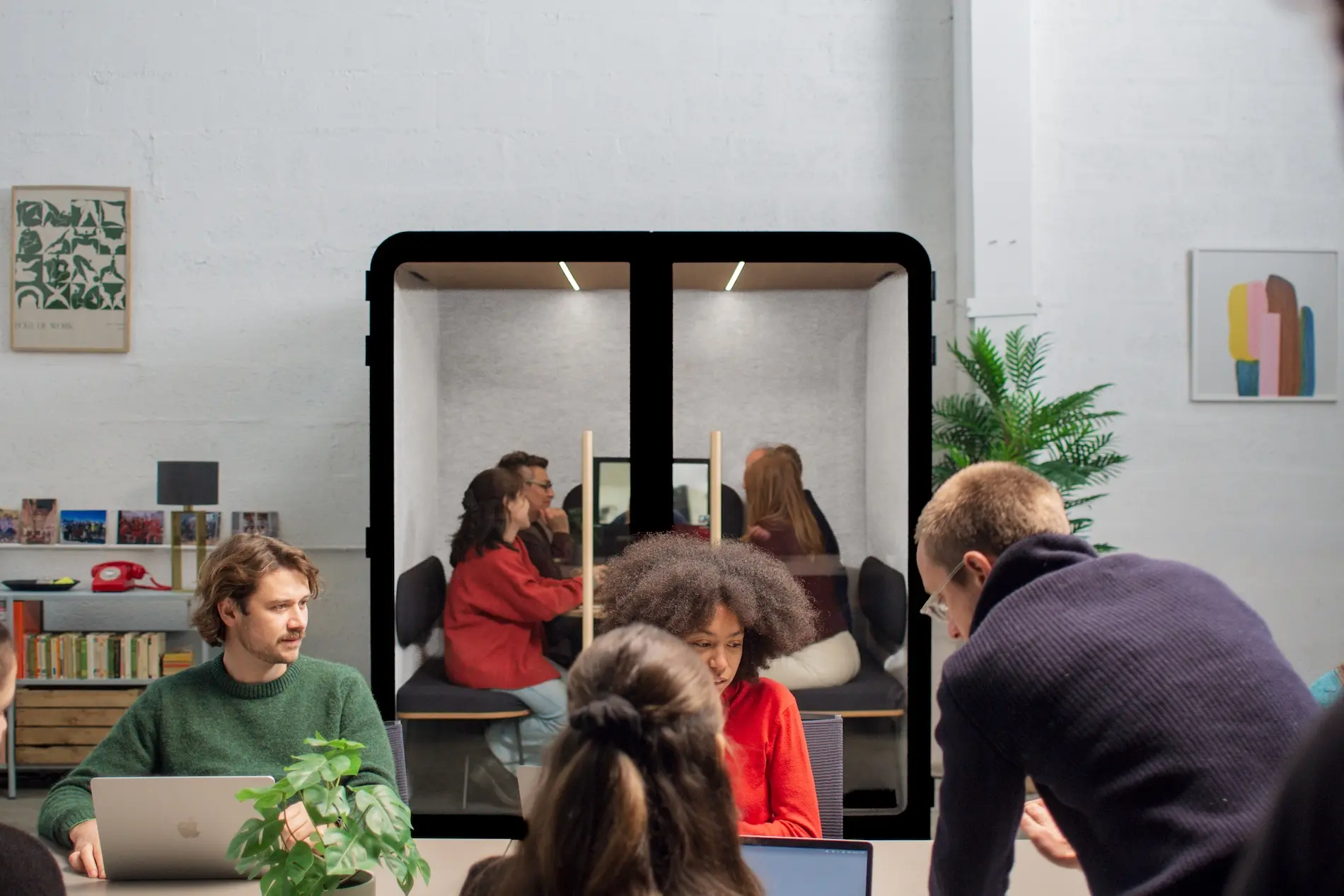
Focus and confidentiality spaces become essential in an open environment. Modular solutions with no construction work offer a quick, flexible response to these needs. This equipment adapts to organisational changes without major technical constraints.
Our acoustic pods, certified ISO 23351-1 Class A, guarantee optimal noise reduction. This performance creates an environment suited to focus and confidential conversations.
Types of acoustic spaces
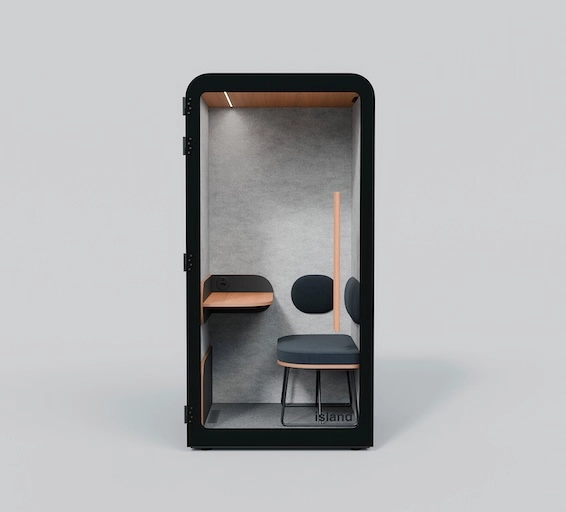
Individual pods handle phone calls and video calls without disturbing the space around them. These spaces preserve confidentiality while offering optimal acoustic comfort. Their quick installation allows for an immediate response to needs.
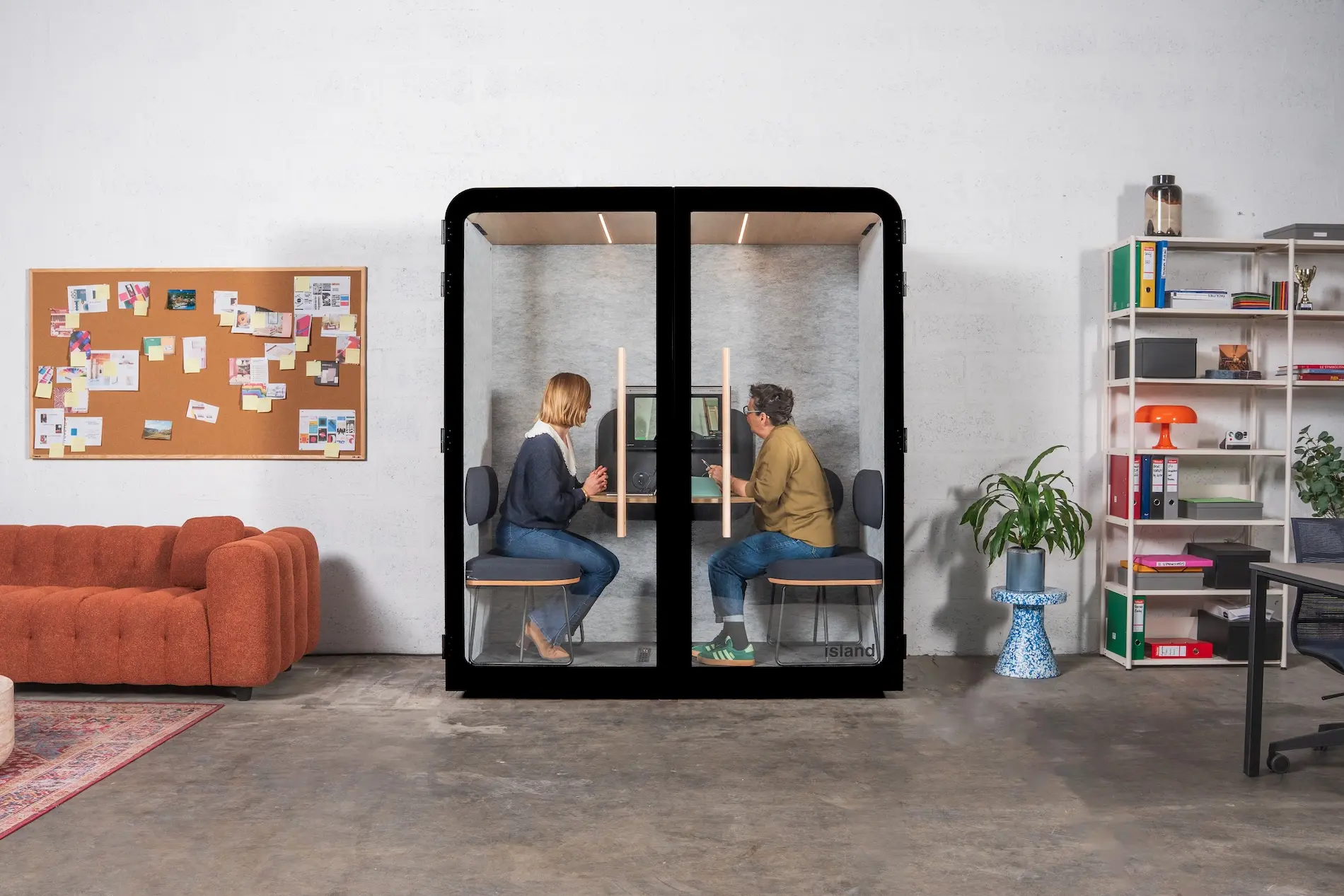
Soundproofed collaborative spaces support small-group meetings without booking a traditional meeting room. These modular, demountable solutions adapt to the frequent reorganisations of growing companies.
Define flex office A way of working where no desk is assigned: each employee settles in based on what they're doing, choosing from several space types (focus, collaboration, video calls, relaxation).
Tell flex office apart from desk sharing Desk sharing splits identical desks between several people. Flex office offers a variety of spaces that employees choose based on what they're doing.
Enjoy the economic benefits Shared furniture, optimised square metres, lower real estate costs: flex office shrinks the space footprint without sacrificing comfort.
Appreciate the benefits for employees Autonomy over choosing your environment, flexible hours, work-life balance: flex office aligns the organisation with what people expect today.
Anticipate the organisational challenges Losing a personal desk, a weaker sense of belonging, managing personal items: these frictions are resolved with clear rules and human support.
Get noise and confidentiality under control Noise remains acoustic challenge number one. Acoustic pods Class A ISO 23351-1cutting noise by 28.7 to 31.1 dB, plus clearly marked quiet zones.
Get the rollout right Initial diagnostic, participatory workshops, booking system, change management: the move to flex office is as much a human project as an organisational one.
No items found.
Work With Island supports your flex office project
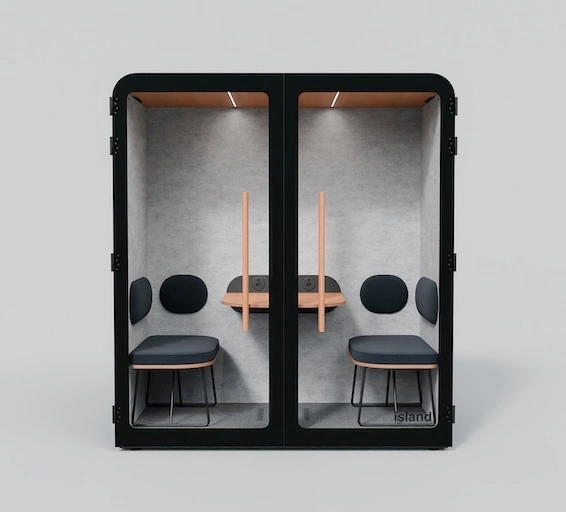
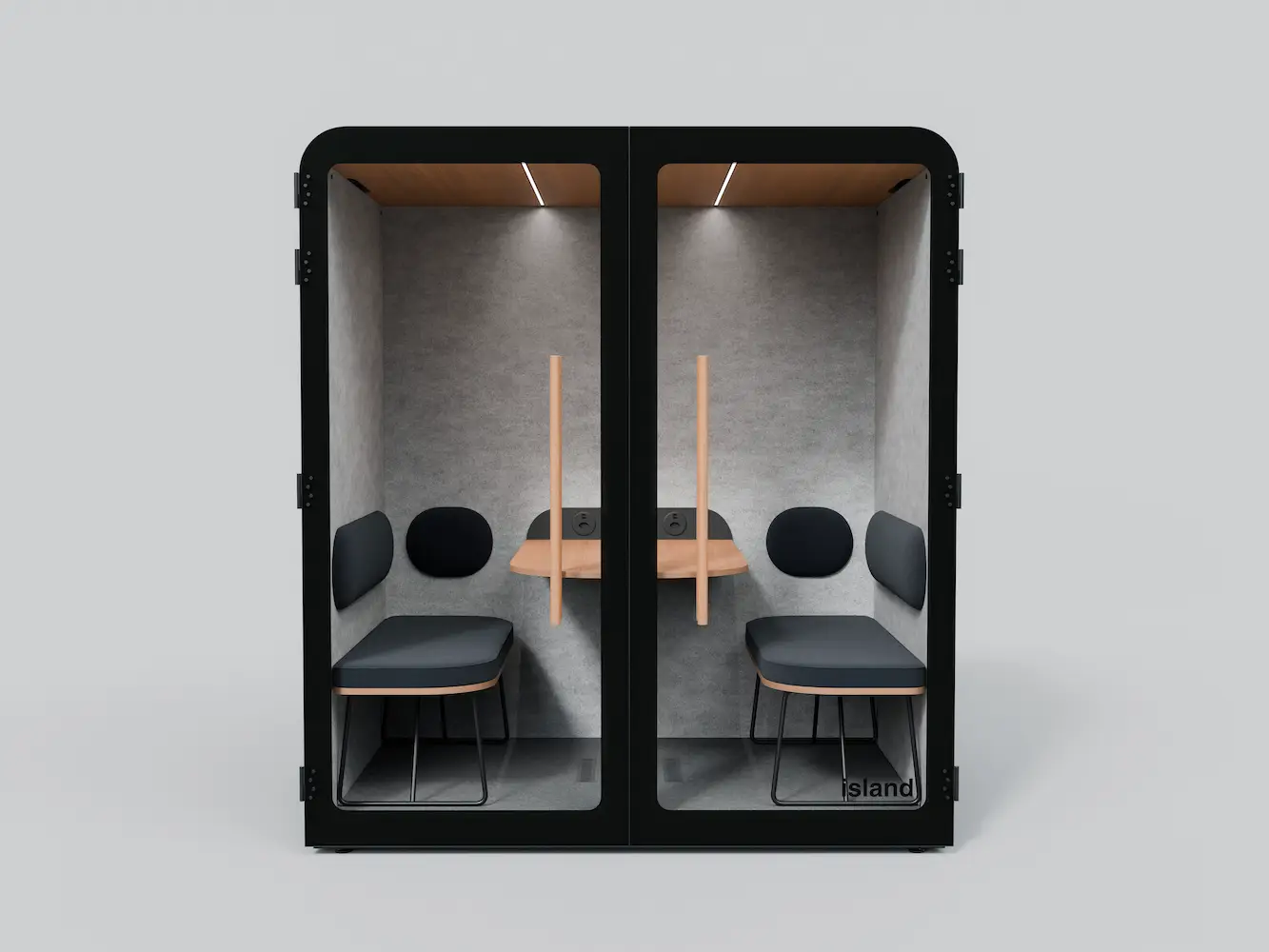
Work With Island offers acoustic pods that address the challenges of flex office: lack of confidentiality, noise, and the need for focus spaces. Our Island Solo, Desk, Duo and Quattro solutions are installed in around 30 minutes with no construction work, and reduce noise by up to 31.1 dB.
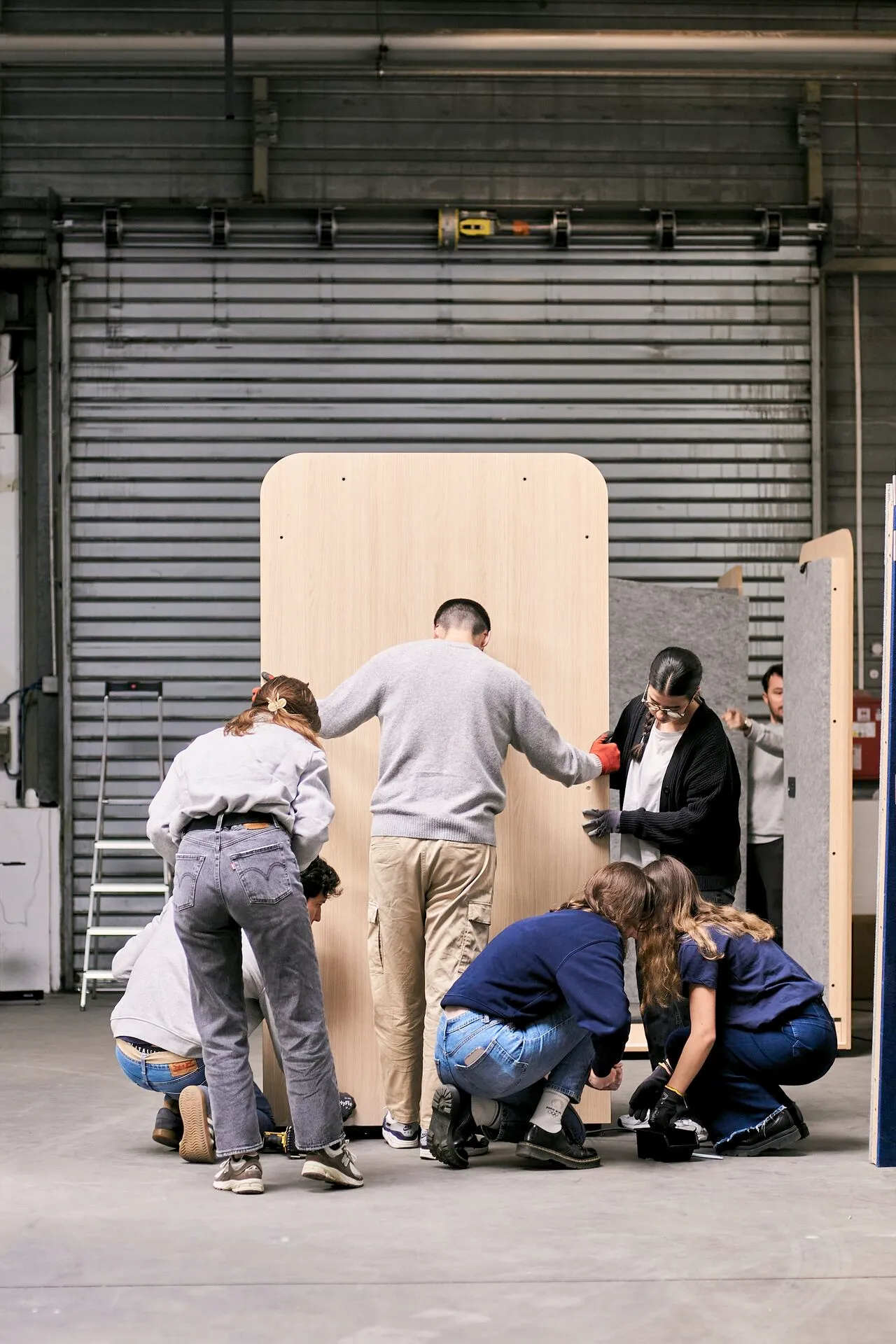
Our French manufacturing guarantees quality, with Origine France Garantie and B Corp certification since 2025. This responsible approach aligns with the CSR values of modern companies. Our eco-responsible materials are durable and recyclable.
Since 2018, and with 4,000 clients including Decathlon, LVMH and Siemens, we've built recognised expertise. Our peace-of-mind guarantee includes a 100-day trial, a 5-year warranty, and installation in around 30 minutes. This offer protects your investment and makes the transition easier.
Fill in the form and get our product guide right away: a clear PDF with all the essential information: price, dimensions, connectivity and more.
FR
Frequently asked questions about flex office
What is a flex office?
Flex office is a way of organising work with no assigned desks, where employees book their space based on their needs. This flexible approach fits hybrid ways of working by optimising the use of space. It calls for booking tools and a variety of spaces for different activities.
What are the benefits of flex office?
Flex office can significantly cut real estate costs, optimise space occupancy, and give employees more flexibility. It also supports collaboration and adapting to new hybrid ways of working. That said, it needs rigorous organisation and solutions to preserve confidentiality.
How do you implement flex office?
Implementation calls for a needs audit, consulting teams and the works council, then a test phase. You'll need varied spaces, booking tools and acoustic solutions. A progressive "test and learn" approach over several months is recommended before full rollout.
Does flex office suit every company?
Flex office suits companies with remote working, mobile teams or varied activities particularly well. It's less suited to roles that need specialised equipment or a constant presence. Analysing your specific needs is essential before making the switch.
How do you handle noise in a flex office?
Noise is a major challenge of flex office. Solutions include Work With Island acoustic pods for calls, soundproofed focus spaces, and clear usage rules. Modular pods offer up to 31.1 dB of noise reduction with no construction work.
Can you try flex office before committing?
Yes, a progressive approach is recommended. Start with a pilot on one team or one floor for several months. This lets you identify specific needs and adjust the organisation before full rollout. Some solutions, like Work With Island acoustic pods, come with a 100-day trial.
.svg)
.svg)
.svg)
.svg)