To remember
Audit
Measure actual desk occupancy over 4 weeks to size the future layout.
Set the framework
Define the remote-working policy and consult the works council before any change.
Equip
Choose the management tools and acoustic solutions suited to how people work.
Track
Continuously measure satisfaction and occupancy to fine-tune the set-up.
How to Implement Flex Office in Your Workplace
Step 1 - Audit the current organisation
The audit is the foundation of any flex office project. This diagnostic phase looks at current working habits, actual desk occupancy, and what employees need.
A four-week measurement of occupancy is essential. Results usually reveal a significant gap between actual and assumed occupancy. This gap is what makes the economic case for flexible working. The audit also identifies peaks and troughs in use, which help size the future layout.
Step 2 - Set the policy and consult the works council
The remote-working policy gives structure to flex office. It sets out mandatory office days, booking rules, and any specific conditions for different teams.
A mixed model combining office days and remote-working days is the most common approach. This balance optimises office occupancy while preserving collaboration. Booking rules need to stay simple and fair.
Consulting the works council is a legal requirement for any change of this kind. It calls for careful preparation of the economic and social arguments. Employee representatives need to understand the benefits for staff before negotiating a company agreement.
Step 3 - Choose the management tools
Flex office management software automates space booking. A mobile app makes it easy for employees to use intuitively. Integration with existing systems avoids duplicate data entry.
Key features include real-time booking and conflict management. Usage data guides future adjustments. The interface should be as simple as booking a hotel room.
Step 4 - Lay out the spaces
Flex office layout rests on a mix of space types suited to different ways of working. Focus zones, collaborative spaces, meeting rooms and relaxation areas are arranged with a clear purpose in mind.
A balanced ratio structures the space between individual desks, collaborative areas and relaxation zones. This balance adapts to your sector. Open-plan remains the main format but is enriched with specialised zones.
Furniture and storage
Ergonomic furniture adapts to flexible use. Personal lockers replace fixed desks for storage. A clean-desk policy keeps shared spaces tidy and orderly.
A connected locker system with badge access keeps personal belongings secure. This reassures employees and smooths out day-to-day organisation.
Space types to plan for
• Modular individual desks
• Open collaboration spaces
• Equipped formal meeting rooms
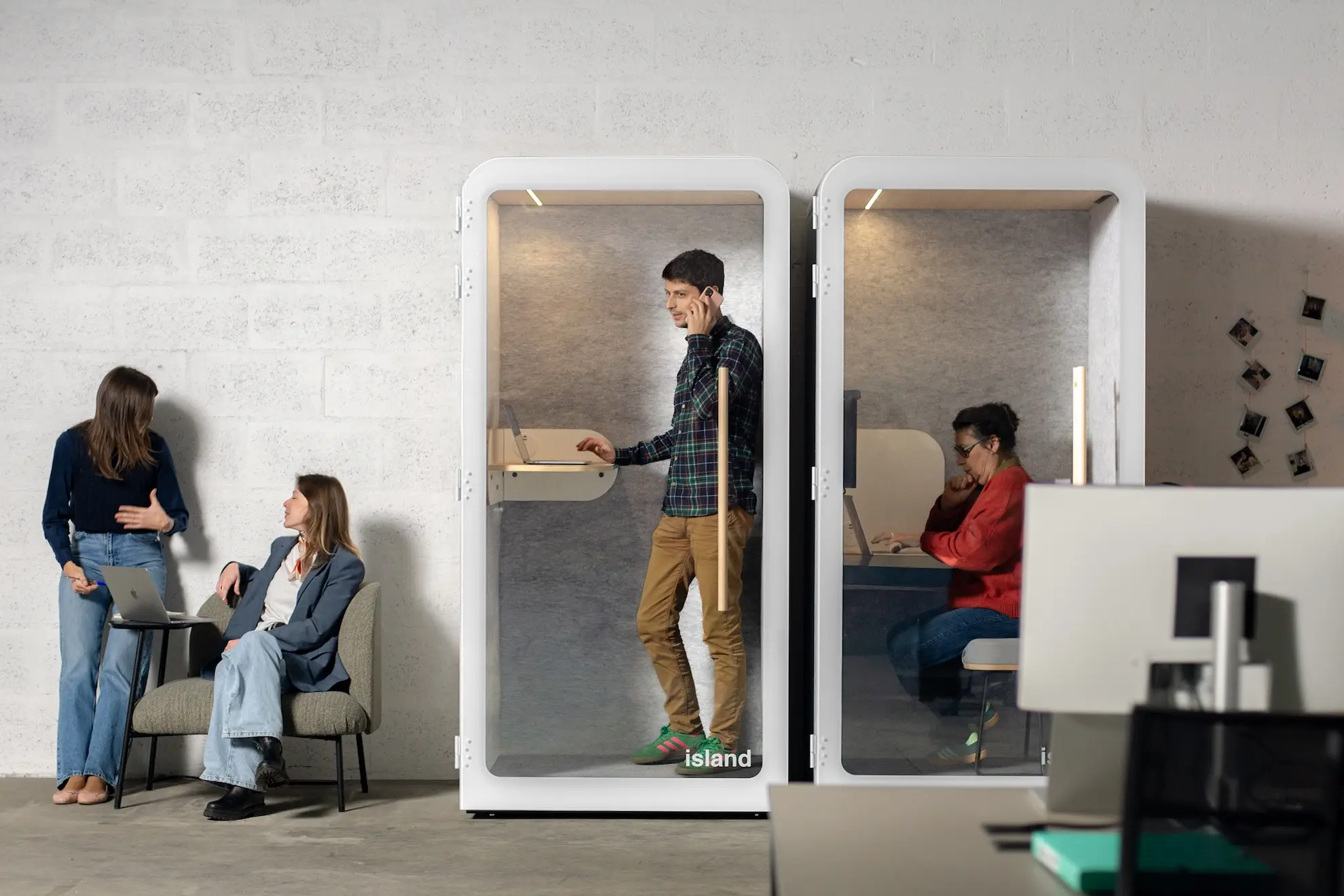
• Work With Island acoustic pods for confidentiality
• Quiet focus zones
• Relaxation and social spaces
• Creativity and brainstorming spaces
• Reception and transit areas
How to Implement Flex Office in Your Workplace
Step 5 - Get the acoustics right
Noise is one of the top complaints from employees in open-plan and flex offices. That makes acoustics a central issue in any layout project. How well noise is handled largely determines how well the new way of working is accepted.
Sound insulation works through several complementary approaches: mobile partitions to structure the space, absorbent materials to limit reverberation, and acoustic pods to create pockets of silence.
Work With Island's acoustic solutions
Island acoustic pods offer an effective answer to this challenge. Certified ISO 23351-1 Class A, they reach up to 31.1 dB of noise reduction on the Desk model. Installed in around 30 minutes, made in France in the Vendée region.
Several solutions are available:
• Work With Island acoustic pods: up to 31.1 dB, installed in around 30 minutes
• Mobile partitions: flexible structuring of the space
• Absorbent panels: general acoustic treatment
What changes with an Island cabin: the noise
A reference scale
70 dB
Lively open plan office
Outside the pod
65 dB (Lively conversation)
Inside the pod
37 dB (Library)
How to Implement Flex Office in Your Workplace
Step 6 - Support the change
How well you support your teams largely determines whether the project succeeds. Change management prepares employees for what's coming. Training managers builds their new skills for leading in this setting.
Flex office management favours leading by objectives over visual oversight. Trust and autonomy become the pillars of the manager-employee relationship. Communication needs to stay transparent about the objectives and the expected benefits.
Team spirit and cohesion
Keeping team spirit alive means new rituals suited to hybrid working. In-person events matter more than ever. Social spaces make room for the informal encounters that feed company culture.
Weekly in-person rituals strengthen social ties. Digital tools complement, rather than replace, direct human interaction.
Good management practices:
• Set clear, measurable objectives
• Hold regular one-to-one and team check-ins
• Keep in-person team rituals going
• Build trust and autonomy
• Adapt communication tools to what's needed
• Preserve informal social moments
Step 7 - Formalise the company agreement
A company agreement on flex office puts the organisational change on solid legal footing. It sets out the practical terms of implementation. A trial period allows rules to be adjusted based on real-world feedback. Regular evaluation measures how well the set-up is working.
Negotiating with the works council shapes the content of the agreement. Key clauses cover how spaces are organised and employees' rights. Periodic review allows the agreement to adapt to legal and organisational changes.
Here are a few legal points worth keeping in mind:
• Mandatory consultation of the works council
• Equal treatment of all employees
• Health and safety at work
• The right to disconnect
• Clearly defined booking rules
• Personal data protection
• Fair access to workspaces
• Preserving collective rights
• Regular evaluation of the set-up
• The option to reverse the arrangement
Good to know:
Rolling out an acoustic solution as part of a flex office project takes less time than you might think.
Work With Island delivers its Island pods in under 8 weeks from order, with on-site installation of around 30 minutes per pod. That's enough to equip a whole floor in half a day, without disrupting your teams.
How to Implement Flex Office in Your Workplace
Step 8 - Measure and continuously improve
Flex office indicators give you an objective view of how the new way of working is performing.
Occupancy rate, employee satisfaction, productivity: each of these guides your adjustments.
A real-time dashboard showing occupancy by zone makes day-to-day management easier. The data points to adjustments in layout and organisation. Analysing peaks and troughs in use improves how you plan your spaces.
Indicators to track
Optimising flex office relies on continuously improving your processes. Regular surveys capture employee feedback. Adapting spaces responds to changing needs.
A 12-month evaluation method gives this process structure. Quarterly measurements identify trends. Corrective action can then be taken quickly to keep performance on track.
Here's the list of indicators to track:
• Overall occupancy rate of spaces
• Employee satisfaction (monthly survey)
• Average desk booking time
• Usage of the different space types
• Productivity by team and individual
• Real estate cost savings achieved
• Digital tool adoption rate
• Team cohesion indicators
“The feedback from our teams was clear: noise is exhausting. They need moments to recharge, to slow down and step away. The pod lets them fully isolate themselves and enjoy a zero-distraction atmosphere.”
Jérôme Bourdon
Co-founder of WiiSmile
How to Implement Flex Office in Your Workplace
Work With Island supports your flex office project
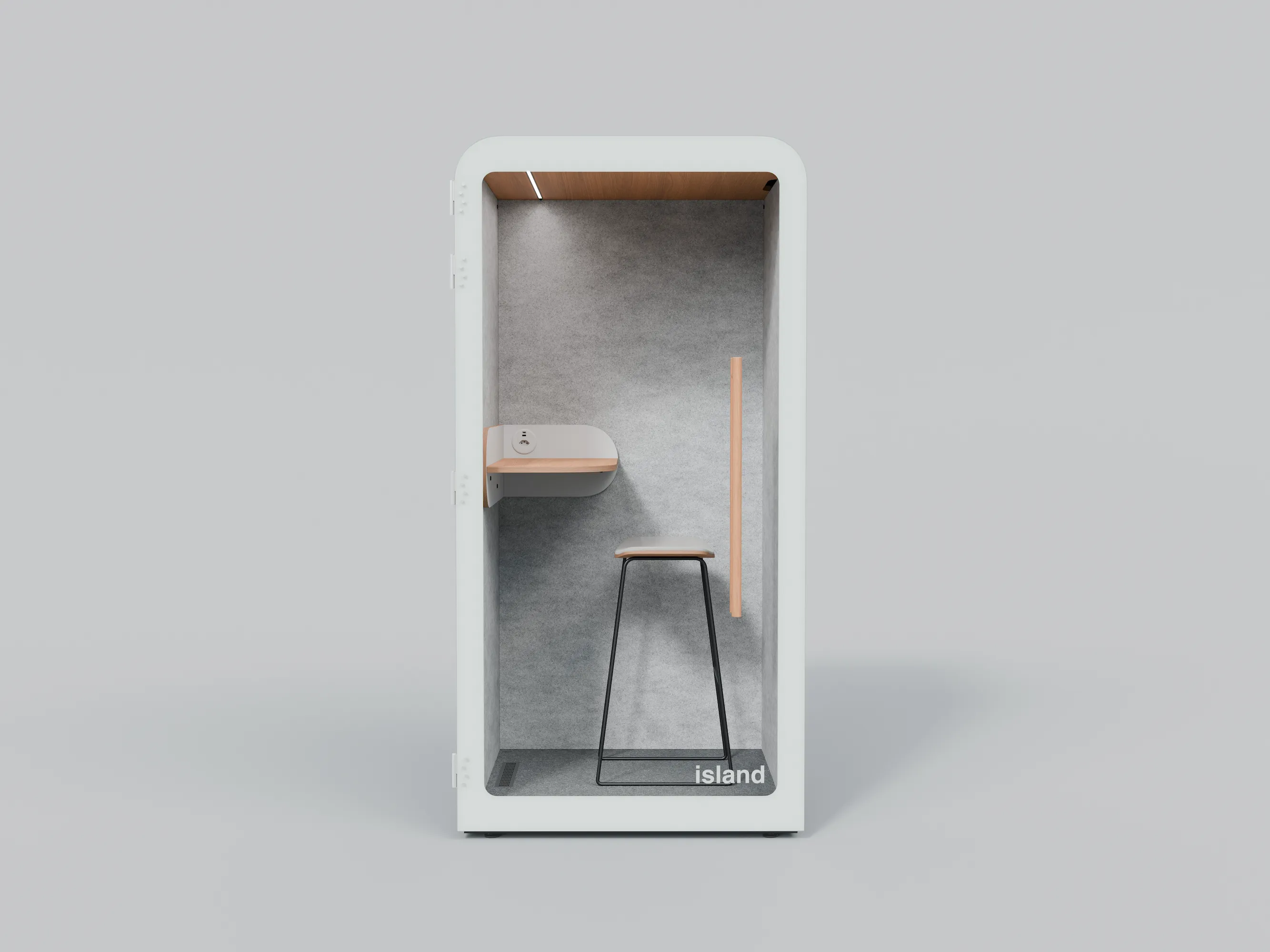
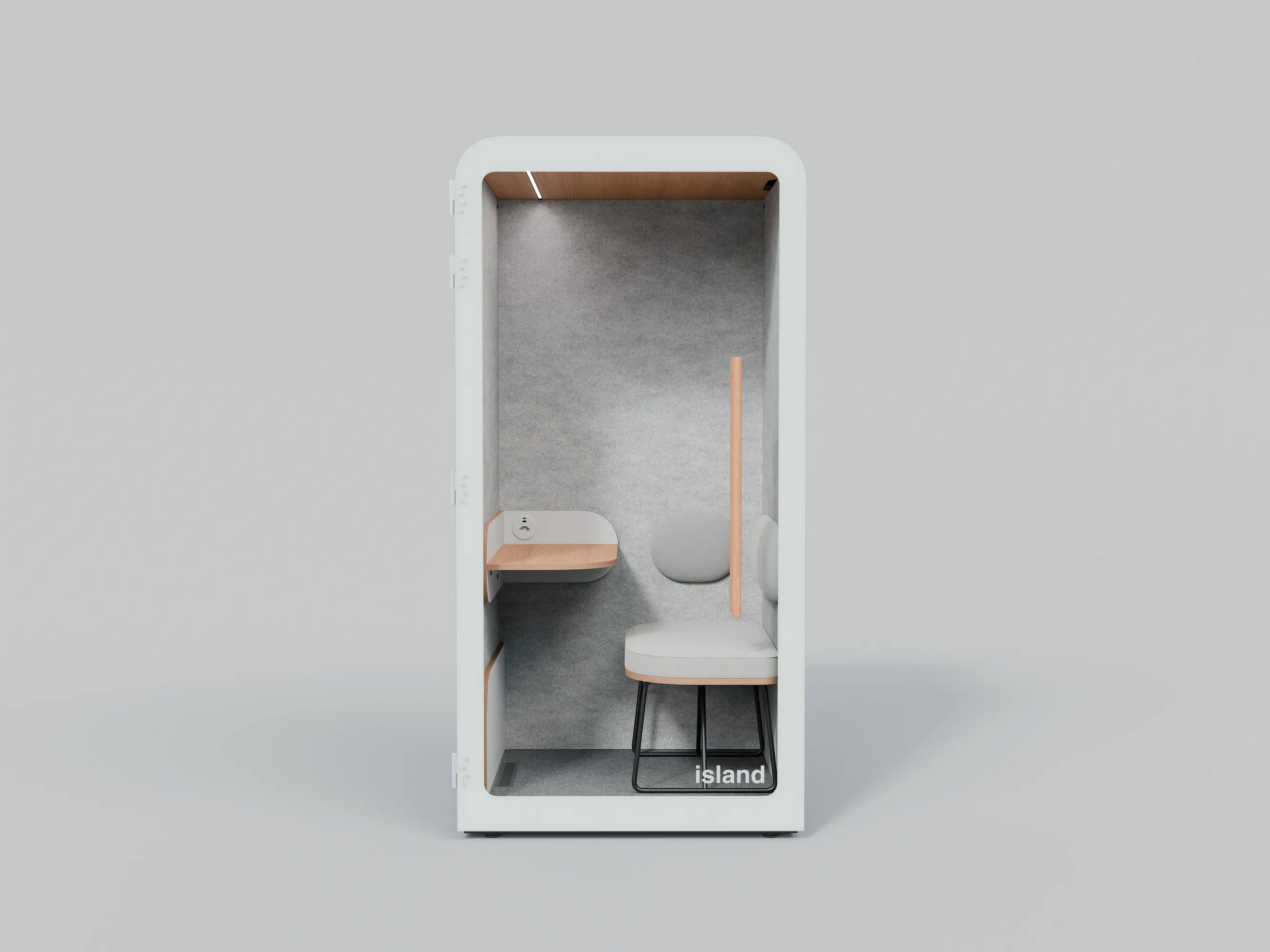
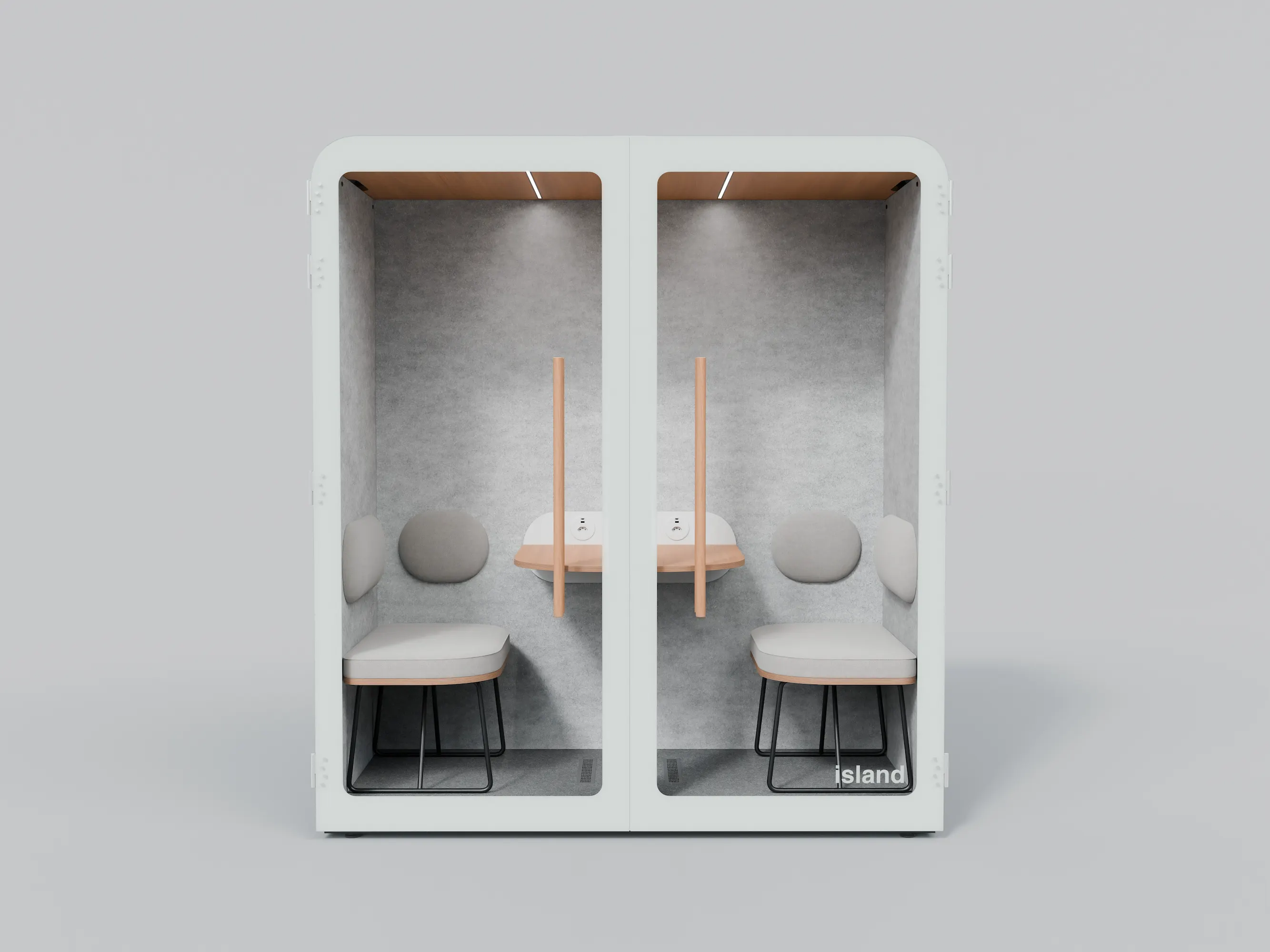
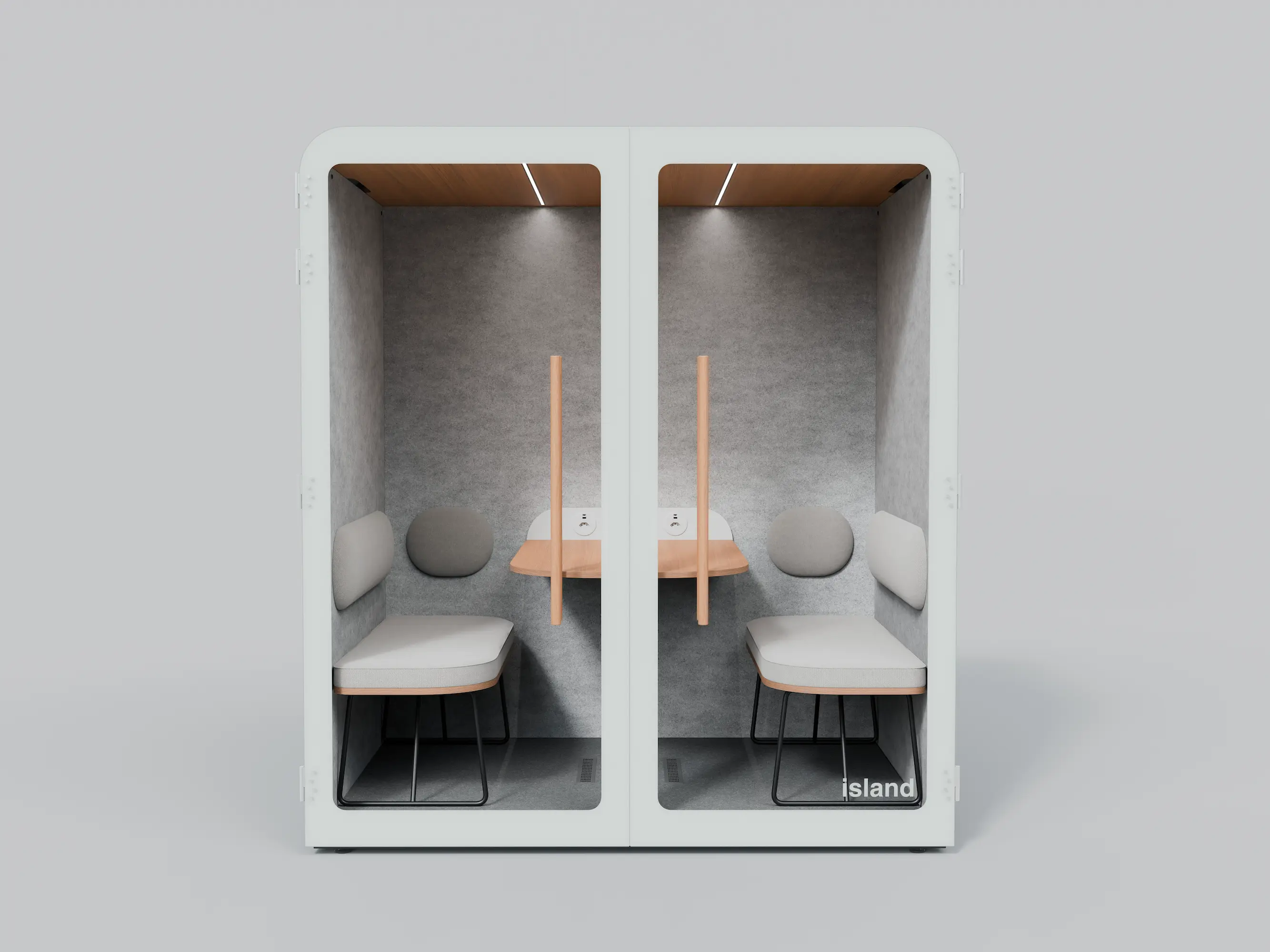
Acoustic pod specialists since 2018, Work With Island equips more than 4,000 companies across Europe with their flexible workspace projects. Our Island Solo, Island Desk, Island Duo and Island Quattro pods meet the specific needs of flex office: focus spaces, confidential calls, spontaneous meetings.
Our range of acoustic solutions
Individual, standing, from €3,990 or €68/month
For your calls and focus time, in complete privacy.
Individual, seated, from €4,790 or €80/month
Your closed office to work quietly, seated and fully equipped.
2-person meetings, from €7,990 or €135/month
The ideal space for your two-person meetings and video calls.
Team meetings, from €9,990 or €171/month
The compact meeting room for your small-group discussions.
How to Implement Flex Office in Your Workplace
Our commitments
B Corp certification and Origine France Garantie. Our B Corp certification and Origine France Garantie label reflect a responsible approach. Manufacturing entirely in France, in the Vendée region. Acoustic expertise. Our 4,000 clients speak to our technical know-how. Pods certified ISO 23351-1 guarantee measured, consistent acoustic performance.
Your 8-step flex office action plan
- Audit the current organisation
Measure actual occupancy and map needs by team.
- Set the policy and consult the works council
Settle the remote-working and booking rules, and launch the mandatory consultation.
- Choose the management tools
Select a booking solution that integrates with your existing systems.
- Lay out the spaces
Arrange focus zones, collaborative spaces, relaxation areas and meeting rooms.
- Get the acoustics right
Address noise with pods, mobile partitions and absorbent panels.
- Support the change
Train managers in leading by objectives and communicate with your teams.
- Formalise the company agreement
Set out the terms of implementation, with review and evaluation clauses.
- Measure and continuously improve
Track occupancy, satisfaction and productivity to fine-tune the set-up.
Frequently asked questions about implementing flex office
What is flex office?
Flex office is a way of working where desks are not assigned to a named person. Employees book their space based on their needs and their presence schedule. This approach makes better use of office space and supports flexibility. It's usually paired with a structured remote-working policy.
How do you implement flex office?
Implementing flex office happens in 8 steps: auditing the organisation, setting the policy and consulting the works council, choosing management tools, laying out the spaces, getting the acoustics right, supporting the change, formalising the company agreement, and measuring and optimising. Allow 4 to 6 months for a successful transition.
What are the benefits of flex office?
Flex office reduces real estate costs, improves employee satisfaction, and helps attract talent. It also encourages exchanges between teams and makes better use of space. Companies see better adaptability as headcount changes.
Do employees need to agree to flex office?
Employee agreement is not mandatory to implement flex office, but consulting the works council is required. A company agreement is recommended to set out the terms of implementation. Involving teams in the process makes it easier for the project to be accepted and to succeed.
How much does fitting out a flex office cost?
Fit-out costs vary depending on what you choose (furniture, technology, acoustics). Island acoustic pods start at €3,990 excl. VAT or €68/month on leasing. Real estate savings generally offset the investment over the medium term. Leasing options let you spread the cost.
Does flex office hurt productivity?
A well-designed flex office improves productivity. The keys to success: varied spaces, effective acoustic solutions like Island pods, and management suited to the new set-up. Failure usually comes down to insufficient preparation or spaces that don't fit the new way of working.
.svg)
.svg)
.svg)
.svg)












.png)