The foundations of effective work organisation
What is modern work organisation?
Work organisation refers to the methods, processes and structures that govern how tasks are assigned, coordinated and carried out within a company. In the post-pandemic context, this definition has grown to include new dimensions: spatial, time-based and technological flexibility.
Key points:
- Optimal allocation of human and material resources
- Coordinating individual and collective activities
- Adapting to new ways of working (hybrid, remote, flex office)
The 3 pillars of organisational effectiveness
Pillar 1: Clarity of roles and responsibilities
Every employee needs to clearly understand their tasks, goals and scope of responsibility. This clarity avoids duplicated work, responsibility conflicts and helps make the best use of time. Effective project management depends on this organisational transparency.
Pillar 2: Smooth communication
Information needs to flow effectively between teams, departments and levels of hierarchy. Poor communication can cut productivity by 25%, according to a McKinsey study. The challenge is to create communication channels suited to different types of exchanges.
Pillar 3: Adaptability to business needs
The organisation needs to be able to evolve quickly in response to business priorities, activity peaks and external constraints. This organisational agility becomes a decisive competitive advantage.
At Decathlon, work organisation relies on autonomous teams of 8-12 people, with clearly defined roles and daily communication rituals that allow for optimal responsiveness.
Methods and tools for structuring office presence
Strategic presence planning
The "Core Team Days" method
Set 2-3 days a week when the whole team is in the office for important meetings, brainstorming sessions and collaborative projects. This approach guarantees quality time for in-person interaction while preserving flexibility.
Rotation by expertise
Organise presence around the skills needed: technical experts in on Tuesdays and Thursdays, sales teams on Mondays and Wednesdays, creating optimal cross-functional synergy. This organisational method makes the best use of resources while maintaining efficiency.
Modern coordination tools
Space-booking platforms
- Meeting-room booking systems
- Desk booking in flex-office setups
- Scheduling for collaborative spaces
Presence dashboards
A real-time view of who's in, available or working remotely, making spontaneous coordination and decision-making easier. These digital tools are transforming how hybrid teams are managed.
The RACI method applied to spatial organisation
- Responsible: Who's responsible for carrying out the task?
- Accountable: Who's accountable for the outcome?
- Consulted: Who needs to be consulted?
- Informed: Who needs to be kept informed?
This RACI matrix helps determine who needs to be physically present based on the type of activity and level of interaction required. It brings clear structure to presence planning and improves team efficiency.
The company Alan uses a system of "focus days" (remote) and "collaboration days" (office), which has increased productivity by 15% while maintaining team cohesion.
Optimising the workplace for focus and collaboration
Creating dedicated zones by activity
Individual focus spaces
Tasks that need sustained attention require calm, interruption-free environments. Fitting out "focus" zones with proper sound insulation becomes essential for protecting quality of work life.
Spontaneous collaboration spaces
Open, modular zones encourage informal exchanges and collective creativity. These spaces should be equipped with presentation tools and visual aids to support teamwork.
Formal meeting spaces
Rooms equipped for hybrid video calls, so remote employees can be included in important discussions. The workplace needs to adapt to new ways of collaborating.
The importance of workstation ergonomics
Optimal lighting
Suitable lighting reduces eye strain and improves focus. Natural light should be prioritised and supplemented with quality artificial lighting. This attention to workstation ergonomics directly affects performance.
Adaptable furniture
Height-adjustable desks, ergonomic chairs and monitor arms let each employee adapt their workstation to their physical needs. Investing in a quality work environment translates into better productivity.
Managing noise and acoustics
Noise is one of the main sources of stress and lost productivity in open-plan offices. An INRS study shows that 54% of employees in open-plan offices complain about noise.
Acoustic solutions:
- Movable partitions to reshape the space
- Absorbent materials (carpets, wall panels)
- Private spaces for phone calls
These fit-outs help create a workplace that supports employees' focus and wellbeing.
Communication and coordination for hybrid teams
Communication rituals suited to hybrid work
Daily stand-up meetings
Short meetings (15 minutes maximum) at the start of the day to sync up teams, whether they're in the office or remote. Format: today's goals, any blockers, collaboration needs. These rituals maintain cohesion despite the distance.
Weekly team meetings
Longer sessions to review project progress, share best practices and maintain team cohesion. The regularity of these exchanges gives structure to collaboration.
Asynchronous communication tools
Shared documentation
Centralising important information in collaborative spaces accessible to everyone, reducing dependence on real-time exchanges. This approach supports team autonomy and efficiency.
Topic-based communication channels
Organising discussions by project or topic to avoid information overload and make information easier to find. Structuring exchanges this way improves how information flows.
Maintaining company culture remotely
Planned informal moments
Organise non-work exchanges: virtual coffee, team lunches, hybrid team-building events. These initiatives preserve the social bonds essential to cohesion.
Regular recognition and feedback
Setting up continuous feedback systems to maintain team engagement and motivation. HR plays a key role in this personalised follow-up.
At BlaBlaCar, implementing a "buddy" system between in-office and remote employees has kept engagement at 89%, despite the move to hybrid work.
New forms of organisation: remote work and flex office
The structured remote-work model
Goal-based remote work
Rather than setting arbitrary remote-work days, this approach is based on the nature of the tasks and the goals to achieve. Thinking, writing or training activities can be optimised for remote work.
Collaborative remote work
Organising team remote-work days with shared video-call work sessions, keeping the team's collective dynamic while benefiting from the calm of home.
Flex office: optimising space and flexibility
The clean-desk principle
No desk is permanently assigned. Every employee stores their belongings in a locker and books a space based on the day's needs. This practice is transforming how office space is used.
Specialised zones
- Quiet zones for focus work
- Collaborative spaces for teamwork
- Phone booths for confidential calls
- Relaxation spaces for breaks
Benefits and challenges of flex office
Benefits:
- Lower real-estate costs (30-40% space savings)
- Better use of office space
- Encourages cross-department interactions
Challenges to plan for:
- Some employees losing their sense of "their" spot
- The need for an effective booking system
- Adapting company culture
This shift to flex office requires change management to protect employees' work-life balance.
At Vinci, rolling out flex office cut its real-estate footprint by 35% while improving employee satisfaction by 23%.
Prioritisation methods and team time management
The Kanban method for project visibility
The basic principle
Visualising ongoing tasks on a board split into columns: "To do", "In progress", "In review", "Done". This Kanban method lets every team member understand overall progress and encourages transparency.
Adapting to hybrid work
Using digital tools (Trello, Asana, Monday) to maintain project visibility whether the team is in the office or remote. Digitalising these practices has become essential.
Collective prioritisation techniques
The MoSCoW method
Classifying tasks by importance:
- Must have: Essential
- Should have: Important but not critical
- Could have: Desirable
- Won't have: Deferred
This method structures collective decision-making and aligns teams on priorities.
The Eisenhower Matrix, as a team
Assessing tasks together against two criteria: urgency and importance. This approach avoids every team member having their own view of priorities, and aligns effort.
Managing interruptions and meetings
Protected focus time
Setting hours where interruptions are limited, allowing for deep work. For example: 9-11am = focus time, no meetings or non-urgent calls. This time management significantly improves productivity.
Making meetings more efficient
- A set agenda every time
- A time limit (25 or 50 minutes maximum)
- Attendees limited to those directly involved
These collective time-management practices free up time for deep work and reduce meeting fatigue.
Performance indicators and continuous improvement
Essential KPIs for work organisation
Productivity indicators
- Goal-completion rate by team
- Average project turnaround time
- Number of deliverables produced per period
Wellbeing indicators
- Absenteeism rate
- Employee satisfaction score (eNPS)
- Turnover by team
Organisational efficiency indicators
- Office space utilisation rate
- Number of meetings per employee per week
- Response time to internal requests
These work-organisation indicators allow objective tracking of collective performance.
Setting up a continuous-improvement process
Monthly retrospectives
Team sessions to identify what's working well, areas to improve and actions to take. Format: Start/Stop/Continue. This practice encourages collective learning.
360° feedback
Regularly collecting feedback from employees, managers and internal clients on how well the organisation is working. This comprehensive approach enriches the view of what needs improving.
Data-driven adaptation
Organisational A/B testing
Trying out new methods on part of the team before rolling them out more widely. For example: testing different meeting formats or spatial layouts.
Analysing collaboration patterns
Using data from collaborative tools to identify bottlenecks and optimise processes. This data-driven approach guides improvement decisions.
Work-organisation productivity improves through continuous analysis of practices and adapting to teams' evolving needs.
Work With Island supports you in optimising your workspace
Our solution for optimal work organisation
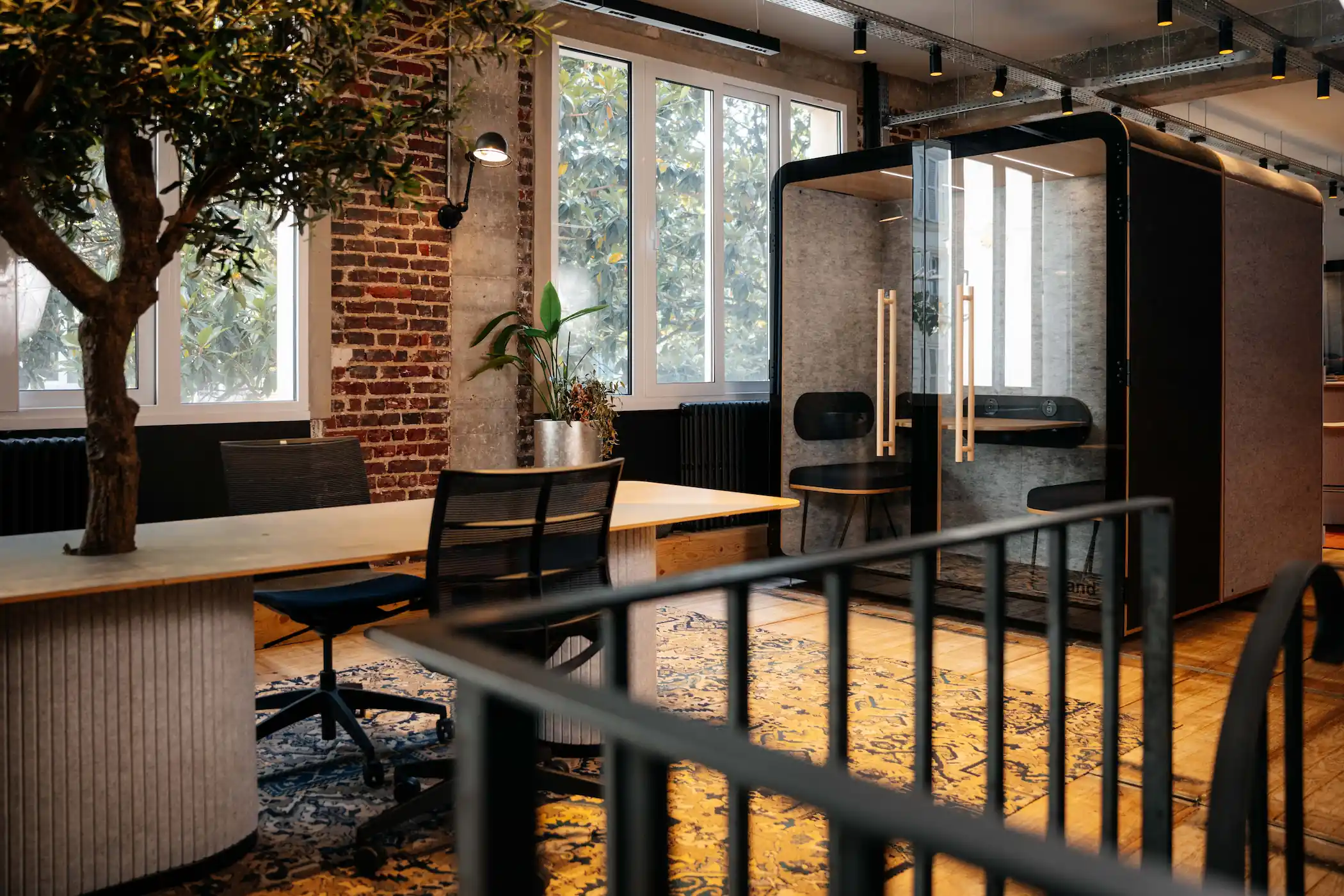
Modern work organisation needs spaces suited to different types of activity. Work With Island offers a full range of acoustic pods that fit perfectly into your fit-out strategy.
Our acoustic pods:
- Island Solo: An individual space for calls and focus work (1 m² footprint)
- Island Desk: An extended workstation with a built-in seat
- Island Duo: A 2-person space for interviews and small meetings
- Island Quattro: A 4-person meeting room for collaborative sessions
Why choose us
Certified French manufacturing
100% made in France, in the Vendée region, with B Corp certification. This responsible approach aligns with the CSR values of modern companies.
Fast, flexible installation
Installed in under 1 hour, with no major construction work. Perfect for adapting as your organisational needs evolve. This agility fits the constraints of companies going through change.
Expert support
More than 4,000 companies trust us, from startups to major groups like LVMH, Decathlon and L'Oréal. Our expertise supports your thinking on how to optimise your workspace.
.svg)
.svg)
.svg)
.svg)