What is a work pod? Definition and origins
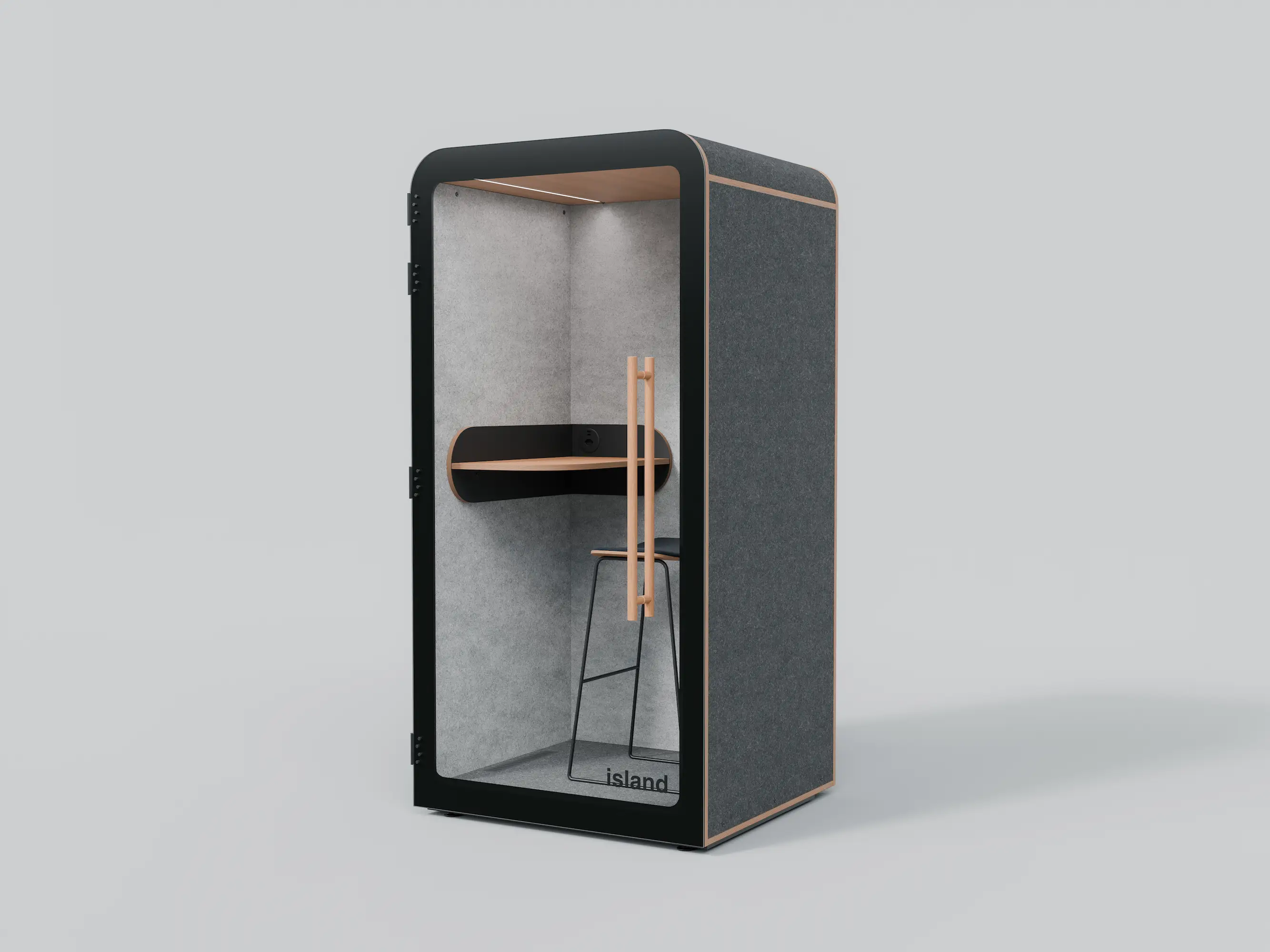
Work pods are changing our workplaces. These self-contained structures, also called acoustic pods or phone boxes, create isolated zones within open environments. They let employees step away for tasks that need focus or privacy.
They emerged to answer a need for balance. After the era of enclosed offices, then open-plan offices, workplaces are now looking for a middle ground. Work pods offer pockets of calm without giving up the benefits of open spaces.
Where work pods come from
The story starts with the rise of open-plan offices in the 1990s and 2000s. These layouts supported communication and made better use of space, but soon showed their limits: ambient noise, constant distractions, and a lack of privacy. Noise in an open environment can significantly cut productivity and raise employee stress.
In response, the first modern phone pods appeared in the early 2010s. Initially simple spaces for calls, they evolved into more sophisticated solutions. The rise of flex office and hybrid work after the pandemic sped up this shift.
Different types of work pod on the market
Today, the market offers a range of solutions suited to different needs:
Individual pods are the most common category. Their compact format makes them easy to fit into almost any environment.
For collaborative needs, meeting pods seat several people. These enclosed spaces create ideal conditions for confidential conversations or brainstorming sessions. Some models include full audiovisual equipment.
The strategic benefits of work pods for companies
Adding work pods is much more than a simple fit-out choice, it's a strategic decision with real, wide-ranging benefits. Where noise is a major source of distraction, these acoustic spaces become a lever for operational efficiency.
One major advantage lies in their fit-out flexibility. Unlike traditional construction, pods install in a few hours with no structural changes to the building. Organisations can quickly adapt their environment as their needs change.
Impact on productivity and employee wellbeing
Acoustic pods directly affect several key productivity factors:
- They significantly reduce the mental fatigue caused by constant noise
- They provide secure spaces for confidential conversations
- They create zones dedicated to deep focus
- They improve overall satisfaction with the workspace on offer
Privacy is a major benefit. In an open environment, a significant share of conversations can be overheard by nearby colleagues. Pods provide protected spaces for sensitive discussions.
"Our employees particularly value being able to step away when needed, while still enjoying the interactions of the open-plan office the rest of the time," HR professionals who've rolled out these solutions often say.
Economic and logistical benefits
The economics also favour work pods:
- Real savings: a significantly lower investment than traditional meeting rooms
- Fast installation: up and running in under a day, versus several weeks of construction work
- Modularity: movable and reconfigurable with no extra construction work
A 4-person meeting pod typically costs between €9,000 and €15,000, an economical alternative to traditional construction of the same capacity.
As companies regularly change their fit-out, being able to move or reconfigure pods with no extra construction work brings real savings.
Technical features of high-performing work pods
A work pod's quality comes down to several key technical features.
Acoustic performance and sound insulation
Acoustic performance is the key criterion. An effective pod should offer at least 25 dB of sound reduction to create an environment suited to focus. The best-performing models reach 30 dB and above.
This insulation comes from a multi-layer design combining different materials:
- Exterior walls in high-density acoustic panels
- Interior lining in felt or acoustic foam
- Seals on doors and windows
To objectively assess acoustic quality, ISO 23351-1 has become the benchmark. It measures sound reduction in decibels and rates products from Category A to E. Quality pods usually fall in Category A or B.
Two fundamental acoustic concepts are worth distinguishing:
- Sound insulation stops sound crossing the walls in either direction
- Sound absorption reduces reverberation inside the pod
Top-of-range models like Work With Island's offer sound reduction of up to 31.1 dB (Solo/Desk, Class A) to ISO 23351-1 testing, creating an environment where a normal conversation stays inaudible from outside.
Ventilation and thermal comfort
Air renewal is a crucial technical factor. In an enclosed space, CO2 levels can rise quickly, leading to drowsiness and reduced focus. An effective system should deliver at least 30 m³ per hour per person.
Advanced solutions offer smart ventilation systems that switch on automatically with presence detection. These systems cut energy use while ensuring steady comfort.
High-performing individual pods like the Island Solo and Island Desk deliver 400 m³/h of airflow, while collaborative models like the Island Duo and Island Quattro reach 800 m³/h.
Technology integration also matters. Modern pods include a range of connectivity (power sockets, USB ports, network connections) and can house screens or video conferencing systems.
Practical applications of work pods in different environments
Work pods are versatile enough to fit a wide range of professional environments.
Work pods in office spaces
In traditional office spaces, pods complement the existing fit-out by creating isolated zones within the open-plan office. Their presence transforms the user experience, letting employees choose their environment based on their task.
A successful rollout relies on studying foot traffic beforehand. A strategic position, close to workstations but away from heavy foot traffic, maximises their usefulness.
Combining different pod types covers the full range of needs:
- Individual pods placed at regular intervals for calls or focus time
- Collaborative pods positioned strategically for spontaneous conversations
The right ratio of pods varies with a company's culture and activity. Studying actual use and specific needs helps size the equipment precisely.
Work pods in coworking spaces and shared offices
Coworking spaces welcome a mix of people every day: freelancers, startups, project teams from large groups, all sharing the same floor.
This mix amplifies acoustic challenges, with overlapping calls, impromptu meetings, and very different privacy needs from one occupant to the next.
Acoustic pods address this by giving operators a concrete way to structure the space without fixing it in place:
- Individual pods, open access, for confidential calls and video meetings
- Bookable collaborative pods for 2 to 4-person meetings that need discretion and focus
Installing with no construction work, and being movable, is a decisive advantage in these environments that reconfigure frequently as members come and go. Operators like Wojo have already added these solutions to offer a more complete work experience.
Sizing adapts to occupancy rates and the type of activity hosted. Studying actual use helps balance the offer between open spaces and isolated zones.
How do you choose the right work pod for your needs?
Choosing the right solution takes a close look at your organisation's specific needs.
Assessing your needs and sizing
This starts with identifying your priority uses:
- Phone calls
- Video meetings
- Collaborative meetings
- Zones for individual focus
"We were looking for a solution that reflects our company culture while meeting our teams' actual needs," business owners often say. This dual requirement naturally points towards solutions that combine technical performance with thoughtful design.
Studying your ways of working is a fundamental step. Auditing collaborative practices identifies how often and what kind of meetings happen, along with the need for isolation for individual tasks.
A prior acoustic study of the existing space can be valuable. Measuring the ambient noise level and identifying particularly noisy areas helps optimise where to position the pods.
Space and technical constraints should also be considered:
- Sufficient ceiling height
- A standard power connection nearby
- Building access for delivery and installation
For the exact dimensions of each model, see the product guide. And if you're at all unsure, our sales team is happy to visit and assess feasibility directly on-site.
Budget and return on investment
Cost is a major deciding factor. Prices vary considerably by model and features:
On top of these amounts come delivery and installation costs, typically between €500 and €1,400 depending on the complexity of the project.
For organisations with tighter cash flow, alternative financing options exist. Long-term rental gives access to this equipment for a monthly payment, typically between €67.69 and €171.04 a month depending on the model.
Beyond the investment, it's the everyday benefits that make the difference:
- More calm and quiet in the office
- Better concentration, and so higher productivity
- Smoother conversations thanks to dedicated spaces
- An overall improvement in employee satisfaction
Work pods designed to evolve with how you work
Work pods aren't set in stone. They're part of the ongoing transformation of workplaces, and the most advanced manufacturers are already building in features that answer new ways of working.
Equipment already built for hybrid work
Hybrid work has made video meetings an everyday occurrence. Acoustic pods have evolved accordingly. Collaborative models like the Island Duo and Island Quattro can be fitted with a video conferencing pack, including a built-in screen and a wide-angle camera that automatically keeps every participant in frame.
On the space-management side, smart booking solutions already exist through specialist partners. These tools track pod occupancy, suggest available slots, and point users to the pod format best suited to their needs.
Future developments will build on this: automatic adjustment of lighting and ventilation, simplified touchless controls, and ever tighter integration with the company's collaboration tools.
Sustainability and eco-design
The environmental dimension is central to the design of the best work pods. At Work With Island, this commitment shows in concrete choices:
- Métisse® acoustic insulation, made from recycled textiles
- PEFC-certified wood, from sustainably managed forests
- Recycled glass built into the construction
- LED lighting systems with presence detection, to limit energy use
These commitments aren't just marketing claims: Work With Island is B Corp certified, a label that assesses a company's overall social and environmental impact. For organisations committed to CSR, it's a concrete, verifiable criterion.
.svg)
.svg)
.svg)
.svg)