Acoustic furniture: an effective answer to workplace noise
Noise is the top stress factor in modern workplaces. Employees lose considerable everyday productivity to noise. Given this, acoustic furniture stands out as an ideal solution for transforming the sound environment while preserving the look of a space.
A space's acoustics aren't just about full soundproofing. The goal is to strike a sound balance that supports both conversation and concentration. Acoustic furniture acts as a regulator, absorbing disruptive frequencies while keeping a productive atmosphere.
The impact of noise on productivity and wellbeing
The consequences of workplace noise go well beyond a passing annoyance:
- Higher cortisol levels (the stress hormone)
- A measurable drop in cognitive performance
- More errors on complex tasks
- Growing irritability and persistent headaches
Economically, the cost to companies is considerable in terms of reduced productivity, not to mention the impact on absenteeism and turnover.
How sound absorption works
Three distinct mechanisms are at play in architectural acoustics:
- Absorption: turning sound energy into heat
- Diffusion: dispersing sound waves
- Insulation: blocking sound from spreading
Absorbent materials (open-cell foam, textile fibres, mineral wool) capture sound waves and convert them into heat energy. Their effectiveness is measured by the sound absorption coefficient (α), ranging from 0 to 1. Effective acoustic furniture generally shows a high coefficient in the human voice frequency range (500-2000 Hz).
A well-equipped office should maintain an optimal reverberation time to support speech intelligibility while reducing how far conversations carry.
The different categories of acoustic furniture to consider
The market now offers a wide range of solutions suited to every space and constraint. Each category answers specific needs and fits into the office ecosystem differently.
Acoustic panels and partitions
Acoustic wall panels are often the first step in an acoustic fit-out. Easy to install and relatively affordable, they turn reflective surfaces into absorption zones. Available in standard or custom formats, they can be printed to become genuine decorative elements.
Acoustic partitions come in fixed or mobile versions. Freestanding models offer valuable flexibility in constantly changing spaces, letting you create temporary quiet zones. Modular solutions are gaining popularity with the rise of hybrid work, allowing you to quickly adapt the layout to actual space use.
Built-in furniture: acoustic desks, tables, and seating
Building acoustic properties directly into functional furniture is a strong trend. Acoustic desks include absorbent panels on the front or under the desktop, creating an immediate calm zone for the user.
In collaborative spaces, acoustic seating plays a dual role. High-absorption armchairs, sofas, and poufs help contain conversation while offering optimal comfort. Their internal structure, made of technical foams of varying density, effectively captures vocal frequencies.
Work With Island acoustic pods
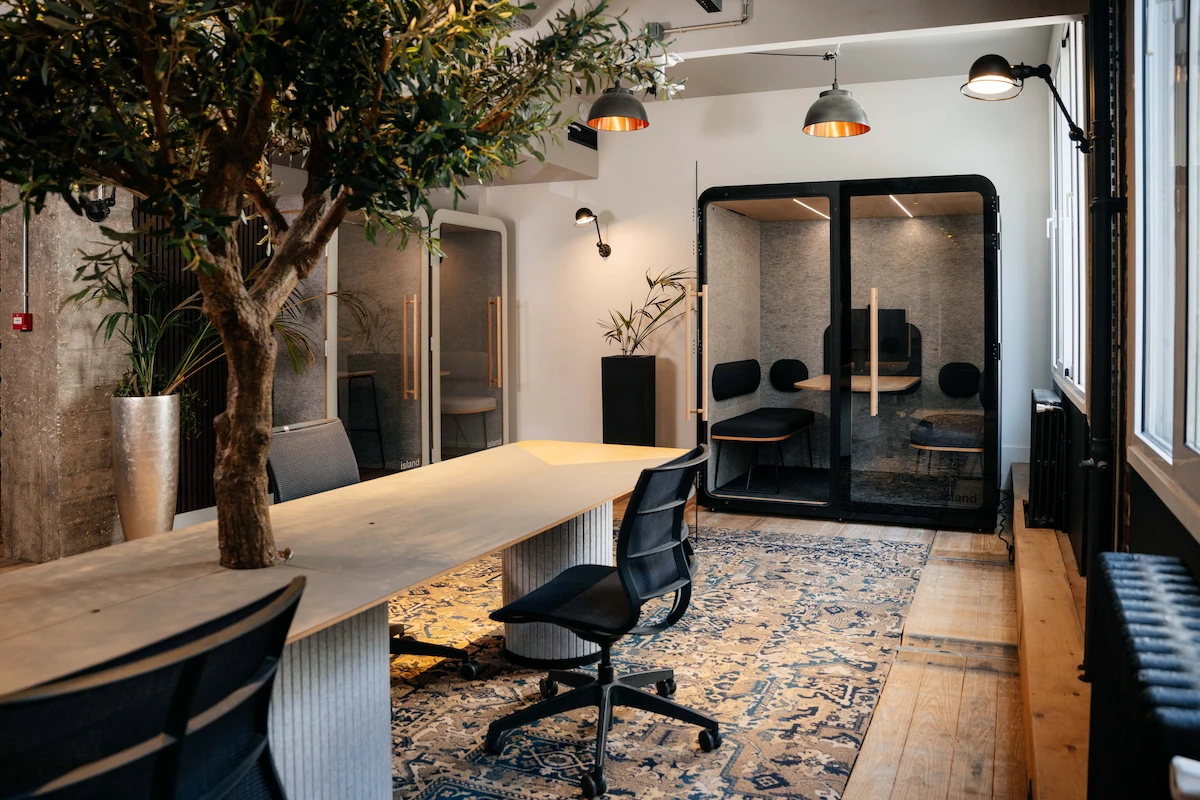
Acoustic pods like those offered by Work With Island are the most complete solution for calls and video meetings. These enclosed spaces offer significant sound reduction.
Fitted with ventilation, lighting, and built-in connectivity, they're a genuine office within the office, with a much shorter installation time than traditional construction.
Our pods, certified ISO 23351-1 (Class A for Solo and Desk, Class B for Duo and Quattro):
Decorative and architectural solutions
Acoustics is now finding its way into decorative elements. Acoustic light fixtures combine optimised lighting with sound absorption, particularly effective in spaces with high ceilings.
Absorbent decorative objects like acoustic artwork, totems, and hanging pieces let you introduce visual identity elements while improving sound comfort. For more structural interventions, acoustic ceilings and wall coverings offer an all-round solution with a high absorption coefficient.
How do you choose the right acoustic furniture for your space?
Selecting the best acoustic furniture takes a methodical approach. A preliminary analysis of sound issues, how the spaces are used, and technical constraints helps build a coherent strategy.
How effective an acoustic fit-out is depends on how well the solutions deployed complement each other. Rather than putting the whole investment into a single type of product, a multi-level approach covering ceilings, walls, and furniture generally gives more even results.
Assessing needs by type of space
Open-plan offices present specific acoustic challenges linked to how sound travels horizontally. Combining separating partitions, absorbent ceilings, and furniture with acoustic properties lets you create "sound bubbles" around workstations.
For meeting rooms, the challenge is twofold: keeping conversations contained inside, while also guaranteeing internal acoustics that support conversation. Absorbent wall panels, combined with acoustic ceilings, reduce reverberation and improve intelligibility.
Circulation areas play a crucial role in how noise travels. Often overlooked, these spaces particularly benefit from suspended solutions (baffles, islands) and absorbent furniture that create buffer zones between different areas.
Technical and practical selection criteria
Beyond the simple absorption coefficient, look at the frequency-based absorption curve to make sure the furniture effectively targets the problem frequencies in your environment. Certifications like fire classification (European standard EN 13501-1) and standardised acoustic tests (ISO 354, ISO 23351-1) guarantee verified performance.
The materials chosen affect both durability and environmental impact. Solutions incorporating recycled fibres or bio-based materials are gaining relevance. Certifications like B Corp or Origine France Garantie reflect a quality commitment that goes beyond acoustic performance alone.
The practical aspects of installation and maintenance deserve particular attention. Easy installation (with no structural work), the option to relocate later, and simple upkeep are significant operational advantages.
Optimising your budget: value for money in acoustic solutions
Optimising the budget for an acoustic project relies on sensibly prioritising interventions. In most professional environments, treating part of the surfaces with effective acoustic solutions is enough to significantly transform the sound atmosphere.
The cost-benefit analysis should factor in the expected productivity gains. A substantial reduction in sound distractions can translate into a significant amount of time saved per day per employee, representing a worthwhile return on investment.
Cost-effective solutions and optimisation tips
For organisations with tighter budgets, several approaches can improve acoustics with no major investment:
A gradual approach: treat the main reflective surfaces first (facing walls, ceilings) with affordable but effective panels.
Hybrid solutions: favour furniture that combines function with acoustics (bookcases with acoustic backing, green partitions incorporating absorbent materials).
Optimising quantities: rather than covering surfaces uniformly, position acoustic elements strategically at critical reflection points. This approach can significantly cut the budget needed.
Trends and innovation in acoustic furniture
The sector is buzzing with creativity, driven by changing ways of working. The hybridisation of professional spaces is pushing manufacturers to develop ever more flexible, multifunctional solutions.
Acoustics is becoming central to how modern workspaces are designed. Modular acoustic pods like Work With Island's are seeing strong growth, offering on-demand focus spaces with no structural changes to buildings.
Eco-friendly materials and a sustainable approach
Material innovation is a major area of development. Natural fibres like hemp, linen, or processed algae now offer acoustic performance comparable to traditional synthetic solutions, with a smaller carbon footprint.
Recycling is entering a new dimension, with acoustic panels made from plastic bottles, textile offcuts, or even agricultural waste. These "second life" materials answer growing demand for responsible fit-outs.
Design and personalisation
Building visual identity into acoustic solutions turns a technical constraint into an aesthetic opportunity. Printed panels, custom cutouts, and bespoke compositions are becoming elements of spatial storytelling.
Personalisation options are becoming more sophisticated, with modular systems that allow frequent reconfiguration. Working with designers is emerging as a distinctive practice for large-scale projects, producing unique pieces that combine acoustic performance with a recognisable aesthetic signature.
A practical guide: the steps for buying acoustic furniture
Acquiring acoustic furniture follows a structured process that optimises the investment and guarantees results that live up to expectations.
Assessment and acoustic diagnosis
Measure the existing problems: use professional apps to measure reverberation time and take sound readings at different times of day.
Consult an expert for large-scale projects: this initial investment often significantly optimises the overall budget by precisely targeting the interventions needed.
Use self-assessment tools for smaller organisations: acoustic perception questionnaires, simplified measurement apps, or the pre-diagnosis services some suppliers offer.
Choosing suppliers and comparing offers
A few essential criteria to guide your choice:
- The supplier's stability and track record in the market
- Transparency around technical data and certifications
- A trial or product demonstration service
- The quality of support and customer follow-up
Beyond price, compare the detailed technical specifications, lead times, and installation conditions. The warranties offered and the quality of after-sales service are decisive factors for your long-term satisfaction.
Installation and monitoring performance
Plan the installation to minimise disruption to your business. Modern solutions like Work With Island pods favour non-destructive fixing systems and short intervention times (under an hour for installation).
After installation, confirm you've met your acoustic goals with new measurements and satisfaction surveys. Set up a regular maintenance programme to preserve both the look and the acoustic performance over time.
Buying acoustic furniture is a strategic investment in workplace performance and wellbeing. A structured approach guarantees optimal results and a tangible return on investment, contributing to the company's appeal over the long term.
.svg)
.svg)
.svg)
.svg)







.webp)